

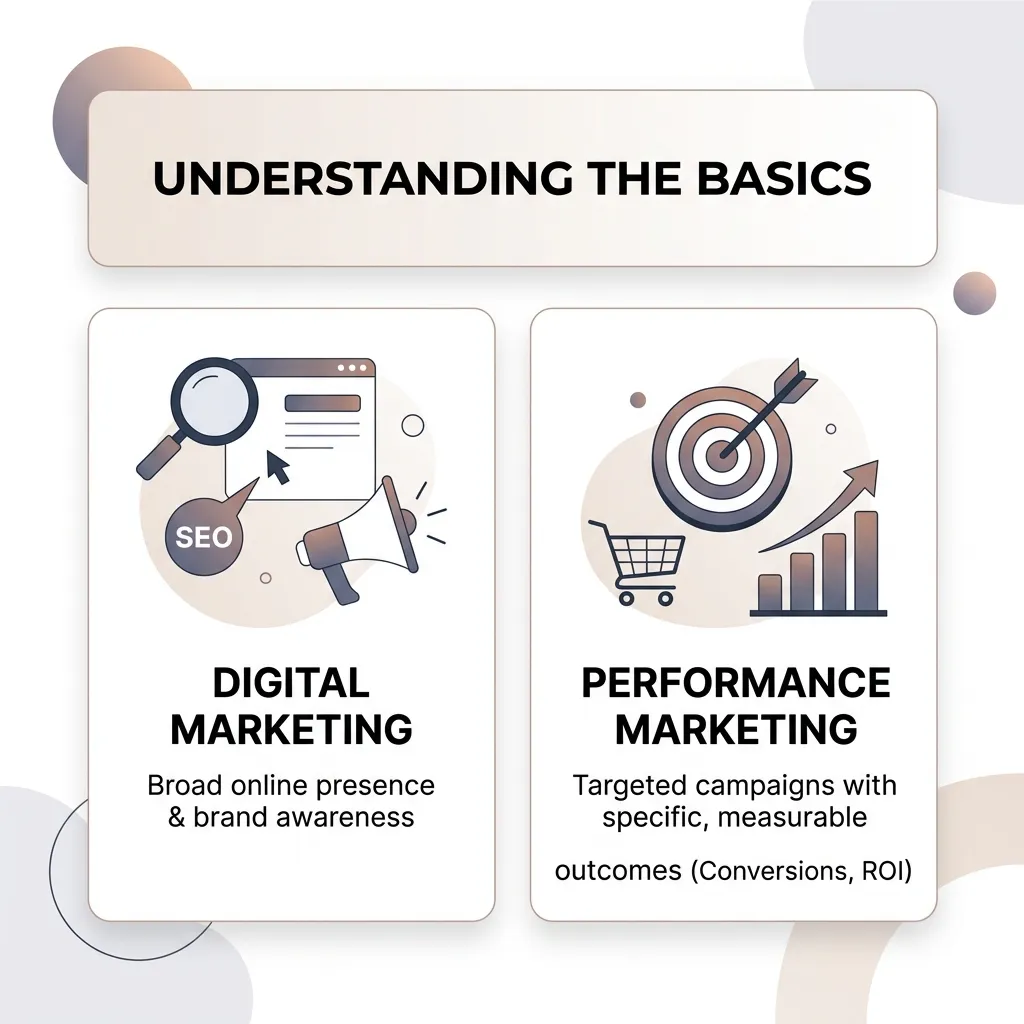
Performance marketing vs digital marketing is an important distinction for businesses planning their online growth. Digital marketing covers the broader ecosystem of online promotion, while performance marketing focuses heavily on measurable actions and results. Understanding the differences can help businesses choose the right channels, budgets, KPIs, and strategies for achieving specific marketing goals.
Businesses today have more ways to reach customers than ever before. From search engines and social media to email, content, paid advertising, affiliate partnerships, and influencer campaigns, digital channels have transformed how brands attract and convert audiences.
However, marketers often use performance marketing vs digital marketing as if the two terms mean exactly the same thing. They are closely related, but they are not identical.
Digital marketing is the broader discipline that includes almost every marketing activity conducted through digital channels. Performance marketing is a more results-oriented approach that emphasizes measurable outcomes such as clicks, leads, sales, app installs, or conversions.
Understanding performance marketing vs digital marketing can help businesses determine where to invest their resources and how to measure success.
What Is Digital Marketing?
Digital marketing refers to promoting products, services, brands, or businesses through digital channels. It includes both paid and organic strategies designed to attract audiences, build awareness, generate engagement, and drive conversions.
Common digital marketing channels include:
- Search engine optimization (SEO)
- Pay-per-click advertising (PPC)
- Social media marketing
- Content marketing
- Email marketing
- Affiliate marketing
- Influencer marketing
- Display advertising
- Video marketing
- Mobile marketing
- Online public relations
Digital marketing can support almost every stage of the customer journey. A company might use SEO to attract people searching for information, social media to build awareness, email marketing to nurture prospects, and paid advertising to generate immediate traffic.
For businesses that want to understand how different channels work together, this guide to digital marketing channels provides useful context.
The broad nature of digital marketing is one of its biggest strengths. Businesses can combine multiple channels instead of depending on a single source of traffic or sales.
What Is Performance Marketing?
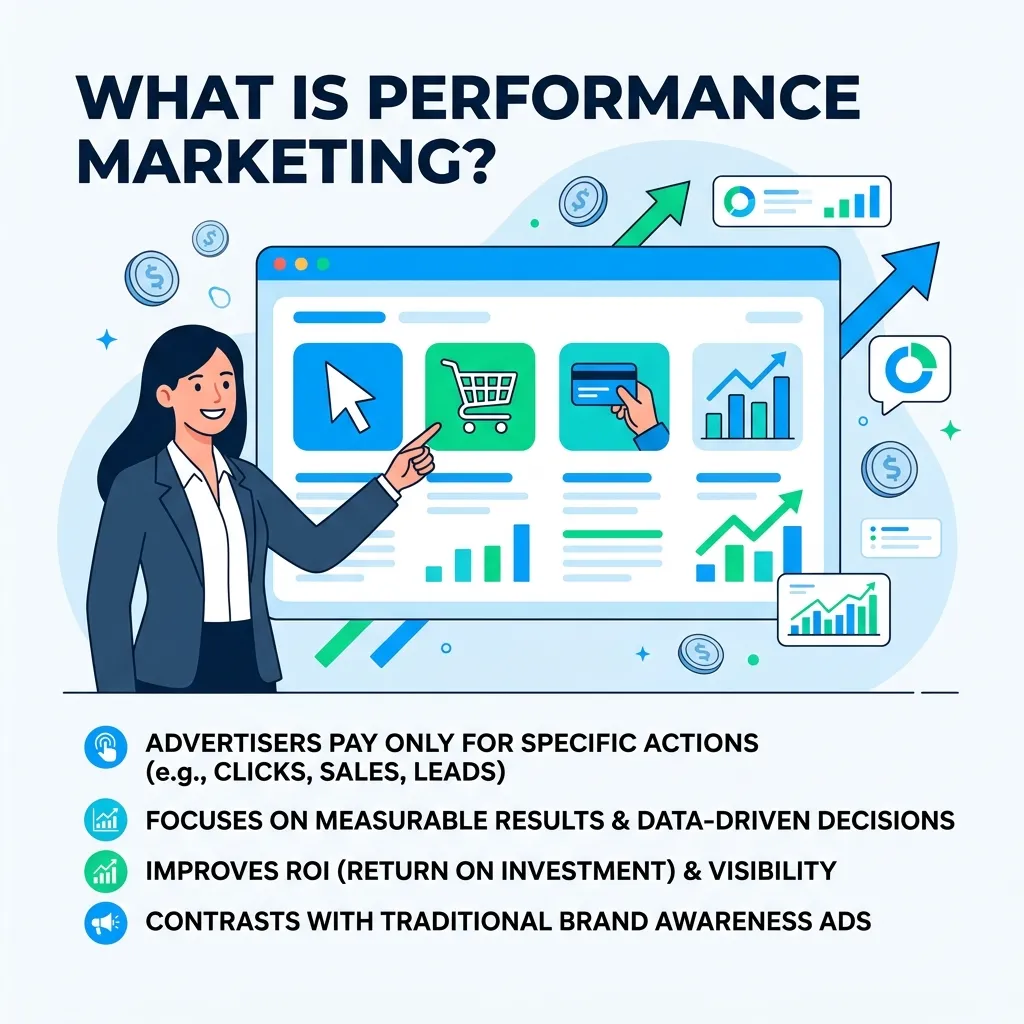
Performance marketing is a results-driven approach to digital advertising and promotion where campaigns are evaluated primarily according to measurable actions.
Instead of focusing only on exposure or brand visibility, performance marketers typically track outcomes such as:
- Clicks
- Leads
- Sales
- App installs
- Registrations
- Purchases
- Sign-ups
- Cost per acquisition
- Return on ad spend
The exact payment model can vary depending on the campaign and channel. Some performance campaigns are based on clicks, while others focus on leads, conversions, or revenue.
This makes performance marketing particularly attractive to businesses that want to connect marketing spending with measurable business outcomes.
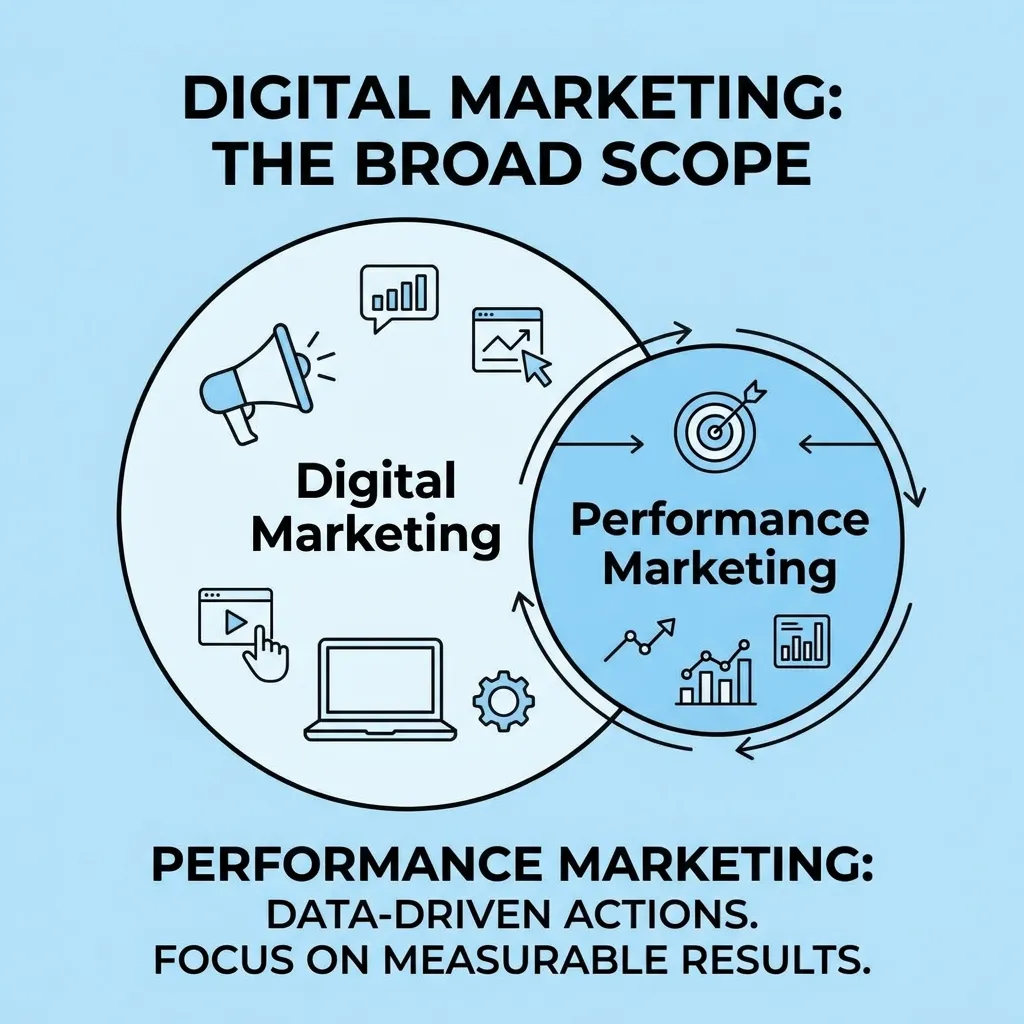
When comparing performance marketing vs digital marketing, the most important distinction is scope. Performance marketing generally operates within the broader digital marketing ecosystem but places stronger emphasis on measurable performance.
Performance Marketing vs Digital Marketing: Main Difference
The simplest way to understand performance marketing vs digital marketing is to think about scope and measurement.
Digital marketing is the larger category. Performance marketing is a results-focused approach that can be used within that category.
For example, SEO can be part of digital marketing because it helps improve organic visibility and attract search traffic. A paid search campaign optimized around cost per acquisition and conversions can be considered performance-oriented marketing.
Here is a simple comparison:
| Factor | Digital Marketing | Performance Marketing |
|---|---|---|
| Scope | Broad | More focused |
| Primary goal | Awareness, engagement, traffic, leads, sales | Measurable actions and conversions |
| Channels | SEO, social, email, PPC, content, video, etc. | Paid search, social ads, affiliate, display, and other measurable channels |
| Measurement | Traffic, engagement, rankings, reach, conversions | CPA, ROAS, conversions, revenue, leads |
| Payment | May be fixed, organic, subscription, or paid | Often connected to measurable campaign performance |
| Time horizon | Short- and long-term | Often focused on measurable campaign outcomes |
| Brand building | Major component | Can support brand growth but usually emphasizes performance |
| Optimization | Overall marketing strategy | Continuous campaign and conversion optimization |
Therefore, performance marketing vs digital marketing is not necessarily a choice between two completely separate systems. Performance marketing can be considered a specialized, measurement-focused part of the broader digital marketing landscape.
Key Characteristics of Digital Marketing
Digital marketing has several characteristics that distinguish it from traditional marketing.
1. Multiple Digital Channels
Digital marketing can involve many different channels simultaneously. A brand might publish educational content, optimize its website for search, run social media campaigns, and send email newsletters.
This multi-channel approach helps businesses reach customers at different stages of the buying journey.
2. Long-Term Brand Building
Not every digital marketing activity produces an immediate sale. Content marketing, SEO, social media engagement, and community building can take time to produce significant business results.
These activities can nevertheless create valuable long-term assets.
3. Organic and Paid Strategies
Digital marketing includes both organic and paid activities.
For example:
- SEO can generate organic search visibility.
- Content marketing can attract audiences without direct advertising costs.
- PPC can generate paid search traffic.
- Social advertising can reach specific audience segments.
- Email marketing can nurture existing prospects.
This flexibility makes digital marketing suitable for businesses with different budgets and objectives.
4. Customer-Centric Communication
Digital platforms allow brands to communicate with audiences more directly. Businesses can use analytics, customer feedback, search behavior, and engagement data to improve their strategies.
For a broader understanding of digital marketing strategy and its objectives, businesses can also review this complete guide to digital marketing objectives.
Key Characteristics of Performance Marketing
Performance marketing has a stronger focus on measurable business outcomes.
1. Data-Driven Decisions
Performance marketers rely heavily on campaign data. Instead of simply asking whether an advertisement received attention, they may ask:
- How many people clicked?
- How many converted?
- What did each conversion cost?
- How much revenue did the campaign generate?
- Which audience generated the highest return?
This allows marketers to make decisions based on measurable evidence.
2. Clear KPIs
Performance campaigns normally have specific KPIs.
Common metrics include:
- Cost per click (CPC)
- Cost per lead (CPL)
- Cost per acquisition (CPA)
- Conversion rate
- Return on ad spend (ROAS)
- Customer acquisition cost (CAC)
- Revenue per customer
Businesses can use their digital marketing KPIs to determine whether campaigns are contributing to their broader objectives.
3. Continuous Optimization
Performance campaigns are rarely launched and then left unchanged.
Marketers can test:
- Ad creatives
- Headlines
- Landing pages
- Audience segments
- Keywords
- Offers
- Calls to action
- Bidding strategies
The resulting data can then be used to improve campaign efficiency.
4. Strong Conversion Focus
Performance marketing generally places greater emphasis on actions than simple exposure.
A campaign may be considered successful when it produces profitable conversions rather than merely generating impressions.
Performance Marketing vs Digital Marketing: Channel Comparison
Another useful way to understand performance marketing vs digital marketing is to compare their typical channels.
Search Engine Optimization
SEO is a major digital marketing strategy that focuses on improving organic visibility in search engines.
SEO can generate long-term traffic without paying for every individual click. However, results can take time and are influenced by competition, search behavior, content quality, and technical factors.
Pay-Per-Click Advertising
PPC is strongly associated with performance marketing because advertisers can track clicks, conversions, spending, and revenue.
However, PPC can also support broader digital marketing goals such as brand awareness and market expansion.
Businesses deciding between organic and paid search can explore this SEO vs PPC comparison for additional context.
Social Media Marketing
Social media can serve both digital marketing and performance marketing objectives.
Organic social media may focus on community building, brand awareness, and engagement, while paid social campaigns can focus on leads, purchases, app installs, or other measurable actions.
Email Marketing
Email marketing is often used for customer retention and nurturing, but it can also be highly measurable.
Businesses can track open rates, clicks, conversions, revenue, and customer engagement to evaluate campaign effectiveness.
Affiliate Marketing
Affiliate marketing is naturally performance-oriented because businesses can compensate partners according to measurable actions such as sales or qualified leads.
Benefits of Digital Marketing
Digital marketing offers several advantages for modern businesses.
Wider Reach
Businesses can reach audiences across geographic boundaries through search engines, social media, websites, email, and other digital platforms.
Flexible Strategies
Companies can combine different channels according to their goals and resources.
Long-Term Growth
SEO, content, email databases, social communities, and brand recognition can create assets that continue providing value over time.
Detailed Audience Insights
Digital platforms provide data about customer behavior, interests, engagement, and interactions.
Strong Brand Development
Digital marketing can help companies build recognition and credibility rather than focusing exclusively on immediate conversions.
Benefits of Performance Marketing
Performance marketing offers several advantages for businesses focused on measurable growth.
Measurable Results
Performance campaigns can be evaluated using specific metrics and conversion data.
Budget Control
Businesses can set budgets, monitor spending, and adjust campaigns according to performance.
Faster Optimization
Campaign data can reveal which audiences, advertisements, keywords, or landing pages are producing stronger results.
Accountability
Because performance campaigns are closely connected to measurable outcomes, marketers can more easily demonstrate the relationship between spending and results.
Scalability
Successful campaigns can often be expanded by increasing budgets, testing new audiences, or adding additional channels.
For example, ROAS is an important measurement when evaluating advertising profitability. Businesses can learn more about this metric through this guide to return on ad spend.
Performance Marketing vs Digital Marketing: Which Is Better?
There is no universal winner in the performance marketing vs digital marketing debate because the right approach depends on business objectives.
Digital marketing may be the better framework for businesses that want to:
- Build long-term brand awareness
- Improve organic visibility
- Develop customer relationships
- Create valuable content
- Build an online community
- Establish authority
Performance marketing may be more appropriate for businesses that want to:
- Generate measurable leads
- Increase online sales
- Acquire customers efficiently
- Track advertising profitability
- Optimize paid campaigns
- Scale proven campaigns
In practice, many successful companies combine both approaches.
A business can use SEO and content marketing to establish long-term visibility while simultaneously using paid search and social advertising to generate immediate traffic and conversions.
How to Combine Performance Marketing and Digital Marketing
Rather than treating performance marketing vs digital marketing as an either-or decision, businesses can build an integrated strategy.
Step 1: Define Business Objectives
Start by identifying the desired outcome.
Examples include:
- Increasing sales
- Generating qualified leads
- Improving brand awareness
- Increasing website traffic
- Reducing acquisition costs
- Improving customer retention
Step 2: Select the Right Channels
Choose channels based on the audience and objective.
For example, SEO may be appropriate for long-term organic acquisition, while paid search can capture users with strong purchase intent.
Step 3: Establish KPIs
Each campaign should have measurable indicators.
For performance campaigns, this may include CPA, conversion rate, or ROAS.
For broader digital marketing initiatives, additional indicators may include organic traffic, engagement, rankings, reach, and customer retention.
Step 4: Track the Customer Journey
Do not evaluate individual channels in isolation.
A customer may discover a brand through social media, read a blog post through search, receive an email, and eventually convert through a paid campaign.
Understanding this journey provides a more complete picture of marketing effectiveness.
Step 5: Optimize Continuously
Use campaign and website data to identify opportunities for improvement.
Test different messaging, audiences, content, offers, landing pages, and calls to action.
Common Mistakes When Choosing Between the Two
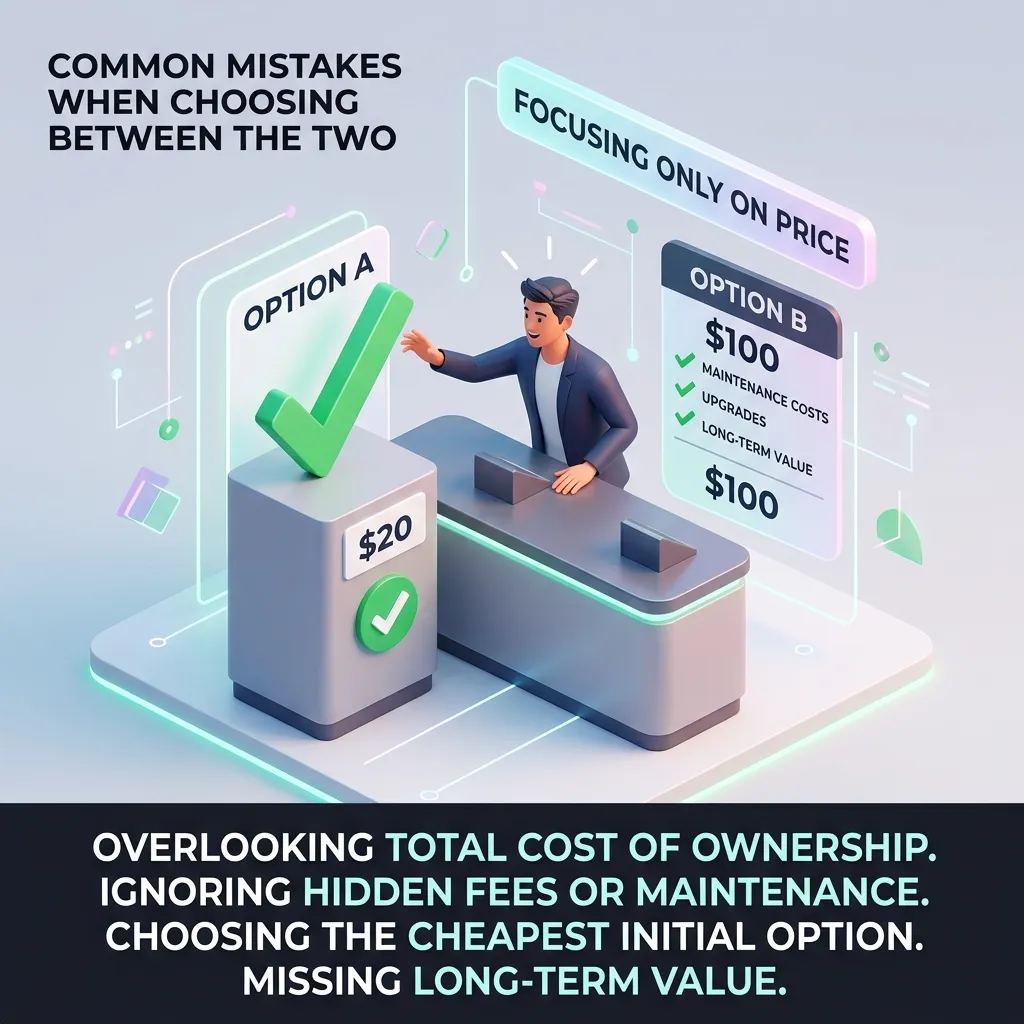
Businesses sometimes make strategic mistakes when comparing performance marketing vs digital marketing.
Focusing Only on Immediate Conversions
Not every valuable marketing activity creates an immediate transaction. Brand awareness, content, SEO, and customer relationships can influence future purchases.
Ignoring Profitability
High conversion volume does not automatically mean a campaign is successful. Acquisition costs and customer value should also be considered.
Using Too Many Channels
Being present everywhere can spread resources too thin. Businesses should prioritize channels that align with their audience and objectives.
Measuring Vanity Metrics
Impressions, followers, and clicks can provide useful information, but they do not always indicate business success.
Neglecting Landing Pages
Even a strong advertising campaign can underperform if the landing page is slow, confusing, irrelevant, or difficult to navigate.
Final Thoughts on Performance Marketing vs Digital Marketing
The performance marketing vs digital marketing distinction becomes much clearer when you look at scope and objectives. Digital marketing represents the broader world of online marketing, covering channels such as SEO, content, social media, email, PPC, and more.
Performance marketing focuses more specifically on measurable outcomes and efficient customer acquisition.
For many businesses, the strongest strategy is not choosing one over the other. Instead, companies can use digital marketing to build sustainable visibility and customer relationships while using performance marketing to generate and optimize measurable conversions.
The best approach depends on the business model, audience, budget, customer journey, and growth objectives. By combining long-term digital strategies with measurable performance campaigns, businesses can create a marketing system that supports both immediate results and sustainable growth.
Frequently Asked Questions
1. What is the difference between performance marketing vs digital marketing?
Digital marketing is the broader practice of promoting a business through digital channels. Performance marketing is more focused on measurable actions such as leads, sales, conversions, and acquisition costs.
2. Is performance marketing part of digital marketing?
Yes. Performance marketing can operate within the broader digital marketing ecosystem and uses channels such as paid search, paid social, display advertising, and affiliate marketing.
3. Which is better, performance marketing or digital marketing?
Neither is universally better. Digital marketing is useful for broader objectives such as awareness and long-term growth, while performance marketing is especially useful for measurable acquisition and conversion goals.
4. Is SEO performance marketing?
SEO can be measured through traffic, leads, conversions, and revenue, but it is generally considered a broader digital marketing channel rather than exclusively performance marketing.
5. Is PPC performance marketing?
PPC is commonly used for performance marketing because advertisers can measure clicks, conversions, spending, acquisition costs, and revenue.
6. What are the main performance marketing metrics?
Common metrics include CPC, CPL, CPA, conversion rate, ROAS, CAC, revenue, and customer lifetime value.
7. What are the main digital marketing channels?
Major channels include SEO, PPC, social media marketing, content marketing, email marketing, affiliate marketing, influencer marketing, display advertising, video marketing, and mobile marketing.
8. Can small businesses use performance marketing?
Yes. Small businesses can use performance marketing with controlled budgets and clearly defined conversion goals. Campaigns should be monitored carefully to ensure acquisition costs remain sustainable.
9. Does performance marketing build brand awareness?
It can. Performance campaigns can expose audiences to a brand while generating measurable actions, although brand-building may require additional digital marketing activities.
10. Why is measurement important in performance marketing?
Measurement helps marketers understand whether campaigns are generating valuable outcomes relative to their costs. It also allows marketers to identify opportunities for optimization.
11. Can a business use both strategies together?
Yes. Combining broader digital marketing strategies with performance-focused campaigns can help businesses balance long-term brand development with measurable short-term results.
12. How do I choose between performance marketing vs digital marketing?
Start with your objectives. If you need broad visibility, content, organic growth, and brand development, use a wider digital marketing strategy. If measurable leads, sales, conversions, or acquisition efficiency are the priority, performance marketing should receive greater emphasis.



Leave a Reply