

Video marketing has become an essential part of modern digital communication, helping businesses attract audiences, explain products, build trust, and increase sales. From short social media clips to detailed product demonstrations, video content allows brands to communicate their messages in an engaging and memorable way. A successful video marketing approach combines audience research, creative storytelling, search engine optimization, and performance tracking to achieve measurable results. Whether you run a small business, an e-commerce store, or a large company, understanding the right strategies and tools can help you connect with customers and strengthen your online presence.
Video Marketing Strategy
A successful video marketing strategy begins with understanding your target audience and defining clear business objectives. Before producing content, determine whether your primary goal is to increase brand awareness, generate leads, educate customers, or drive sales. Knowing your objectives helps you choose suitable video formats, platforms, messaging, and performance indicators.
Audience research is equally important. Consider your customers’ interests, challenges, purchasing habits, and preferred social media platforms. For example, a company selling software might create tutorials that explain complicated features, while a clothing brand could produce styling videos and seasonal product showcases. These targeted approaches make video marketing more relevant to potential customers.
Planning a content calendar can help maintain consistency and prevent rushed production. Your calendar should include topics, publishing dates, distribution channels, and campaign objectives. Establishing a realistic budget is also necessary because effective content does not always require expensive equipment. A smartphone, clear audio, suitable lighting, and a well-planned script can produce professional-looking results.
Businesses should also connect their video efforts with broader digital strategies. Combining educational videos with email marketing automation can help nurture leads after viewers subscribe or request additional information. This creates a smoother customer journey, from discovering a brand to making a purchase.
Video Content Marketing
Video content marketing focuses on creating useful, informative, or entertaining videos that attract and retain a clearly defined audience. Instead of concentrating exclusively on selling products, businesses provide valuable information that helps viewers solve problems, learn something new, or make informed decisions.
Different content formats serve different purposes. Explainer videos simplify complex ideas, product demonstrations show how products work, customer testimonials build credibility, and behind-the-scenes videos introduce the people and processes behind a company. Educational videos can establish authority, while storytelling videos help audiences connect emotionally with a brand.
The most effective content addresses real customer needs. A skincare company, for instance, might publish a video explaining common skincare mistakes before introducing its products. Similarly, an online retailer could demonstrate product features and explain how to choose the right size or model. This approach makes video marketing more helpful and less dependent on direct promotional messages.
Content should also be adapted to the platform where it appears. A detailed YouTube tutorial may work well in landscape format, while Instagram Reels and TikTok videos often benefit from vertical framing and concise storytelling. Captions are useful because many people watch videos without sound.
For e-commerce brands, video content can complement e-commerce marketing by showing products in action, answering customer questions, and reducing uncertainty before checkout. When videos provide genuine value, they can improve engagement and encourage customers to explore a business further.
Benefits of Video Marketing
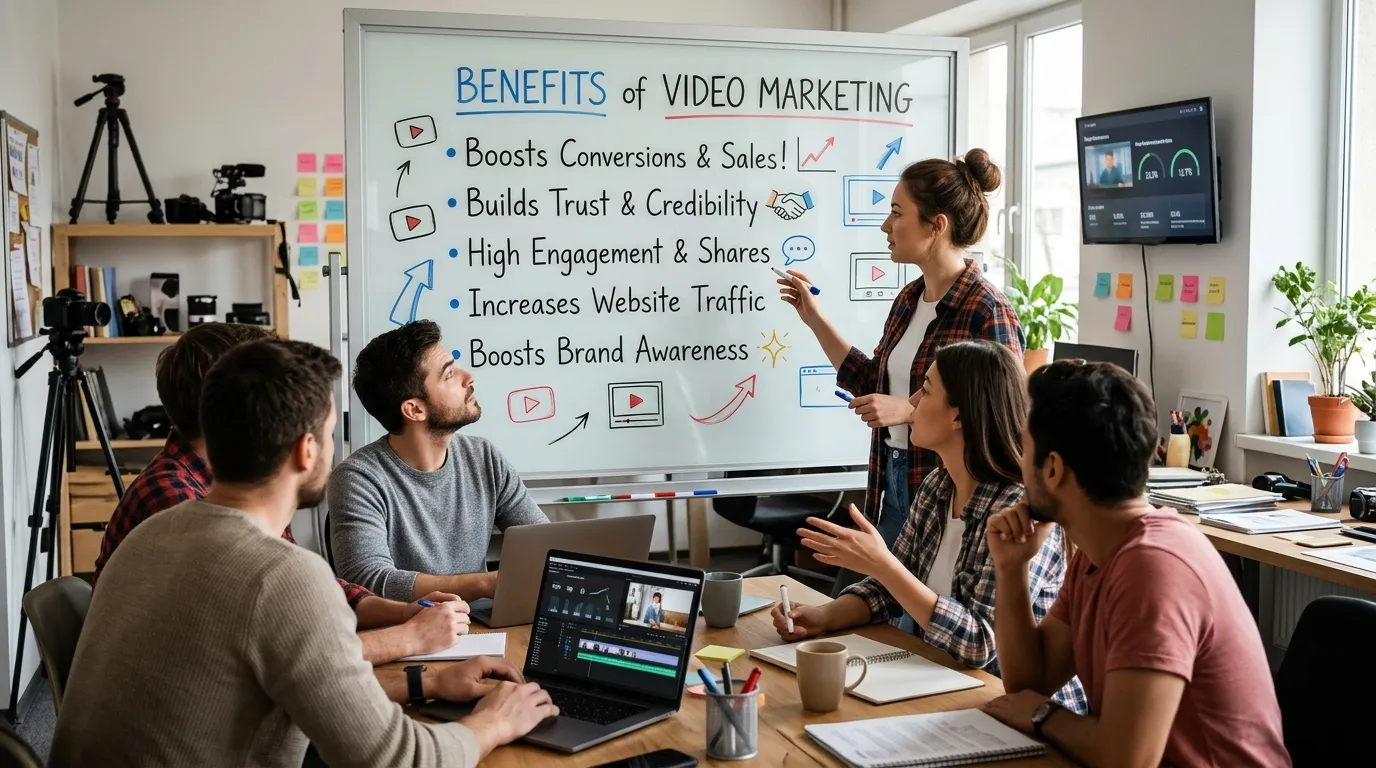 One of the biggest benefits of video marketing is its ability to communicate information quickly. Viewers can understand a product, service, or process through visuals, demonstrations, narration, and on-screen text. This combination can make complicated information easier to understand than lengthy written explanations alone.
Another major advantage is increased audience engagement. Interesting visuals and relatable stories can encourage people to watch, comment, share, and interact with content. When audiences repeatedly encounter useful videos from a brand, they may become more familiar with its products and values.
Video content can also support customer trust. Demonstrations show how a product works, testimonials provide customer perspectives, and behind-the-scenes footage can make a business appear more transparent. Although videos cannot guarantee trust or sales, authentic and accurate presentations can help customers make better-informed decisions.
Search visibility is another potential benefit. Videos published on platforms such as YouTube can attract viewers through search results and recommendations. Embedded videos may also improve the usefulness of website pages when they directly address visitors’ questions. The actual impact depends on content quality, search intent, page performance, and audience behavior.
Businesses can also use video marketing to support lead generation and conversions. A video explaining a service can direct interested viewers to a landing page, while a product demonstration can help shoppers compare available options. These activities can support broader business growth strategies by strengthening brand awareness, customer education, and the sales process.
Video Marketing for Businesses
Video marketing for businesses provides opportunities to communicate value, differentiate products, and develop stronger customer relationships. However, the best approach depends on the company’s industry, resources, audience, and business objectives.
Small businesses can begin with affordable videos that answer frequently asked questions, introduce team members, explain services, or share customer experiences. These videos help potential customers understand what makes the business useful without requiring a large production budget. Maintaining consistent quality and delivering clear messages are generally more important than investing in elaborate visual effects.
Larger organizations may develop more comprehensive campaigns, including brand films, employee training videos, product launches, case studies, and customer education programs. Different departments can use video to support marketing, sales, recruitment, and customer service.
Businesses should also consider how video fits into their advertising mix. Online video can reach specific audience segments through digital platforms, while television advertising can provide broad exposure in suitable markets. Companies evaluating traditional channels may find it helpful to understand the benefits of TV advertising, particularly when comparing audience reach, campaign objectives, and advertising costs.
For brands seeking nationwide visibility, national TV advertising offers another perspective on large-scale promotion. The right channel depends on the target audience and available budget. A combined approach may use television to build awareness and online videos to provide product details, capture leads, and encourage further engagement.
Digital Video Marketing
Digital video marketing involves distributing video content through online channels, including websites, search engines, streaming platforms, social networks, and email campaigns. Its major advantage is the ability to reach audiences across different stages of the customer journey while measuring various engagement and conversion signals.
Businesses can publish videos on their websites to explain services, introduce products, or answer customer questions. YouTube can support searchable educational content, while short-form platforms help brands reach viewers who prefer quick, visually engaging information. Email newsletters can also include video previews or links to relevant content.
An effective digital approach requires consistency across channels. The message, visual identity, and call to action should reinforce the same brand promise, even when video length and presentation differ. Repurposing a longer video into short clips can help businesses distribute content efficiently without creating every asset from scratch.
Digital distribution also supports personalized communication. For example, a company could send a product tutorial to customers who recently purchased an item or share an introductory video with new subscribers. These experiences become more useful when combined with audience segmentation and relevant follow-up messages.
Entrepreneurs developing new revenue streams can also explore profitable online business ideas to understand how digital services, online stores, and content-based businesses operate. Video can support many of these models by explaining offers, building credibility, and helping prospective customers understand the value of a product or service.
Social Media Video Marketing
Social media video marketing helps businesses reach audiences where they already spend time watching, sharing, and discussing content. Platforms such as Instagram, TikTok, Facebook, LinkedIn, and YouTube offer different opportunities depending on the audience and type of content.
Short videos are useful for introducing products, sharing practical tips, answering common questions, and presenting relatable moments. Longer videos may be better suited to detailed tutorials, interviews, webinars, and expert discussions. Selecting the right format requires understanding what the intended audience expects from each platform.
The opening seconds are particularly important because viewers can quickly scroll past content that does not interest them. Start with a clear question, an engaging demonstration, or a relevant problem. Avoid lengthy introductions, and make sure the main message remains understandable even when viewers watch without sound.
Authenticity can also make a difference. Real demonstrations, employee stories, customer experiences, and useful advice often feel more relatable than overly polished promotional messages. However, businesses should obtain permission before featuring customers and avoid making unsupported product claims.
Engagement should be treated as a two-way conversation. Responding to comments, addressing recurring questions, and using audience feedback to develop new content can help strengthen relationships. With consistent publishing and careful analysis, social media videos can support awareness, community building, and qualified traffic to a business website.
Video Marketing Trends
 The video marketing landscape continues to evolve as viewing habits, platform features, and production technology change. Businesses should monitor emerging trends while prioritizing the formats that genuinely serve their audiences rather than following every popular development.
Short-form video remains an important format for quick education, product discovery, and entertainment. Concise videos can communicate a single idea effectively, especially when the opening captures attention and the message is easy to understand. Nevertheless, short videos are not appropriate for every topic, and complex subjects may require longer explanations.
Personalized and interactive video experiences are also gaining attention. Brands can use audience insights to develop content for specific customer groups, while interactive features may encourage viewers to explore products, answer questions, or take the next step. The effectiveness of these approaches depends on relevance, usability, and privacy-conscious data practices.
Artificial intelligence is changing how marketers plan, edit, caption, and repurpose content. AI-assisted tools can speed up transcription, generate initial outlines, and simplify repetitive editing tasks. Human review remains important for accuracy, originality, brand consistency, and appropriate representation.
Authenticity is another lasting consideration. Audiences may respond positively to content that feels honest, practical, and transparent. Rather than adopting every new trend, businesses should test promising formats, review audience responses, and invest in approaches that align with their goals.
Video Marketing Campaigns
Video marketing campaigns organize multiple video assets around a specific objective, audience, message, and timeframe. A campaign may promote a new product, introduce a service, increase event registrations, or build awareness of a company.
Every campaign should begin with a measurable goal. For example, a business might aim to increase qualified website visits, generate product inquiries, or improve the number of people who complete a purchase. Clear objectives help marketers select suitable distribution channels and determine which results matter most.
The campaign message should remain consistent across videos, advertisements, landing pages, and follow-up communications. However, each asset can serve a different purpose. An introductory video may create awareness, a detailed demonstration may help viewers evaluate the offer, and a testimonial may address concerns during the decision-making process.
Budget planning should include production, editing, paid distribution, and measurement. Businesses should also prepare different versions of campaign videos when necessary, including vertical formats, shorter edits, captions, and platform-specific calls to action.
After launch, monitor performance regularly. If viewers leave early, review the opening and pacing. If engagement is strong but conversions are weak, examine the landing page, offer, and call to action. These insights allow marketers to refine video marketing campaigns instead of relying on assumptions.
Video SEO Optimization
Video SEO optimization helps people discover video content through relevant search results and platform recommendations. Effective optimization starts with understanding what the target audience wants to learn and how they search for that information.
Titles should accurately describe the content and include relevant search terms where appropriate. Descriptions should explain what viewers will learn, provide useful context, and direct interested audiences to relevant resources. Tags may offer additional context on some platforms, but they should not replace a strong title, useful content, and a clear description.
Transcripts and captions can improve accessibility and help viewers follow the message. They also provide text that can be repurposed into articles, summaries, or supporting website content. Businesses should ensure captions are accurate, especially when videos contain technical terms or product names.
Website owners can embed relevant videos in pages that answer the same questions. Descriptive page titles, useful written content, appropriate video structured data, and a fast-loading page can support discoverability. A video sitemap may also help search engines find video content on eligible websites.
Performance should be assessed using indicators such as search impressions, click-through rate, watch time, audience retention, and conversions. Video SEO optimization is not simply about repeating keywords; it is about helping the right audience find content that satisfies their needs.
Video Marketing Tools
 Video marketing tools help businesses plan, produce, edit, distribute, and measure content more efficiently. Choosing the right tools depends on the team’s skills, budget, production volume, and required features. For editing, applications such as CapCut, Canva, and Adobe Premiere Pro offer different levels of functionality. Simpler editors can be suitable for short social media clips and basic promotional content, while advanced software supports more detailed editing and professional production workflows.
Recording equipment can remain relatively simple. A modern smartphone, a reliable microphone, a tripod, and suitable lighting may be sufficient for many introductory projects. Good audio and a clear message often matter more than complex equipment. Planning tools, shared calendars, and project management platforms can help teams coordinate scripts, approvals, deadlines, and publishing schedules. Analytics tools available through social platforms and website measurement services can show how viewers discover content, interact with videos, and move toward business goals.
Businesses should evaluate tools according to their actual needs instead of paying for unnecessary features. Start with a manageable workflow, identify the tasks that consume the most time, and introduce additional software when it solves a specific problem. With the right combination of tools and a clear plan, video marketing can become a practical and scalable part of a company’s overall marketing strategy.
Conclusion
Video is a versatile communication format that can help businesses educate customers, strengthen brand recognition, and support measurable marketing objectives. Success depends on understanding the audience, producing relevant content, choosing appropriate platforms, and reviewing performance regularly. By combining thoughtful planning with effective storytelling, accessible production tools, and search optimization, businesses can develop a sustainable video strategy that supports their long-term growth.
FAQ
1. What is video marketing?
Video marketing is the use of video content to promote a brand, explain products or services, educate audiences, and support business objectives. It includes product demonstrations, tutorials, customer testimonials, social media clips, and promotional campaigns.
2. Why is video marketing important for businesses?
Video can communicate information clearly, demonstrate product features, and help customers understand a brand’s value. When content matches audience needs, it can support engagement, brand awareness, lead generation, and sales.
3. How do I create an effective video marketing strategy?
Begin by defining your goals, researching your audience, selecting appropriate platforms, and planning relevant content. Establish a realistic budget, publish consistently, and use performance data to improve future videos.
4. What types of videos work best for marketing?
The best format depends on your objectives. Explainer videos are useful for education, product demonstrations help shoppers evaluate products, testimonials offer customer perspectives, and short social videos can introduce ideas quickly.
5. How much does video marketing cost?
Costs vary according to equipment, production complexity, editing requirements, talent, and advertising spend. Businesses can start with smartphone videos and gradually increase their investment as their needs and results become clearer.
6. Which platforms are best for video marketing?
YouTube is useful for searchable tutorials and longer videos, while TikTok and Instagram support short-form content. Facebook, LinkedIn, and business websites can also be effective depending on the audience and campaign objectives.
7. How can video marketing improve SEO?
Videos can attract relevant search traffic, answer customer questions, and support useful website content. Accurate titles, descriptions, captions, relevant page content, and appropriate structured data can improve discoverability.
8. How often should a business publish marketing videos?
There is no universal publishing frequency. Choose a schedule that allows you to maintain quality and consistency. Publishing useful videos regularly is generally more sustainable than producing large amounts of content without a clear purpose.
9. How can I measure video marketing success?
Track metrics that match your objectives, including views, watch time, audience retention, click-through rate, website visits, qualified leads, and conversions. Compare results over time to identify which content contributes most effectively to your goals.
10. Is video marketing suitable for small businesses?
Yes. Small businesses can create helpful videos using affordable equipment and accessible editing software. Frequently asked questions, service explanations, product demonstrations, and customer stories are practical starting points for building an audience and communicating value.



Leave a Reply