

Paid advertising is an effective digital marketing approach that helps businesses reach potential customers, increase website traffic, generate qualified leads, and improve sales. By using platforms such as Google Ads and social media networks, businesses can target specific audiences, control advertising budgets, and measure campaign performance. This guide explores essential advertising strategies, pay-per-click campaigns, audience targeting, campaign management, and return on investment to help businesses develop more effective marketing campaigns.
Introduction to Paid Advertising
Paid advertising is a digital marketing method in which businesses pay to display promotional content to selected audiences through search engines, social media platforms, websites, and other online channels. Unlike organic marketing, which often requires time to build visibility and authority, this approach can help businesses attract attention and generate traffic more quickly.
Companies of different sizes use paid advertising to introduce new products, promote services, increase brand awareness, and reach customers who are actively searching for solutions. However, achieving positive results requires more than simply spending money on advertisements. Businesses need clear objectives, relevant messaging, accurate audience targeting, and continuous performance monitoring.
A successful campaign also works best when it supports a broader marketing plan. Businesses can strengthen their results by combining advertising with a well-planned social media marketing strategy that maintains consistent messaging across platforms and helps build long-term relationships with customers.
Paid Advertising Strategies
Effective paid advertising strategies begin with understanding the target audience and defining measurable business objectives. A company might want to increase online sales, generate leads, attract local customers, or improve awareness of a new product. Each objective requires a different approach to campaign planning, audience selection, and budget allocation.
Businesses should research customer interests, purchasing behavior, search habits, and common problems before creating advertisements. This information helps marketers develop messages that address genuine customer needs instead of relying on generic promotional claims. Compelling headlines, clear benefits, and relevant landing pages can encourage users to take the desired action.
Testing different headlines, images, offers, and calls to action can reveal which combinations perform best. Rather than investing the entire budget in one campaign, businesses should begin with a manageable amount, evaluate the results, and increase spending when the data supports further investment.
Pay-Per-Click (PPC) Advertising
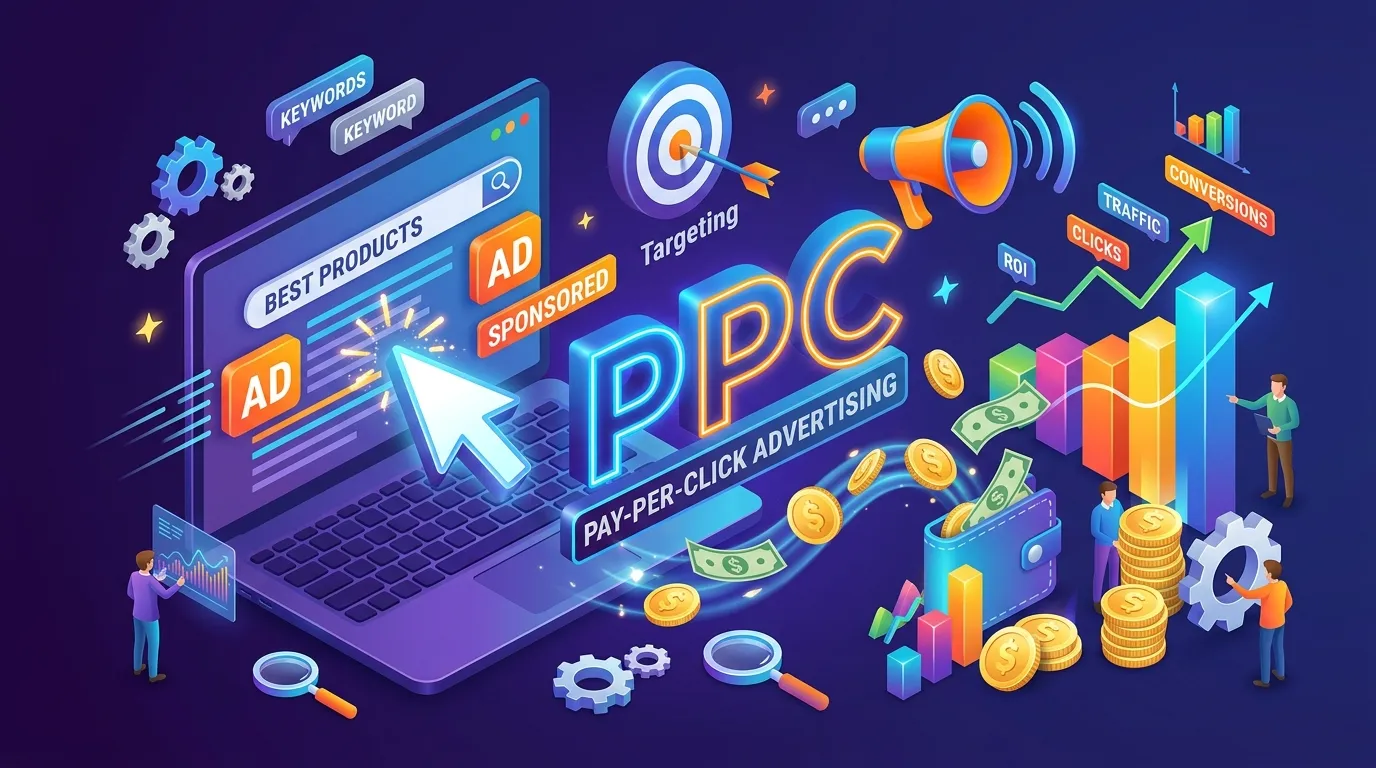 Pay-per-click advertising is a model in which advertisers generally pay when someone clicks on their advertisement. It is widely used on search engines and other digital platforms because it connects advertising costs with measurable user engagement.
PPC campaigns can help businesses appear in front of people searching for specific products, services, or information. For example, a company selling office furniture can target searches related to buying office desks, ergonomic chairs, or workplace storage solutions. Choosing relevant keywords helps attract users who are more likely to become customers.
Successful PPC management involves selecting appropriate keywords, writing persuasive ad copy, setting competitive bids, and improving landing page quality. Marketers should also review negative keywords to reduce irrelevant clicks. When these elements work together, businesses can use paid advertising to generate qualified traffic while maintaining better control over marketing expenditure.
Paid Search Marketing
Paid search marketing allows businesses to display sponsored listings when users search for relevant terms on search engines. These advertisements are particularly useful because they can reach people who already demonstrate an interest in a specific product, service, or solution.
Keyword research is an important part of this process. Marketers need to understand the difference between informational searches, commercial investigation, and purchase-focused queries. Someone searching for general marketing advice may not be ready to hire an agency, while a person searching for a digital marketing service may have a stronger purchasing intention.
Businesses should organize keywords into closely related ad groups and create advertisements that match the user’s search intent. Their landing pages should deliver the information promised in the advertisement and make the next step clear. Effective paid search marketing can complement search engine optimization by helping businesses gain visibility while they continue developing their organic search presence.
Social Media Paid Advertising
Social media advertising enables businesses to reach audiences based on factors such as interests, demographics, online behavior, and engagement with relevant content. Platforms such as Facebook, Instagram, LinkedIn, and TikTok offer different advertising opportunities depending on the audience and campaign objectives.
For example, an online fashion store may use visual advertisements to showcase new collections, while a business-to-business company may promote professional services to decision-makers. The most effective platform depends on where potential customers spend their time and how they prefer to discover products or services.
Creative quality is especially important in social media campaigns. Attractive visuals, engaging short videos, concise messaging, and relevant offers can encourage users to stop scrolling and learn more. Businesses should also coordinate paid campaigns with organic content so that customers receive a consistent brand experience.
Companies seeking broader online growth can combine social media promotions with practical guidance on marketing an online store, ensuring that advertising traffic leads to a shopping experience designed to convert visitors into buyers.
Google Ads Campaign Management
Google Ads campaign management involves planning, launching, monitoring, and improving advertisements across Google’s available advertising networks. Businesses can use search, display, shopping, video, and other campaign formats depending on their goals, account eligibility, and current platform features.
A well-managed campaign begins with selecting an appropriate objective, identifying relevant search terms, creating useful advertisements, and configuring conversion tracking. Conversion tracking helps marketers understand whether clicks lead to meaningful actions, such as purchases, contact form submissions, phone calls, or qualified leads.
Campaign performance should be reviewed regularly to identify wasted spending and opportunities for improvement. Marketers can adjust bids, refine targeting, test new advertisements, and improve landing pages based on actual results. Automated bidding can also help optimize campaigns when conversion data is reliable and the selected strategy matches the business objective.
Consistent monitoring is essential because audience behavior, competition, and advertising costs can change over time. Businesses should make decisions based on meaningful performance trends rather than reacting to every short-term fluctuation.
Paid Digital Marketing
 Paid digital marketing includes several promotional methods, such as search advertising, social media campaigns, display advertisements, sponsored content, and online video promotions. Using multiple channels can help businesses reach customers at different stages of the buying journey.
A potential customer might first discover a brand through a social media advertisement, later search for the business on Google, and eventually make a purchase after seeing a relevant remarketing message. Coordinating these touchpoints can create a more consistent customer journey and improve the effectiveness of marketing activities.
However, businesses should avoid spreading their budgets across too many platforms without a clear strategy. Starting with one or two suitable channels allows marketers to collect useful performance data before expanding into additional formats.
Companies that need specialist support can explore how a digital marketing company approaches campaign planning, audience research, and performance optimization. Choosing the right support depends on business objectives, available resources, and the expertise needed to manage campaigns effectively.
Online Advertising Techniques
Online advertising techniques continue to evolve as platforms introduce new formats, targeting capabilities, and measurement tools. Common approaches include search advertisements, display banners, video promotions, sponsored social posts, remarketing, and shopping advertisements.
Each technique serves a different purpose. Search campaigns can capture existing demand, display advertisements can increase awareness, and video promotions can communicate product benefits through demonstrations or storytelling. Remarketing can reconnect with eligible previous visitors, subject to platform policies and applicable privacy requirements.
Businesses should choose advertising formats based on their goals instead of assuming that every available technique will deliver the same results. For example, a complex product may benefit from video demonstrations, while a straightforward local service might perform better through search advertising.
Creative testing, relevant offers, and fast-loading landing pages can improve campaign effectiveness. Businesses can also learn from other promotional channels, including the benefits of TV advertising, when considering how broad brand awareness and digital campaigns can support one another.
Paid Advertising Campaigns
Paid advertising campaigns require structured planning to connect business objectives with practical marketing activities. Before launching a campaign, marketers should determine the target audience, campaign objective, budget, duration, advertising format, and key performance indicators.
Campaign structure also matters. Separating different products, audiences, or objectives into appropriate campaigns makes performance easier to evaluate. Businesses can then identify which segments generate the strongest results and direct resources toward the most effective opportunities.
Landing page quality is equally important. An advertisement may attract many clicks, but those visitors are less likely to convert if the page is confusing, slow, or unrelated to the original message. A clear headline, useful product information, visible contact details, and a straightforward call to action can help improve the customer experience.
Businesses should review campaign data throughout the advertising period and make informed adjustments. Documenting results from previous campaigns can also help marketers develop more accurate forecasts and avoid repeating unsuccessful approaches.
Entrepreneurs planning new ventures may also find inspiration in profitable online business ideas, particularly when evaluating which business models could benefit from targeted online promotion.
Digital Ad Targeting
Digital ad targeting helps businesses show advertisements to audiences who are more likely to find their products or services relevant. Depending on the platform, targeting options may include location, demographics, interests, search intent, contextual relevance, and interactions with a business’s website or content.
Accurate targeting can improve advertising efficiency by reducing exposure to audiences who are unlikely to take action. A local cleaning service, for example, may prioritize customers within its service area, while an online retailer may reach customers across multiple regions where it can deliver products.
However, targeting should balance relevance with sufficient audience reach. Overly narrow settings can restrict campaign delivery and make it difficult to gather enough data for optimization. Businesses should test audience segments and evaluate their performance before making substantial changes.
Privacy must remain a priority. Advertisers should follow applicable data protection laws, platform rules, consent requirements, and restrictions on sensitive personal information. Transparent data practices help maintain customer trust while supporting responsible campaign management.
Paid Advertising ROI
 Return on investment measures whether the financial benefits of advertising justify the costs. Understanding paid advertising ROI helps businesses determine which campaigns contribute to profitability and which require improvement.
A useful starting point is to compare the profit attributable to advertising with the total campaign cost. Revenue alone does not represent profit because businesses also incur product, fulfillment, labor, and other operating expenses. Marketers should therefore distinguish between revenue-based return on ad spend and profit-based return on investment.
For example, a campaign generating substantial sales may still be unprofitable if acquisition costs and product expenses are too high. Conversely, a smaller campaign may produce valuable customers who make repeat purchases over time. Tracking conversion rates, customer acquisition costs, average order values, and customer lifetime value provides a more complete view of performance.
Accurate measurement also depends on reliable conversion tracking and realistic attribution. Businesses should account for the fact that customers may interact with several marketing channels before purchasing. By evaluating results consistently and improving underperforming campaigns, companies can make better decisions about future advertising budgets.
Conclusion
Paid advertising can help businesses improve visibility, attract relevant visitors, generate leads, and increase sales when campaigns are planned around clear objectives. Success depends on selecting appropriate platforms, creating relevant advertisements, targeting suitable audiences, and measuring meaningful outcomes. Businesses should treat advertising as an ongoing process of testing, learning, and optimization rather than a one-time activity. With careful budgeting, useful landing pages, reliable tracking, and regular performance reviews, organizations can develop campaigns that support sustainable business growth.
FAQ
1. What is paid advertising?
Paid advertising is a marketing method in which businesses pay to promote products, services, or brands through channels such as search engines, social media platforms, websites, and video networks. It helps businesses reach selected audiences and measure campaign performance.
2. What are the main types of paid advertising?
Common types include pay-per-click search ads, social media advertisements, display banners, video promotions, shopping ads, and remarketing campaigns. The most suitable option depends on the target audience, budget, and marketing objective.
3. How does pay-per-click advertising work?
In a PPC campaign, advertisers typically pay when users click their advertisements. Costs depend on factors such as competition, bidding strategies, relevance, and platform-specific auction systems.
4. Is paid advertising suitable for small businesses?
Yes. Small businesses can start with a manageable budget, target relevant audiences, and monitor results before increasing spending. Choosing a focused campaign objective can help make limited resources more effective.
5. How much does paid advertising cost?
Costs vary by platform, industry, audience, competition, and campaign objective. Businesses can establish daily or campaign budgets and adjust spending according to performance and financial goals.
6. What is the difference between paid advertising and organic marketing?
Paid advertising involves paying for promotional placements, while organic marketing focuses on earning visibility through activities such as search engine optimization, useful content, and unpaid social media engagement. Both methods can complement each other.
7. How can I improve my advertising conversion rate?
Improve audience relevance, write clearer advertisements, strengthen landing pages, simplify forms, and test calls to action. Reliable conversion tracking helps identify which changes produce better results.
8. Which platform is best for paid advertising?
Google Ads can be useful for reaching people actively searching for products or services, while social media platforms can help businesses reach audiences through interests, demographics, and engaging content. The best choice depends on customer behavior and campaign goals.
9. How do I measure advertising ROI?
Compare the profit attributable to a campaign with its total cost, using consistent measurement rules. Also monitor conversion rates, customer acquisition costs, revenue, and customer lifetime value to understand the broader business impact.
10. How long does it take to see results from paid advertising?
Some campaigns can generate clicks and leads shortly after launch, but profitable performance may take longer to establish. Results depend on competition, budget, conversion tracking, audience quality, and ongoing optimization.



Leave a Reply