

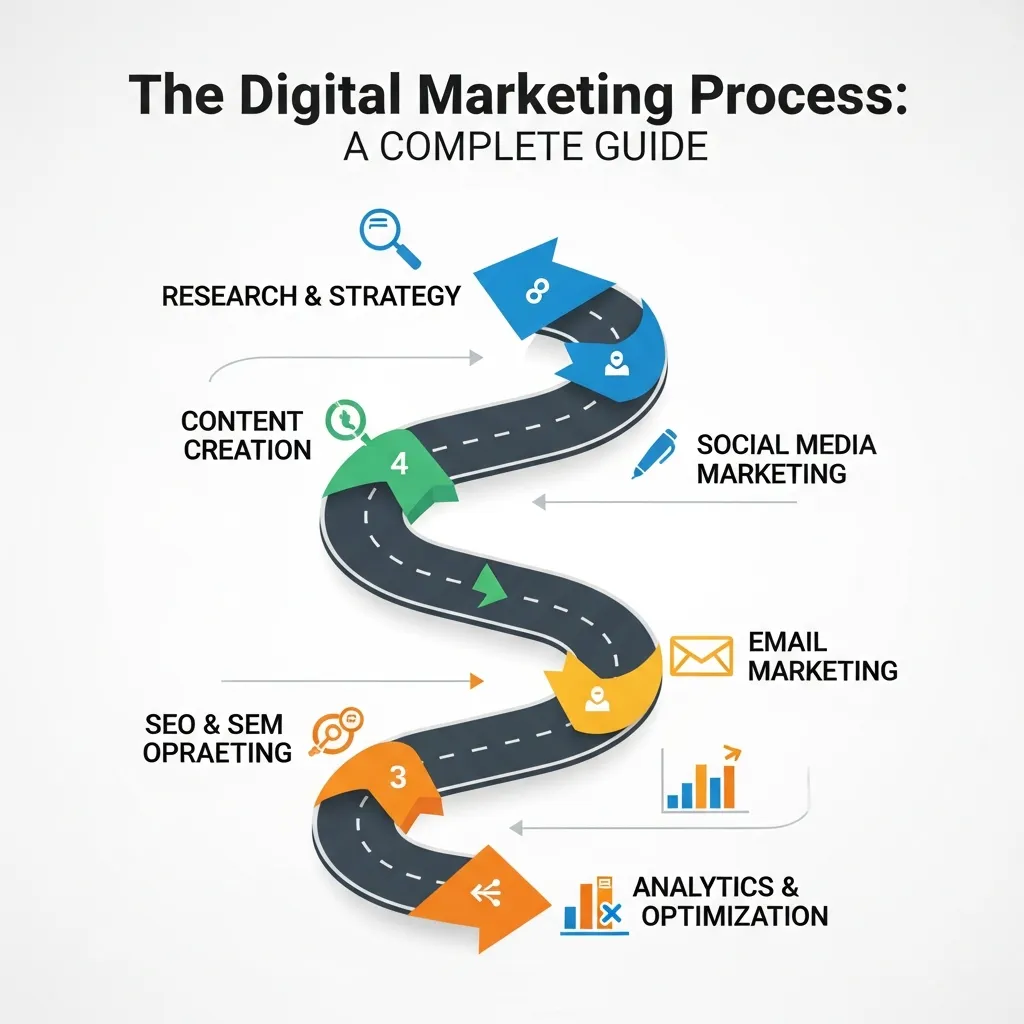
The digital marketing process is a structured framework that guides businesses from research and strategy through execution, optimization, and reporting. A well-defined digital marketing agency process helps brands reach the right audience, maximize ROI, and stay competitive across key digital marketing channels like SEO, social media, PPC, and email.
Digital marketing is no longer optional. With global digital ad spend surpassing $740 billion in 2023 (Statista), businesses that lack a structured digital marketing process are leaving growth—and revenue—on the table.
But here’s what separates high-performing brands from the rest: it’s not just about being online. It’s about having a repeatable, data-driven system that guides every decision, from identifying your audience to optimizing your campaigns. Whether you’re running an in-house team or managing a full-scale digital marketing agency process, the framework you follow determines your results.
This guide breaks down every stage of the digital marketing process, covering the types of digital marketing, key digital marketing channels, the funnel in digital marketing, consumer behavior in digital marketing, and the emerging role of AI and virtual influencers in digital marketing. By the end, you’ll have a clear roadmap to build or refine your own strategy.
What Is the Digital Marketing Process—and Why Does Structure Matter?
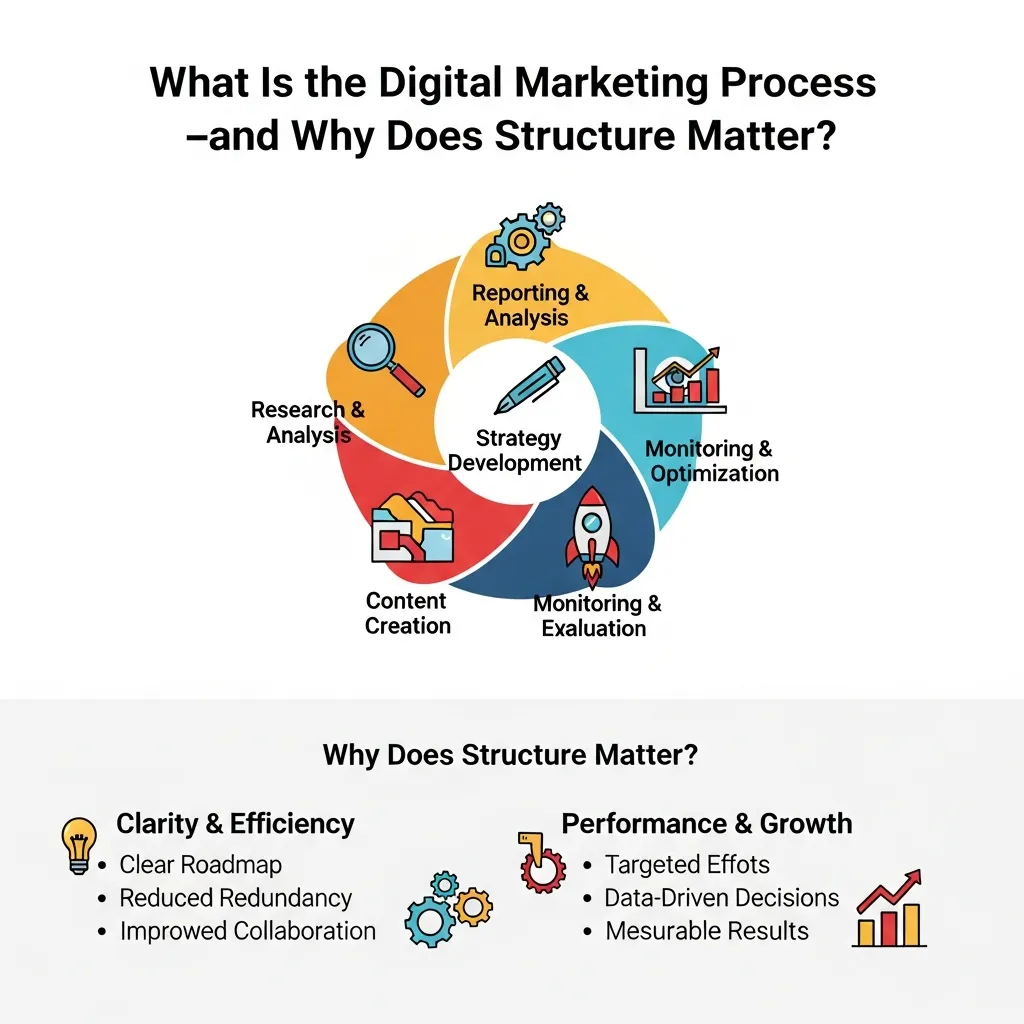
Digital marketing is the promotion of products, services, or brands through online channels and digital technologies. It encompasses everything from search engines and social media to email campaigns and influencer partnerships.
A structured digital marketing process matters because it transforms guesswork into a scalable system. Without it, teams waste budget on tactics that don’t align with business goals, miss optimization opportunities, and struggle to demonstrate ROI. According to HubSpot’s State of Marketing Report (2023), marketers with a documented strategy are 313% more likely to report success than those without one.
For agencies specifically, a formalized digital marketing agency process ensures consistency across clients, faster onboarding, and measurable deliverables. Structure is what converts creative effort into predictable business outcomes.
The 5 Core Stages of the Digital Marketing Process
Stage 1: Research and Analysis
Every effective digital marketing process starts with research. This means understanding your target audience (demographics, psychographics, online behavior), analyzing competitor strategies, and assessing market conditions.
Key activities include customer persona development, keyword research, SWOT analysis, and competitive benchmarking. Tools like Google Analytics, SEMrush, and SparkToro help uncover where your audience spends time and what problems they’re trying to solve.
Stage 2: Strategy Development
Research informs strategy. At this stage, you define your goals (brand awareness, lead generation, revenue), establish KPIs, select channels, and map out campaign timelines and budgets.
A strong strategy answers three questions: Who are we targeting? What message will resonate? Which digital marketing channels will deliver the best return? SMART goals—Specific, Measurable, Achievable, Relevant, and Time-bound—form the backbone of any solid digital marketing strategy.
Stage 3: Implementation and Execution
This is where plans become action. Content gets created, ads go live, email sequences launch, and social media campaigns run. Execution requires close coordination between creatives, copywriters, developers, and media buyers.
Consistency is critical here. Brand messaging, visual identity, and tone must remain aligned across all digital marketing channels to build recognition and trust.
Stage 4: Monitoring and Optimization
No campaign runs perfectly from day one. Continuous monitoring—through platforms like Google Analytics 4, Meta Ads Manager, and HubSpot—reveals what’s working and what’s wasting budget.
A/B testing is essential during this phase. Test ad copy, landing page layouts, email subject lines, and CTAs to progressively improve performance. The digital marketing process is iterative by nature; optimization never stops.
Stage 5: Reporting and Refinement
At regular intervals (weekly, monthly, quarterly), performance data is compiled into reports that measure results against KPIs. These reports inform future campaigns, budget reallocations, and strategic pivots.
For agencies, reporting is also a trust-building tool. Transparent, insight-rich reports demonstrate value and strengthen client relationships.
Types of Digital Marketing and Key Digital Marketing Channels
Understanding the types of digital marketing helps you choose the right channels for your goals.
Search Engine Optimization (SEO): Organic visibility in search engines. SEO drives long-term, compounding traffic and is foundational to most digital marketing strategies. According to BrightEdge (2023), organic search drives 53% of all website traffic.
Content Marketing: Blog posts, guides, videos, podcasts, and infographics that attract, educate, and convert audiences. Content marketing fuels SEO, social media, and email simultaneously.
Social Media Marketing: Building brand presence and community across platforms like Instagram, LinkedIn, TikTok, and Facebook. Each platform serves different audience segments and content formats.
Pay-Per-Click (PPC) Advertising: Paid ads on Google, Meta, LinkedIn, and other platforms. PPC offers fast, targeted reach and is ideal for driving immediate traffic and conversions.
Email Marketing: One of the highest-ROI digital marketing channels available. According to Litmus (2023), email marketing generates an average return of $36 for every $1 spent.
Affiliate Marketing: Partnering with publishers or influencers who earn commissions for driving traffic or sales. Effective for scaling reach without upfront media spend.
Video Marketing: YouTube, short-form video (TikTok, Reels), and live streaming. Video accounts for over 82% of all internet traffic (Cisco, 2022), making it a critical content format.
Choosing the right mix of digital marketing channels depends on your audience, budget, and goals. Small businesses often see the strongest early results from SEO and email, while larger brands may run multi-channel campaigns across all formats simultaneously.
The Funnel in Digital Marketing: Guiding the Customer Journey
The funnel in digital marketing maps the path a prospect takes from first discovering your brand to becoming a loyal customer.
Awareness Stage: The prospect realizes they have a problem or need. Content here includes blog posts, social media ads, videos, and podcast appearances—anything that gets your brand in front of new eyes.
Consideration Stage: The prospect actively researches solutions. Case studies, comparison pages, webinars, and email nurture sequences are effective at this stage.
Conversion Stage: The prospect decides to buy. Strong CTAs, optimized landing pages, retargeting ads, and live chat support reduce friction and drive action.
Retention and Advocacy Stage: Post-purchase, the focus shifts to customer satisfaction, loyalty programs, and referral incentives. Happy customers become brand advocates—one of the most cost-effective growth engines available.
A well-structured funnel in digital marketing ensures no stage is neglected and that messaging is tailored to where the prospect is in their decision-making journey.
Consumer Behavior in Digital Marketing: What Drives Online Decisions?
Consumer behavior in digital marketing refers to how individuals research, evaluate, and purchase products or services online. Understanding this behavior is what separates reactive marketing from proactive strategy.
Modern digital consumers are research-heavy. According to Google’s Zero Moment of Truth research, consumers interact with an average of 10.4 pieces of content before making a purchase decision. They compare reviews, watch demos, ask peers on social media, and consult AI-generated answers before clicking “buy.”
Several factors influence online purchasing decisions:
- Social proof: Reviews, ratings, and user-generated content build trust
- Personalization: McKinsey (2021) found that 71% of consumers expect personalized interactions, and 76% feel frustrated when they don’t receive them
- Mobile experience: Over 60% of online purchases are now made on mobile devices (Statista, 2023)
- Page speed: A one-second delay in page load time can reduce conversions by up to 7% (Akamai)
Consumer behavior in digital marketing is directly shaped by personalization. The more relevant your content, offers, and timing, the higher your conversion rates. CRM platforms like Salesforce and HubSpot help brands use behavioral data to trigger the right message at the right moment.
Optimizing Your Digital Marketing Process for AI Visibility
AI is reshaping how content gets discovered, evaluated, and served to users. Optimizing your digital marketing process for AI visibility means creating content that surfaces in AI-generated answers (like Google’s AI Overviews and ChatGPT responses), not just traditional search results.
Leveraging AI in Content Creation: Tools like Jasper, Copy.ai, and Surfer SEO accelerate content production without sacrificing quality. AI writing platforms help teams scale output while maintaining brand consistency.
AI for SEO and Keyword Research: Platforms like Semrush and Clearscope use AI to identify semantic keyword clusters, content gaps, and optimization opportunities that manual analysis would miss.
Predictive Analytics and Consumer Insights: AI-powered analytics tools analyze behavioral patterns to predict future consumer actions. This enables proactive campaign adjustments rather than reactive ones.
Virtual Influencers in Digital Marketing: Virtual influencers in digital marketing are computer-generated characters used to promote brands on social media. Examples include Lil Miquela (2.5M+ Instagram followers) and Aitana Lopez. Brands use virtual influencers in digital marketing to control messaging, avoid PR risks, and engage younger, tech-savvy audiences. While still emerging, virtual influencers in digital marketing are growing—the virtual influencer market was valued at $4.6 billion in 2023 (Bloomberg Intelligence).
The Digital Marketing Agency Process: From Onboarding to ROI
A professional digital marketing agency process follows a structured workflow that ensures consistent, measurable results for clients.
Client Onboarding and Discovery: Agencies begin by auditing the client’s existing digital presence, understanding business goals, and establishing clear expectations. A detailed discovery process prevents misalignment later.
Project Management and Workflow: Tools like Asana, Monday.com, and Notion keep campaigns organized, deadlines visible, and teams accountable. A documented digital marketing agency process reduces errors and improves delivery speed.
Collaboration and Communication: Regular check-ins, shared dashboards, and transparent reporting keep clients informed. Agencies that communicate proactively retain clients longer.
Measuring ROI: ROI measurement in the digital marketing agency process involves tracking revenue attributed to campaigns, cost per acquisition (CPA), customer lifetime value (CLV), and channel-specific performance metrics. Clear attribution modeling—using tools like GA4 or Triple Whale—connects marketing spend to business outcomes.
Common Challenges in the Digital Marketing Process (and How to Solve Them)
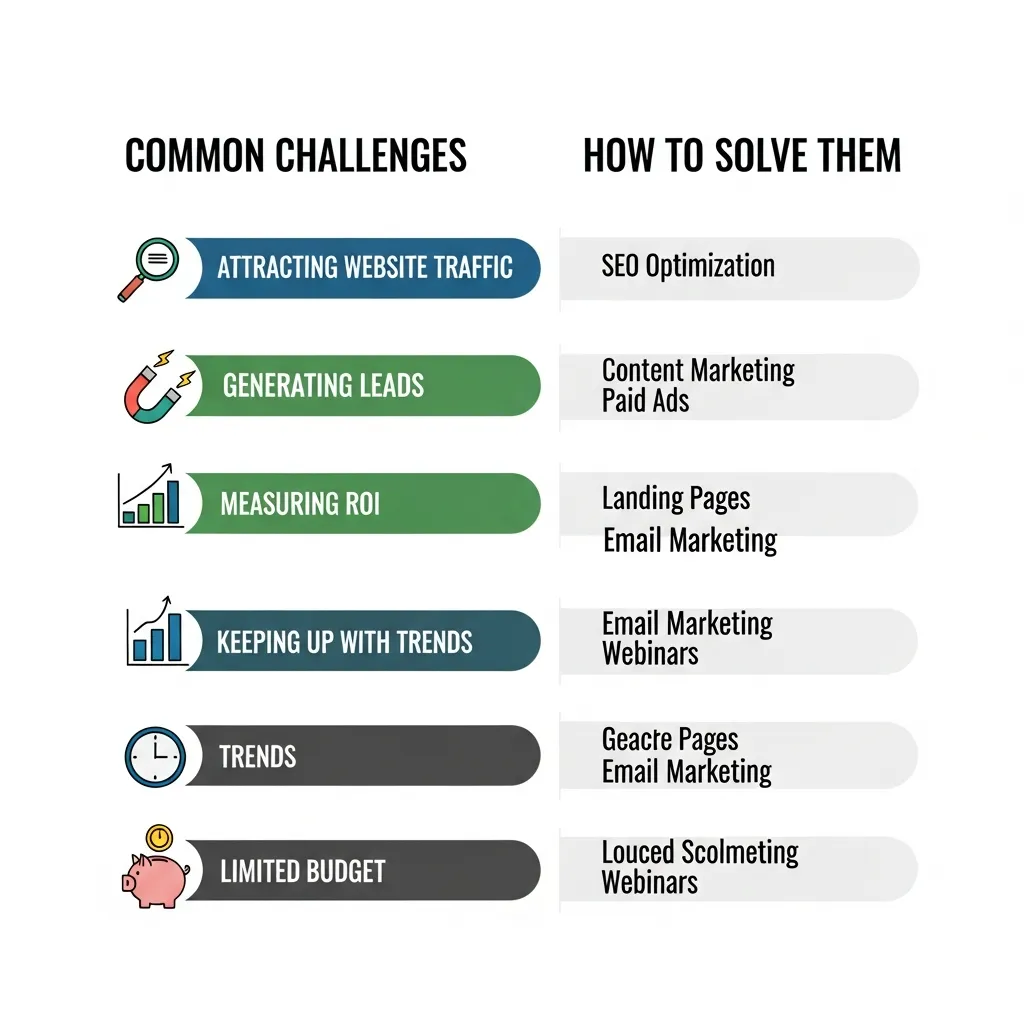
Keeping Up with Algorithm Changes: Search and social platform algorithms change constantly. The solution is diversification—don’t rely on a single channel. Build owned audiences (email lists, community groups) alongside rented ones (social followers).
Data Overload and Analysis Paralysis: More data doesn’t automatically mean better decisions. Define your core KPIs before a campaign launches and use dashboards that surface only the metrics that matter most to your goals.
Budget Allocation and Optimization: Many businesses spread budgets too thin across too many digital marketing channels. Start with one or two proven channels, demonstrate ROI, then reinvest and expand. The digital marketing process should always match budget to business stage.
Conclusion
The digital marketing process is a strategic system, not a collection of disconnected tactics. From research and strategy through execution, optimization, and reporting, every stage builds on the last. Understanding the types of digital marketing, choosing the right digital marketing channels, mastering the funnel in digital marketing, and applying insights from consumer behavior in digital marketing are what drive sustainable growth.
As AI reshapes both how content ranks and how consumers discover brands—including through virtual influencers in digital marketing—the businesses that win will be those with a process adaptive enough to evolve alongside the landscape.
Start by auditing your current approach against the five core stages outlined here. Identify gaps, prioritize the highest-impact digital marketing channels for your audience, and build a repeatable digital marketing agency process that scales with your goals.
FAQs About the Digital Marketing Process
What is the main goal of the digital marketing process?
The main goal of the digital marketing process is to attract, engage, and convert the right audience into customers—then retain them. A structured process ensures marketing efforts align with business objectives and deliver measurable ROI.
How does a digital marketing agency process differ from an in-house process?
A digital marketing agency process typically involves more formalized workflows, dedicated specialists for each channel, and structured reporting systems. In-house teams often have deeper brand knowledge but may lack the breadth of expertise an agency provides. Agencies also manage multiple clients simultaneously, requiring stricter project management systems.
What are the most effective digital marketing channels for small businesses?
For small businesses with limited budgets, SEO and email marketing consistently deliver the highest ROI. Local SEO helps capture nearby customers, while email nurtures relationships at minimal cost. Social media (particularly organic content on Instagram or LinkedIn) complements these channels effectively.
How important is SEO in the overall digital marketing process?
SEO is foundational to the digital marketing process. Organic search drives over 53% of all website traffic (BrightEdge, 2023), making it the single largest traffic source for most websites. Strong SEO compounds over time, reducing reliance on paid advertising.
Can AI improve my digital marketing efforts?
Yes. AI tools improve the digital marketing process by automating content creation, enhancing keyword research, personalizing customer experiences at scale, and surfacing predictive insights from behavioral data. Platforms like Jasper, Surfer SEO, and HubSpot’s AI tools are widely used by marketing teams to increase efficiency and output quality.
What is the role of a funnel in digital marketing?
The funnel in digital marketing maps the customer journey from awareness to advocacy. It helps marketers create stage-appropriate content and messaging that moves prospects closer to conversion. Without a funnel, marketing efforts lack direction and fail to address where customers are in their decision-making process.
How often should I review my digital marketing strategy?
Monthly performance reviews are recommended for campaign-level metrics. Broader strategic reviews—covering channel mix, audience insights, and goal alignment—should happen quarterly. Major strategy overhauls are typically warranted annually or after significant market shifts.
What are relevant keywords in digital marketing?
Relevant keywords are search terms your target audience uses when looking for your products, services, or information. In the digital marketing process, keyword research identifies high-intent, high-volume terms to target across SEO, PPC, and content marketing efforts. Tools like SEMrush and Google Keyword Planner are standard for this research.
How does consumer behavior influence digital marketing strategies?
Consumer behavior in digital marketing directly shapes channel selection, content format, timing, and messaging. For example, if research shows your audience consumes video content on mobile devices during evening hours, your strategy should prioritize short-form video optimized for mobile, distributed at peak engagement times.
What are virtual influencers in digital marketing?
Virtual influencers in digital marketing are AI-generated or computer-animated characters used to promote brands on social media platforms. Unlike human influencers, virtual influencers in digital marketing offer brands complete creative control, no personal PR risks, and consistent availability. Notable examples include Lil Miquela and Aitana Lopez, both of whom have secured real brand partnerships.
What’s the best way to measure the success of a digital marketing campaign?
Success measurement depends on your campaign objectives. Common metrics include Return on Ad Spend (ROAS), Cost Per Acquisition (CPA), organic traffic growth, email open and click rates, conversion rates, and Customer Lifetime Value (CLV). Define KPIs before launch and use attribution tools like Google Analytics 4 to connect results to specific channels and campaigns.
Why is understanding the digital marketing process crucial for businesses today?
Without a structured digital marketing process, businesses waste resources on disconnected tactics that don’t compound into growth. A defined process ensures every marketing activity serves a strategic purpose, can be measured, and feeds insights back into future decisions—creating a cycle of continuous improvement that builds competitive advantage over time.



Leave a Reply