

An effective influencer marketing strategy helps businesses connect with their target audience, build brand awareness, increase engagement, and generate sales through trusted content creators. By choosing the right influencers, creating authentic collaborations, and tracking meaningful results, brands can turn social media partnerships into long-term marketing opportunities. Whether a business works with micro-influencers or established creators, a well-planned approach can improve campaign performance and support sustainable growth.
Influencer Marketing Tips
Influencer marketing has become an important part of digital promotion because consumers often value recommendations from creators they follow. However, successful campaigns require more than paying an influencer to publish a sponsored post. Brands need to understand their audience, choose relevant creators, and develop content that feels natural to the influencer’s community.
One of the most useful influencer marketing tips is to prioritize audience relevance over follower count. An influencer with a smaller, highly engaged audience may generate more meaningful interactions than a creator with millions of followers but limited audience interest in the product. Businesses should review engagement quality, audience demographics, content style, and previous brand partnerships before making a decision.
Clear communication is equally important. Brands should establish campaign objectives, deliverables, deadlines, budgets, and disclosure requirements before collaboration begins. An effective influencer marketing strategy also gives creators enough creative freedom to communicate the product’s benefits in their own voice. This balance helps maintain authenticity while ensuring that campaign content supports business goals.
Influencer Marketing Campaign Strategy
An influencer marketing campaign strategy provides a clear framework for organizing creator partnerships around specific business objectives. These objectives might include increasing brand awareness, promoting a product launch, generating website traffic, collecting leads, or improving sales. Defining the intended outcome before selecting influencers makes campaign decisions more focused.
The next step is identifying the right platforms and content formats. Instagram may work well for visual products and lifestyle content, TikTok can support short-form creative videos, and YouTube may be suitable for detailed product demonstrations or reviews. The best channel depends on where the target audience spends time and how it prefers to discover products.
Brands should also create a consistent message across their marketing channels. For example, influencer content can support a wider social media marketing strategy guide by connecting creator partnerships with organic posts, paid promotions, and community engagement. This integrated approach helps audiences encounter a consistent brand message while discovering products through different channels.
How to Create an Influencer Marketing Strategy
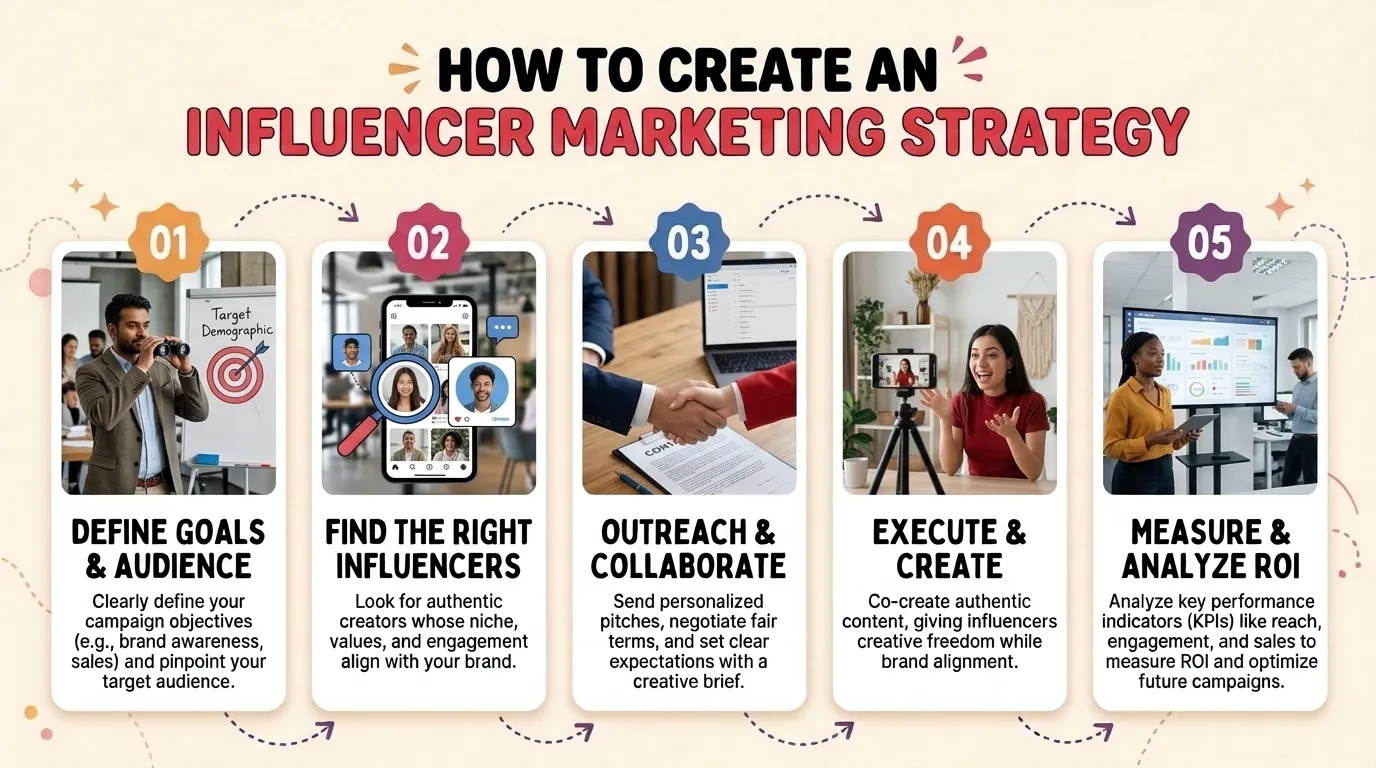 Creating an influencer marketing strategy starts with understanding the business’s marketing objectives and target customers. A company targeting young professionals may choose creators who discuss careers, technology, or lifestyle, while a beauty brand may focus on skincare educators, makeup artists, and beauty reviewers. The goal is to find creators whose audience and content naturally align with the brand.
After defining the audience, establish measurable campaign goals. A brand seeking awareness might track reach, impressions, video views, and brand mentions. A company focused on sales might measure referral traffic, conversion rates, revenue, and cost per acquisition. These measurements help determine whether the campaign is delivering the intended results.
Budget planning is another essential step. Expenses may include creator fees, product samples, content production, advertising amplification, and campaign management. Reviewing a practical guide to marketing budgeting, planning, and optimizing spend can help businesses allocate resources more effectively.
Finally, prepare a campaign brief explaining the product, key messages, deliverables, deadlines, and performance expectations. A strong influencer marketing strategy combines this structure with authentic storytelling, allowing creators to produce content that resonates with their followers.
Influencer Marketing Best Practices
Following influencer marketing best practices helps brands develop trustworthy partnerships and maintain consistent campaign quality. The first priority should be authenticity. Audiences can often recognize promotional content that feels forced, so creators should understand the product and communicate genuine experiences wherever possible.
Transparency is equally important. Sponsored posts, affiliate relationships, gifted products, and other material connections should be disclosed clearly in accordance with applicable advertising rules. Honest communication protects consumer trust and helps brands maintain responsible partnerships.
Another best practice is building relationships rather than treating influencers as one-time advertising placements. Long-term collaborations can help creators develop a deeper understanding of a brand and communicate its value more naturally over time. Brands should also agree on content usage rights, exclusivity terms, approval processes, and payment conditions before campaigns begin.
An effective influencer marketing strategy should leave room for experimentation. Testing different creators, content styles, calls to action, and publishing formats can reveal which combinations resonate most strongly with the target audience.
Social Media Influencer Marketing
Social media influencer marketing allows brands to reach audiences through creators who have established communities on platforms such as Instagram, TikTok, YouTube, and Facebook. These creators produce content that introduces products, explains their benefits, answers audience questions, and encourages people to explore a brand.
Different platforms support different campaign objectives. Short videos can introduce products quickly, while longer tutorials and reviews can provide more detailed information. Stories, live streams, and interactive posts can also encourage audiences to ask questions and engage directly with creators.
Businesses should consider the audience’s behavior on each platform rather than publishing identical content everywhere. A tutorial that performs well on YouTube may need to be shortened for TikTok, while an Instagram collaboration may benefit from a carousel or a sequence of stories.
Influencer partnerships can also complement the benefits of digital marketing by supporting brand visibility, audience engagement, and measurable online traffic. When creators and other digital channels work together, businesses can create a more connected customer journey.
Influencer Collaboration Strategies
Influencer collaboration strategies determine how brands and creators work together to produce useful, engaging content. Common approaches include sponsored posts, product reviews, affiliate partnerships, giveaways, tutorials, brand ambassadorships, and collaborative product launches.
The right collaboration depends on the campaign objective. Product demonstrations can help explain how an item works, while affiliate partnerships can encourage purchases through trackable links or discount codes. Brand ambassadors may be more suitable for companies seeking repeated exposure and long-term relationships.
Successful collaborations begin with shared expectations. Brands should communicate their main objectives and essential product information while allowing influencers to use their own storytelling techniques. Overly restrictive scripts can make content feel unnatural and reduce the connection creators have built with their audiences.
Businesses can also connect influencer collaborations with referral initiatives. For example, a creator may share a unique discount code or referral link that encourages followers to recommend a product to others. This approach can complement a product launch referral strategy by combining creator exposure with customer advocacy.
Influencer Marketing ROI
 Influencer marketing ROI measures the value generated by a campaign relative to its cost. Understanding return on investment helps businesses determine whether their creator partnerships contribute to revenue, customer acquisition, engagement, or other relevant objectives.
A common way to calculate ROI is to subtract the campaign cost from the attributable return, divide the result by the campaign cost, and multiply by 100. For example, if a campaign generates $6,000 in attributable revenue and costs $2,000, its revenue-based ROI is 200%. This calculation assumes the return being measured is revenue; it does not account for product costs or other expenses unless those are included separately.
However, not every influencer campaign generates immediate sales. Brand awareness campaigns may be evaluated through reach, impressions, video views, branded searches, and audience growth. Lead-generation campaigns may focus on qualified leads, sign-ups, and cost per lead.
An effective influencer marketing strategy uses tracking links, unique promotional codes, landing pages, and analytics tools to connect campaign activity with business outcomes. Businesses should also consider attribution limitations because customers may discover a brand through an influencer and purchase later through another channel.
Micro-Influencer Marketing
Micro-influencer marketing involves partnering with creators who have relatively small but focused audiences. Although follower-count definitions vary across industries, these creators often serve specific interests, professional communities, or niche markets.
Micro-influencers can be valuable because their content may feel personal and relevant to their followers. A fitness creator who focuses on home workouts, for example, may be a strong partner for a company selling exercise equipment. A local food creator may be useful for restaurants that want to attract nearby customers.
Working with several micro-influencers can also help businesses test different audience segments without committing their entire budget to one large partnership. Brands can compare content performance, engagement quality, website visits, and conversions to identify promising relationships.
Nevertheless, smaller audiences do not automatically guarantee better results. Businesses should examine genuine engagement, audience relevance, content quality, and suspicious follower activity before selecting creators. A carefully designed influencer marketing strategy evaluates each partnership based on its suitability for the campaign rather than follower count alone.
Influencer Marketing Campaign Planning
Influencer marketing campaign planning brings together objectives, creator selection, budgets, content production, publishing schedules, and performance tracking. Planning these elements in advance helps teams coordinate activities and avoid unnecessary delays.
Begin by establishing a realistic timeline. Allow sufficient time for influencer research, outreach, negotiations, product delivery, content creation, review, and publication. Product launches and seasonal campaigns may require additional preparation because content often needs to align with a specific release date or promotional period.
A detailed campaign brief should explain the target audience, core message, required deliverables, approved product information, deadlines, and measurement criteria. It should also clarify whether the brand can reuse influencer content in advertisements, on its website, or across other marketing channels.
Campaign planning should include contingency arrangements. Creators may experience scheduling conflicts, products may arrive late, or content may require revisions. Preparing alternative publishing dates and maintaining communication with collaborators helps keep campaigns on track.
A well-organized influencer marketing strategy also includes post-campaign evaluation. Reviewing the results, gathering creator feedback, and documenting lessons learned can improve future campaigns and help businesses allocate their budgets more intelligently.
Measuring Influencer Marketing Success
 Measuring influencer marketing success requires selecting metrics that reflect the campaign’s original objectives. Follower growth alone is not enough to determine whether a partnership has created meaningful business value. Instead, brands should examine a combination of exposure, engagement, traffic, conversions, and financial performance.
Reach and impressions help evaluate visibility, while likes, comments, shares, and saves provide insight into audience interaction. Website sessions, sign-ups, and completed purchases can indicate whether influencer content encourages people to take further action. Comparing these metrics across creators helps identify which partnerships are performing most effectively.
Businesses should also establish a measurement period that reflects their sales cycle. Some products generate immediate purchases, while others require several interactions before customers make a decision. Reviewing both short-term campaign outcomes and longer-term trends can provide a more complete picture.
Ultimately, an influencer marketing strategy should evolve through continuous testing and analysis. By identifying successful creators, learning from underperforming campaigns, and refining content based on reliable data, businesses can develop more effective partnerships and improve their marketing results over time.
Conclusion
Developing an effective influencer marketing strategy requires careful planning, authentic collaborations, and continuous performance evaluation. From choosing the right influencers and setting clear campaign goals to managing budgets and measuring ROI, every step contributes to achieving better marketing results. Businesses should focus on building genuine relationships with creators whose audiences align with their brand values and target customers. Whether working with micro-influencers or established content creators, prioritizing authenticity, transparency, and relevant content can strengthen audience trust and engagement. By analyzing campaign performance and adapting to changing social media trends, brands can refine their influencer marketing strategy, increase visibility, attract potential customers, and achieve sustainable long-term growth.
FAQ
1. What is an influencer marketing strategy?
An influencer marketing strategy is a plan for working with social media creators to achieve business goals such as increasing awareness, engaging audiences, generating leads, or driving sales.
2. Why is influencer marketing important for businesses?
It helps businesses introduce products to relevant audiences through creators who have established relationships with their followers. It can also support brand awareness, consumer trust, and online engagement.
3. How do I choose the right influencers?
Evaluate audience relevance, engagement quality, content style, audience demographics, brand alignment, and previous partnerships. Follower count should be only one consideration.
4. What is the difference between micro-influencers and macro-influencers?
Micro-influencers generally have smaller, more specialized audiences, while macro-influencers reach larger audiences. The better choice depends on campaign goals, budget, audience fit, and expected outcomes.
5. How much does influencer marketing cost?
Costs vary according to the creator’s audience, platform, content format, campaign scope, usage rights, and experience. Businesses should also budget for products, management, and paid content promotion.
6. Which social media platform is best for influencer marketing?
The best platform depends on the target audience and campaign objectives. Instagram suits many visual campaigns, TikTok supports short-form discovery, and YouTube can work well for detailed demonstrations and reviews.
7. How can I measure influencer marketing ROI?
Track campaign costs alongside attributable revenue or another defined business return. Use unique links, discount codes, analytics, and conversion tracking to understand performance.
8. Are micro-influencers effective for small businesses?
Yes. Micro-influencers can help small businesses reach focused communities and test partnerships with relatively limited budgets. Their effectiveness depends on audience relevance and genuine engagement.
9. How long should an influencer marketing campaign run?
Campaign length depends on the objective, content format, and sales cycle. A product announcement may need a short, concentrated campaign, while brand awareness and ambassador partnerships may benefit from ongoing collaboration.
10. What are the common mistakes in influencer marketing?
Common mistakes include choosing creators solely by follower count, setting unclear objectives, restricting creative freedom, overlooking disclosure requirements, and failing to track results. Careful planning and ongoing measurement help prevent these problems.



Leave a Reply