

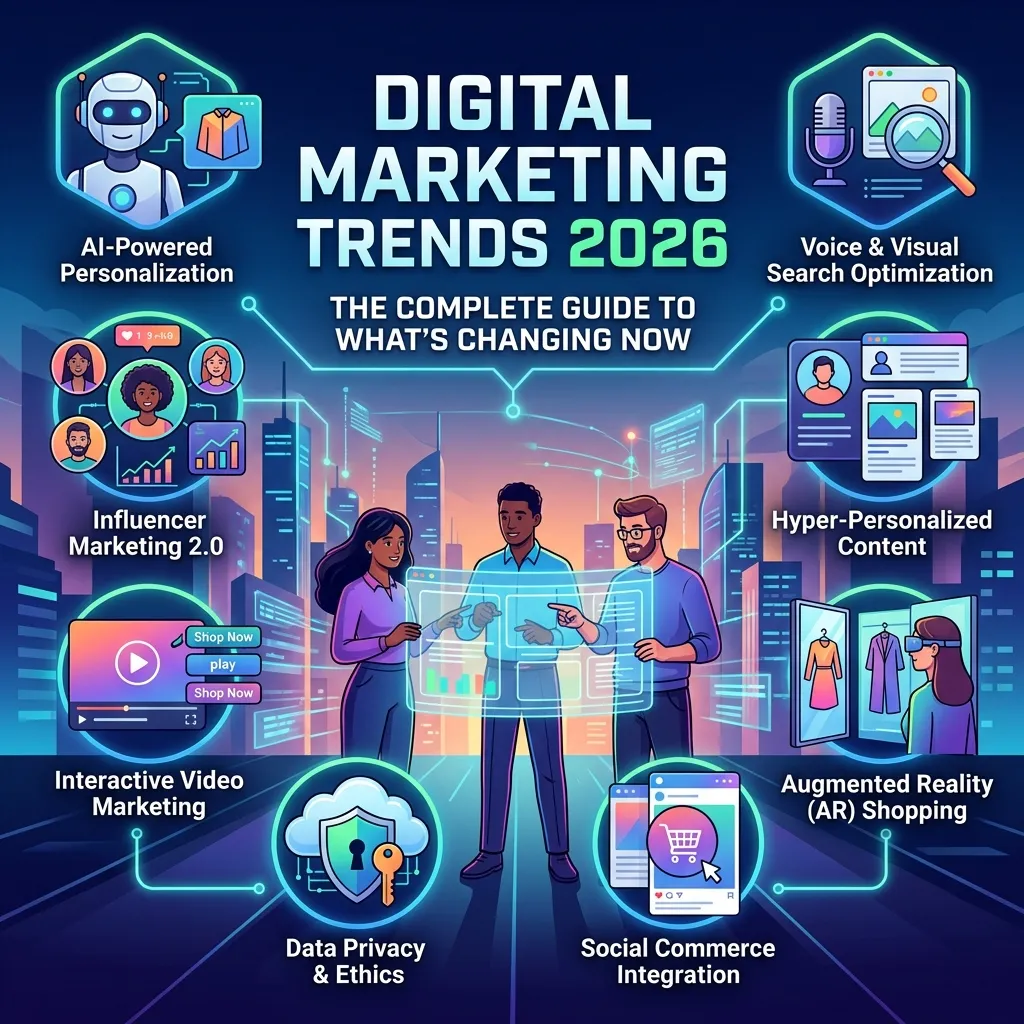
The biggest digital marketing trends of 2026 all point toward one theme — AI is no longer a side experiment, it’s the infrastructure behind search, content, and personalization. This guide breaks down the shifts marketers actually need to act on this year, from AI-driven search and voice discovery to shoppable video, first-party data, and micro-communities. You’ll walk away knowing which trends deserve budget now and how to future-proof your strategy for the rest of 2026.
Why Tracking Digital Marketing Trends Matters More Than Ever
Keeping up with digital marketing trends isn’t just a nice-to-have anymore. Marketing moves fast, but 2026 has accelerated the pace even further. AI tools are maturing, privacy regulations are reshaping how data gets collected, and consumer search behavior is shifting away from traditional links toward AI-generated answers. Staying on top of the latest shifts isn’t optional anymore — brands that ignore what’s happening now risk losing visibility, trust, and revenue to competitors who adapt faster.
Understanding where the industry is headed helps you allocate budget wisely, avoid wasted spend on outdated tactics, and build a strategy that still works twelve months from now. Below are the trends defining how brands reach, engage, and convert audiences this year.
1. AI Agents Are Reshaping the Customer Journey
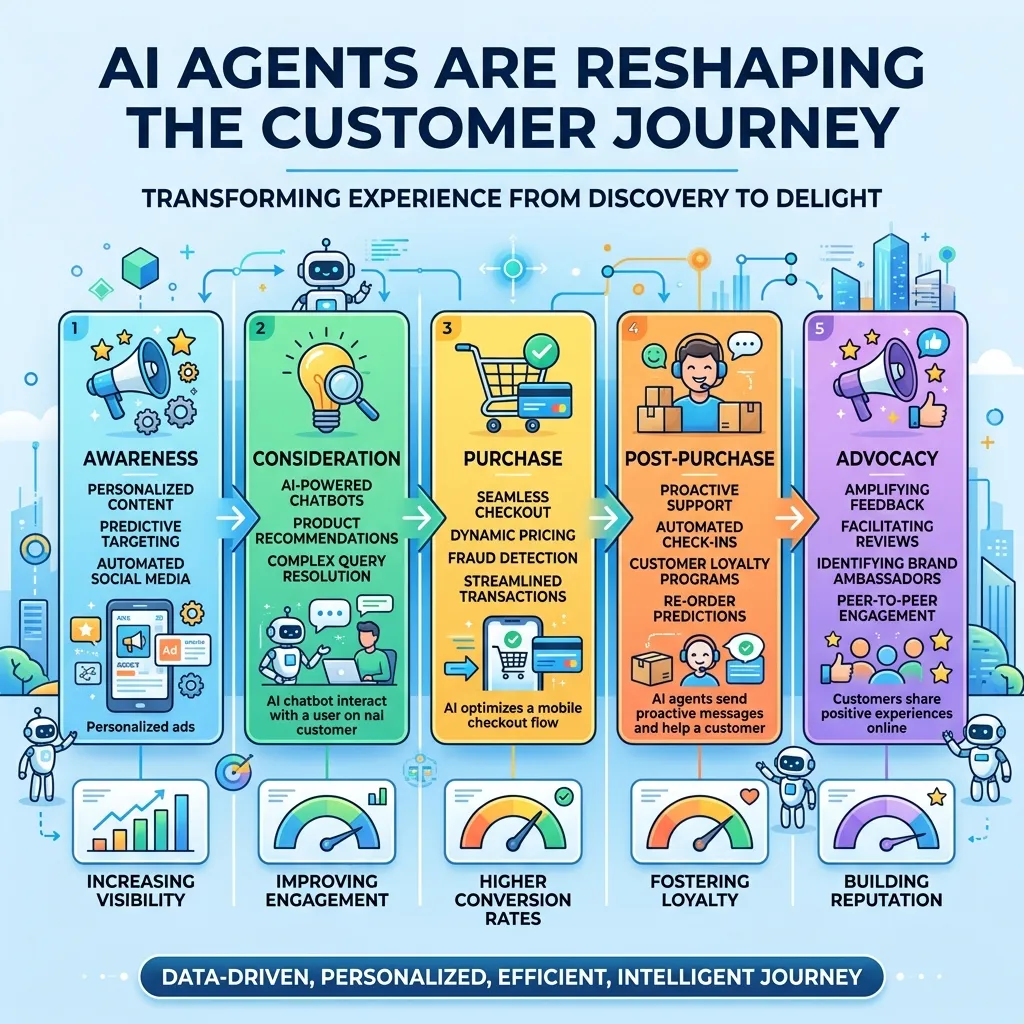
Artificial intelligence has moved beyond content generation and into full decision support, making it one of the defining digital marketing trends of the year. AI agents now assist with research, comparison shopping, and even early-stage purchase decisions, though most consumers still hesitate to let an AI agent complete a transaction autonomously. That hesitation matters for marketers: AI-powered discovery is growing fast, but conversion still depends heavily on trust and brand credibility.
Brands that want to stay visible in 2026 need structured, well-organized content that AI systems can easily parse and reference. If you haven’t already looked at how automation fits into your workflow, our guide to AI-powered marketing strategies walks through practical starting points.
2. Search Is Shifting From Links to Answers
Search behavior is arguably where digital marketing trends are shifting fastest. One of the most disruptive digital marketing trends this year is the rise of AI-generated answers replacing traditional search results. Instead of clicking through ten blue links, users increasingly get a synthesized answer directly on the results page. This changes how content needs to be structured — clear headings, concise answers near the top, and well-organized FAQ sections all help your content get pulled into AI summaries.
Voice search continues to grow alongside this shift, since spoken queries tend to favor the same kind of direct, conversational answers that AI search engines prioritize. If you haven’t optimized for this yet, our voice search optimization guide covers the technical adjustments worth making first.
3. Personalization Becomes Table Stakes
Personalization isn’t a differentiator anymore — it’s an expectation, and it’s one of the digital marketing trends that shows no sign of slowing down. A large majority of consumers say they’re more likely to buy from brands that deliver personalized content, and that number keeps climbing. In 2026, personalization extends beyond just using someone’s first name in an email; it means tailoring product recommendations, ad creative, and even landing pages based on real-time behavior.
This level of personalization requires clean, well-organized data behind the scenes. Marketers who invest in better reporting infrastructure now will have a real advantage, which is why understanding your analytics setup for smarter campaigns is worth prioritizing early in the year.
4. First-Party Data and Privacy-Native Measurement
Among the quieter but more consequential digital marketing trends is the move toward first-party data. As third-party cookies continue to lose relevance and privacy regulations tighten, brands are leaning harder into first-party data collection. Loyalty programs, gated content, and direct customer relationships all become more valuable when they generate data you actually own. Privacy-native measurement tools are also gaining traction, allowing marketers to track performance without relying on invasive tracking methods that regulators and consumers increasingly reject.
5. Retail Media and Shoppable Video Keep Growing
Retail media is quickly becoming one of the most profitable digital marketing trends for ecommerce brands specifically. Retail media networks — ad placements within retailer websites and apps — are expanding rapidly, offering closed-loop measurement that connects ad exposure directly to verified purchases. Alongside this, shoppable video is turning streaming platforms into direct sales channels, letting viewers buy a product without ever leaving the content they’re watching. Connected TV (CTV) is increasingly treated as a performance channel rather than just a brand-awareness play.
6. Marketing Mix Modeling Makes a Comeback
Measurement is one of the harder digital marketing trends to solve for, and it’s why Marketing Mix Modeling is making a comeback. With ad channels and data sources more fragmented than ever, many teams are returning to Marketing Mix Modeling (MMM) to understand the full picture of what’s actually driving results. Unlike single-channel attribution, MMM accounts for how channels interact with one another, giving a more accurate view of overall marketing effectiveness. Expect AI to accelerate how quickly these models can be built and interpreted throughout the rest of 2026.
7. Immersive and Interactive Content Keeps Expanding
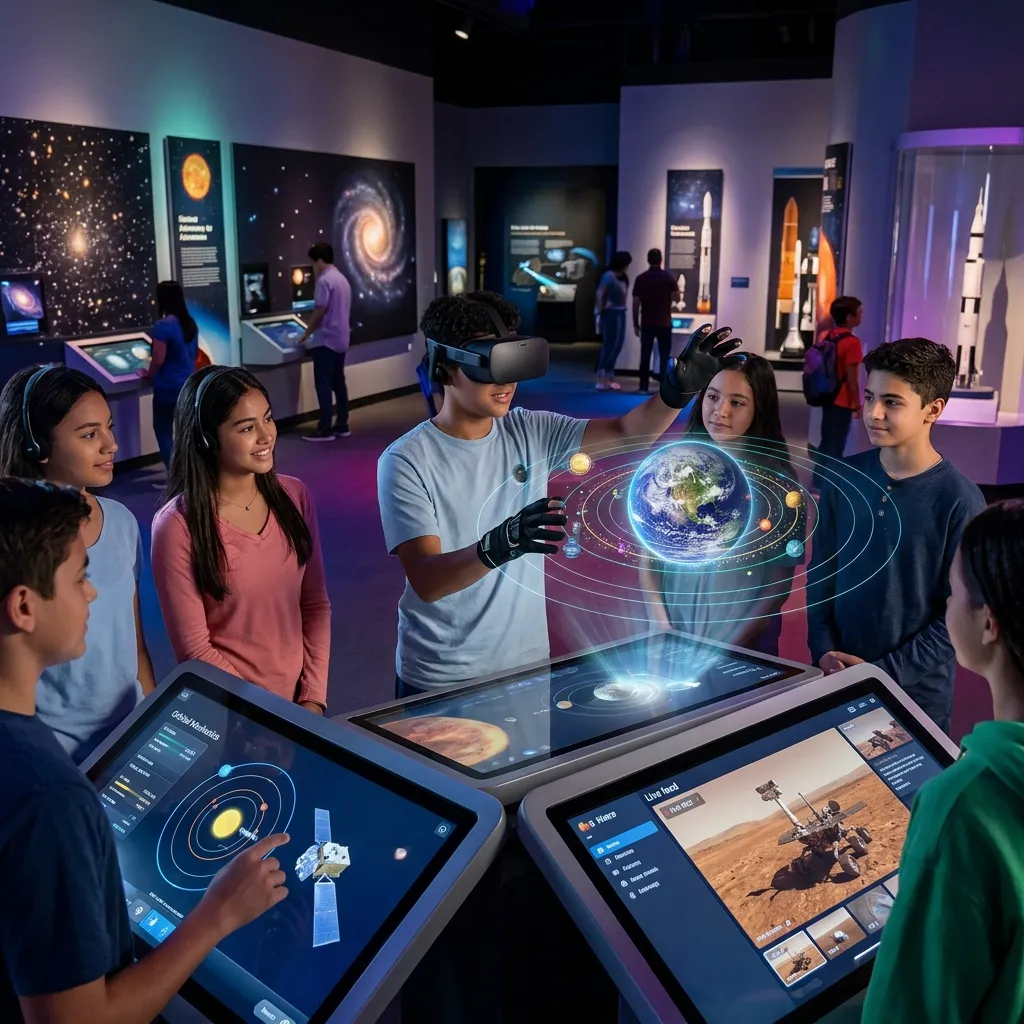
Immersive formats remain some of the most exciting digital marketing trends to watch this year. Augmented reality and virtual reality continue to bridge the gap between digital content and real-world engagement. Virtual try-ons, interactive product demos, and immersive brand experiences are no longer niche — they’re becoming standard tools for categories like beauty, fashion, and home goods. Interactive content in general, from quizzes to shoppable lookbooks, is proving far more effective at holding attention than static formats. Our breakdown of augmented reality in marketing explains how smaller brands can experiment with this without a massive production budget.
8. Video Personalization Goes Mainstream
Video sits at the intersection of several digital marketing trends at once, blending personalization with automation. Personalized video — content tailored to an individual viewer’s behavior, history, or preferences — is becoming easier to produce at scale thanks to AI-assisted editing tools. Instead of one generic video ad, brands can now generate multiple variations tailored to different audience segments without multiplying production costs. This trend pairs naturally with the broader personalization push happening across every channel this year.
9. Automation Handles the Manual Work
Automation continues to rank among the most practical digital marketing trends for teams with limited headcount. Email workflows, lead segmentation, ad targeting, A/B testing, and performance reporting are increasingly automated by default. Platforms are shipping with automation-first setups rather than requiring manual configuration, freeing marketers to focus on strategy instead of repetitive execution. This shift also means teams need fewer people doing manual tasks and more people who can interpret data and make strategic calls.
10. Micro-Communities Replace Mass Reach
Community-driven strategy is another of the digital marketing trends rewarding brands willing to think smaller. Rather than trying to reach everyone, many brands are investing in smaller, purpose-driven communities where members connect over shared interests. Branded forums, fitness groups, and niche online spaces are proving more effective at driving loyalty and word-of-mouth than broad-reach advertising alone. This mirrors a larger shift toward authenticity, as audiences grow increasingly skeptical of impersonal, mass-produced marketing messages.
11. Insight-Based Content Replaces Guesswork
Data-driven content strategy is one of the digital marketing trends changing how editorial calendars get built. Content creation is becoming more evidence-driven. Instead of chasing whatever trend is popular that week, brands are using search intent data, behavioral analytics, and engagement metrics to decide what to create and when to publish it. Content also needs continuous updates to stay aligned with shifting algorithms and audience interests, rather than being published once and forgotten.
12. Trust and Authenticity Become Competitive Advantages
Of all the digital marketing trends on this list, this one underpins every other. As synthetic and AI-generated content floods the internet, consumers are placing a higher premium on trust than ever before. Brands that communicate transparently, avoid manipulative tactics, and demonstrate real expertise are winning more attention than those relying purely on volume or automation. This is arguably the most important of all the digital marketing trends 2026 has brought forward, since it affects how every other trend on this list should be executed.
How to Prioritize These Digital Marketing Trends for Your Business
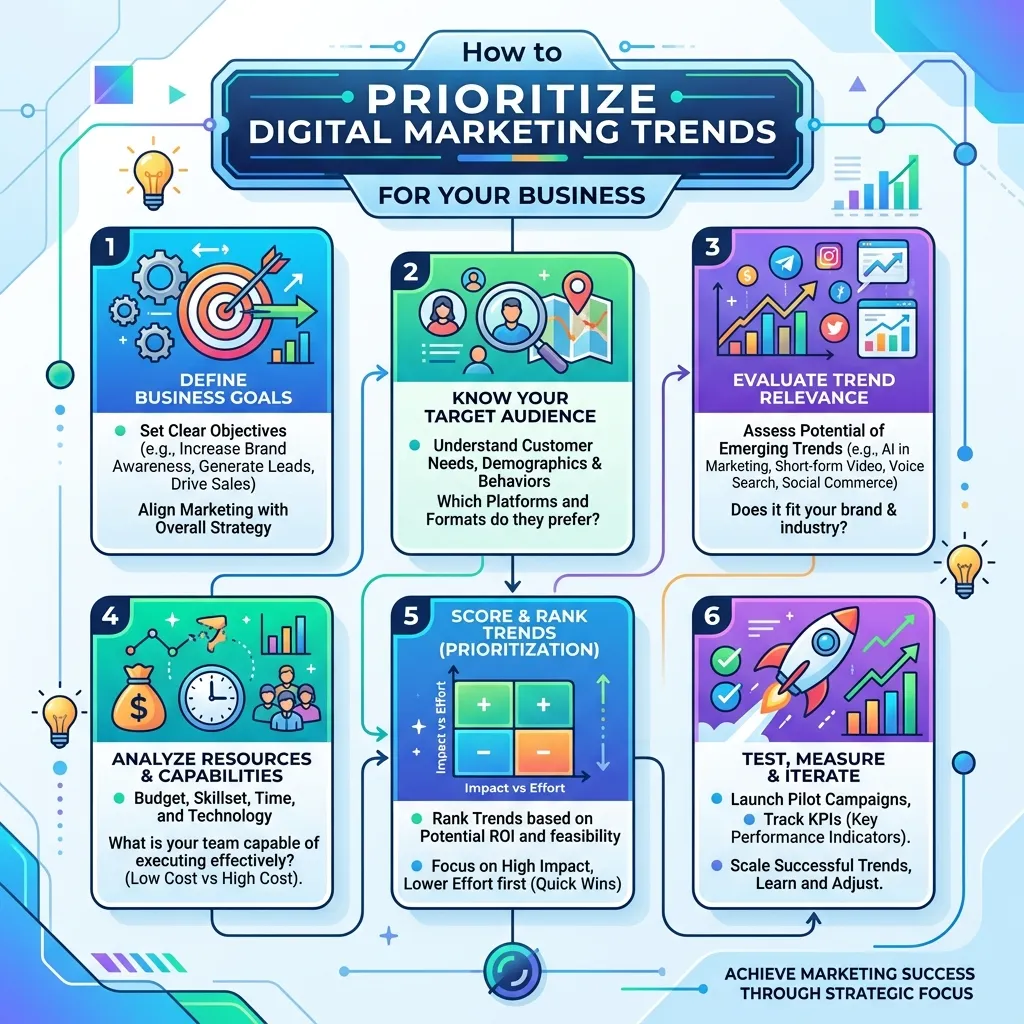
Not every business needs to chase every digital marketing trend at once. Start by asking three questions: Which of these shifts directly affects how your customers search for and evaluate your products? Which ones align with the budget and team you actually have? And which ones will compound in value over the next few years rather than fading out by next quarter?
For most small and mid-sized businesses, first-party data collection, AI-assisted content structuring, and better analytics infrastructure deliver the fastest return. Larger brands with bigger budgets can afford to experiment further with immersive formats like AR, shoppable video, and full-scale AI agent integration. For a broader look at where the industry is generally headed beyond this year, Gartner’s marketing trends research offers useful long-term context worth reading alongside this guide.
Conclusion
The digital marketing trends 2026 has introduced share one common thread: AI now touches nearly every part of the customer journey, from discovery to decision-making. But technology alone isn’t the differentiator — how you use it, and whether you maintain genuine trust with your audience, is what will actually separate growing brands from stagnant ones this year. Focus on the shifts most relevant to your business, build the data infrastructure to support smarter decisions, and keep authenticity at the center of every tactic you adopt. Brands that balance innovation with trust are the ones best positioned to thrive through the rest of 2026 and beyond.
For a wider look at where the industry is heading in the years ahead, our article on why digital marketing is the future is a useful next read.
Frequently Asked Questions
1. What are the biggest digital marketing trends in 2026?
The biggest shifts include AI-driven search, deeper personalization, first-party data strategies, retail media growth, and a stronger focus on trust and authenticity.
2. Are digital marketing trends worth following if I run a small business?
Yes — even small businesses benefit from tracking digital marketing trends, since early adoption of low-cost shifts like first-party data collection can create a real edge over slower competitors.
3. Is AI replacing traditional digital marketing roles?
Not entirely. AI is automating repetitive tasks like reporting and A/B testing, but strategic thinking, creativity, and relationship-building remain firmly human-led.
4. How is search changing in 2026?
Search is shifting from traditional link-based results toward AI-generated answers, making structured, concise content more important than ever.
5. What is retail media and why is it growing?
Retail media refers to ads placed within retailer websites and apps, and it’s growing because it offers closed-loop measurement connecting ad spend directly to verified sales.
6. Why does personalization matter so much this year?
Consumers increasingly expect tailored experiences, and brands that fail to personalize risk losing customers to competitors who do it well.
7. What is Marketing Mix Modeling and why is it relevant again?
MMM analyzes how multiple marketing channels interact to drive results, and it’s regaining popularity as attribution across fragmented channels becomes harder to track accurately.
8. How can I prepare my content for AI-generated search answers?
Structure your content with clear headings, direct answers near the top, and well-organized FAQ sections so AI systems can easily extract and reference the information.
9. Are AR and VR worth investing in right now?
They’re worth testing if your product category benefits from visual or interactive experiences, such as beauty, fashion, or home goods, but they’re not essential for every business yet.
10. What role does trust play in modern marketing?
As AI-generated content becomes more common, consumers are placing greater value on transparency and authenticity, making trust a genuine competitive advantage.
11. Should I still invest in mass-reach advertising?
Mass-reach advertising still has a place, but many brands are finding stronger loyalty and engagement results by also investing in smaller, purpose-driven communities.
12. How often should I revisit my strategy as digital marketing trends shift?
Given how quickly things are shifting, quarterly reviews are a reasonable minimum, with smaller adjustments made monthly as new data comes in.



Leave a Reply