

Digital marketing for personal brands is the process of building, growing, and monetizing your professional reputation online. This comprehensive guide covers everything from defining your brand and building a website to executing advanced strategies like content marketing, social media engagement, and paid advertising.
The concept of a personal brand has shifted from a corporate buzzword to a fundamental necessity. Whether you are a consultant, an author, a coach, or an industry expert, how you present yourself online dictates your professional trajectory. Digital marketing for personal brands is the engine that drives visibility, credibility, and revenue.
Without a structured marketing strategy, even the most talented professionals struggle to be found. Implementing digital marketing for personal brands allows you to control your narrative, reach a wider audience, and convert followers into loyal clients.
In this guide, you will learn how to define your unique value, build a solid digital foundation, create compelling content, and measure your success using proven methodologies.
Defining Your Personal Brand
Before launching a website or creating social media accounts, you must clarify exactly what you stand for. A successful strategy regarding digital marketing for personal brands always begins with a clear identity.
Identifying your niche and unique selling proposition
You cannot be everything to everyone. Identifying a specific niche helps you stand out in a crowded market. Your unique selling proposition (USP) is the specific benefit that makes you better or different from competitors. Determine what specific problem you solve and why you are uniquely qualified to solve it.
Understanding your target audience
Effective digital marketing for personal brands relies on knowing who you want to reach. Create detailed audience personas outlining their demographics, pain points, goals, and online behaviors. When you know where your audience spends their time, you can tailor your marketing efforts to meet them there.
Crafting your brand story and messaging
People connect with people, not abstract concepts. Your brand story should explain your professional journey, the challenges you have overcome, and the core values that drive your work. Consistent messaging across all platforms builds trust and makes your brand memorable.
Building Your Digital Foundation
Your digital foundation serves as the home base for all your marketing efforts. For effective digital marketing for personal brands, a strong, professional online presence is non-negotiable.
Creating a professional website or blog
Social media platforms come and go, but you own your website. It acts as the central hub for your personal brand. Key elements of a successful personal brand website include a clear homepage, an “About” page detailing your story, a portfolio or list of services, client testimonials, and a prominent contact form.
Optimizing for search engines (SEO)
Search engine optimization ensures people can find you when they search for your expertise. On-page SEO strategies for personal brands involve using relevant keywords in your page titles, headers, and body content. Technical SEO considerations—such as site speed, mobile responsiveness, and secure hosting (HTTPS)—are equally important to ensure search engines can crawl and index your site effectively.
Content Marketing for Personal Brands
Content is the fuel that powers digital marketing for personal brands. It proves your expertise and provides ongoing value to your audience.
Developing a content strategy
Your content strategy should align with your business goals and audience interests. Blog posts and articles are excellent for SEO and deep-dive explanations. Video content on platforms like YouTube and TikTok helps build a visual and emotional connection with your audience. Podcast creation is another powerful avenue, allowing you to conduct interviews and share insights in a highly engaging, long-form audio format.
Content distribution channels
Creating content is only half the battle; distributing it is where many professionals fail. Share your content across appropriate social media platforms. Additionally, use email newsletters to bypass social media algorithms and deliver your best content directly to your audience’s inbox.
Social Media Engagement
Social media is the most visible aspect of digital marketing for personal brands. It allows for real-time interaction and community building.
Choosing the right platforms for your brand
You do not need to be on every platform. Select the channels where your target audience is most active. LinkedIn is generally best for B2B professionals, while Instagram and TikTok might serve creative professionals and lifestyle coaches better.
Crafting engaging social media content
Focus on providing value, sharing behind-the-scenes glimpses of your work, and offering actionable advice. Mix up your formats by using text, images, short-form videos, and polls to keep your audience interested.
Building a community and interacting with your audience
Do not just broadcast messages. Reply to comments, ask questions, and participate in industry conversations. Building a community fosters loyalty and encourages word-of-mouth referrals.
Leveraging hashtags and trends
Use relevant hashtags to increase the discoverability of your posts. Keep an eye on industry trends and participate in relevant conversations to show that your brand is current and actively engaged in the broader community.
Email Marketing: Building Direct Connections
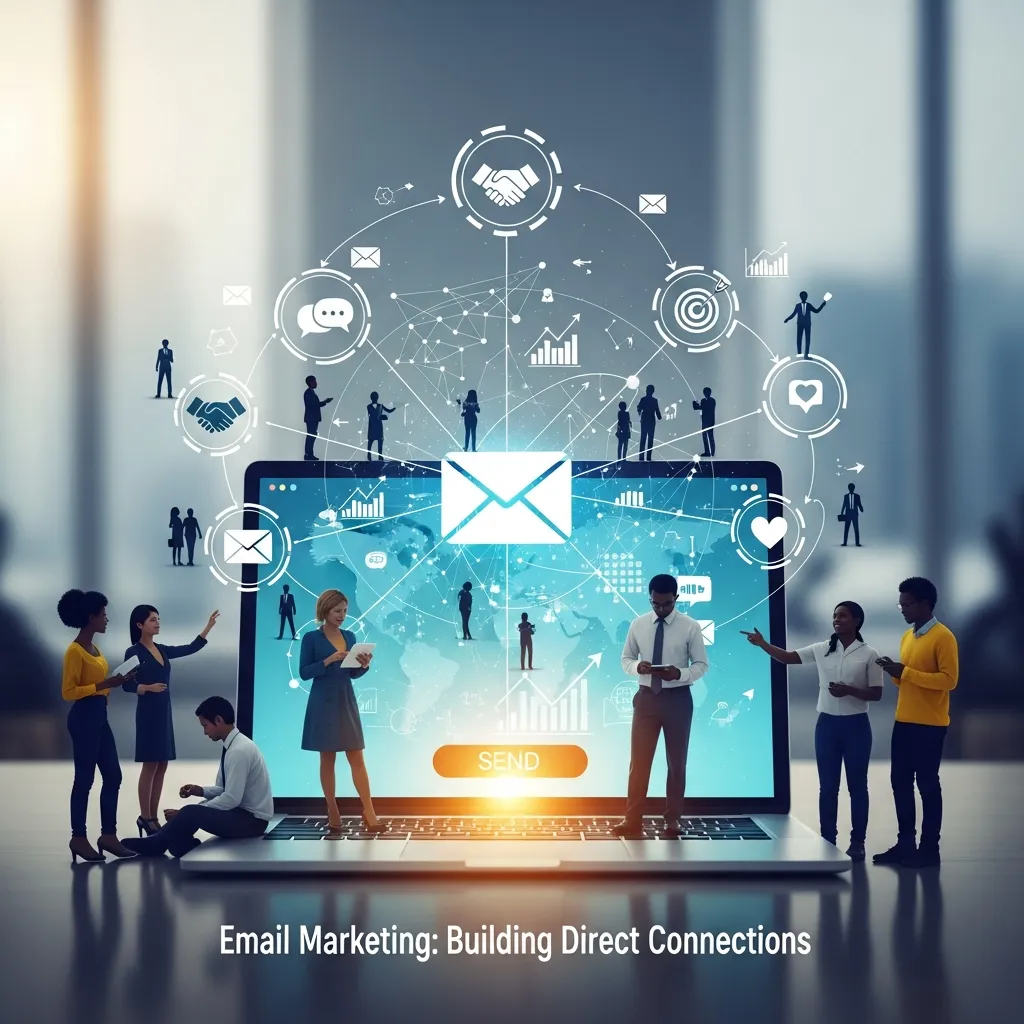
Social media algorithms change frequently, making email marketing a crucial component of digital marketing for personal brands.
The importance of an email list
An email list is a digital asset you own completely. It provides a direct line of communication to people who have explicitly asked to hear from you, resulting in much higher conversion rates than social media.
Strategies for growing your subscriber base
Offer a lead magnet—such as a free ebook, checklist, or mini-course—in exchange for an email address. Place sign-up forms prominently on your website and promote your lead magnet across your social media channels.
Crafting effective email campaigns
Send regular newsletters featuring your latest content, industry insights, and exclusive offers. Write compelling subject lines to improve open rates, and ensure the body of the email delivers on the promise made in the subject line.
Segmentation and personalization
As your list grows, segment your subscribers based on their interests or behavior. Personalized emails that address specific needs perform significantly better than generic blasts.
Paid Advertising for Accelerated Growth
While organic growth is essential, paid advertising can rapidly accelerate your success in digital marketing for personal brands.
Understanding different ad platforms
Google Ads capture people actively searching for specific solutions, making them great for high-intent traffic. Social media ads on platforms like Facebook, Instagram, and LinkedIn are excellent for building awareness and targeting specific demographics.
Setting up targeted campaigns
Define clear objectives for your campaigns, whether that is driving website traffic, generating leads, or selling a product. Use highly targeted audiences to ensure your budget is spent on the right people.
Budgeting and measuring ROI
Start with a small budget to test different ad creatives and audiences. Track your return on investment (ROI) closely.
Digital Marketing for E-commerce strategies
If your personal brand involves selling physical or digital merchandise, you must integrate digital marketing for e-commerce strategies. This includes optimizing product pages for conversions, running retargeting ads to recover abandoned carts, and using email sequences to drive repeat purchases.
Public Relations and Influencer Marketing
Expanding your reach often requires tapping into established audiences through PR and influencer collaborations.
Building relationships with media
Reach out to journalists, podcast hosts, and blog editors in your niche. Offer yourself as an expert source for their stories.
Collaborating with relevant influencers
Partner with other personal brands or influencers who share your target audience but offer complementary services. This can involve co-hosting webinars, writing guest posts, or doing social media takeovers.
Securing features and interviews
Regularly pitch yourself to relevant podcasts and publications. Being featured on authoritative platforms significantly boosts your credibility and drives high-quality traffic back to your website.
Measuring Your Digital Marketing Success
To ensure your efforts regarding digital marketing for personal brands are working, you must track your performance.
Key performance indicators (KPIs) for personal brands
Identify metrics that align with your goals. Common KPIs include website traffic, email list growth rate, social media engagement rate, and lead conversion rate.
Using analytics tools
Google Analytics provides deep insights into your website traffic and user behavior. Social media platforms offer built-in analytics to help you understand which posts generate the most engagement and reach.
Adapting your strategy based on data
Review your data regularly. If a particular type of content is performing exceptionally well, create more of it. If a specific marketing channel is underperforming, adjust your approach or reallocate your resources.
Advanced Strategies and Niche Applications
As your personal brand grows, you can deploy more advanced tactics tailored to your specific industry.
Digital Marketing for Real Estate Agents
For industry-specific applications, the strategies shift slightly. Digital marketing for real estate agents, for example, relies heavily on local SEO, virtual property tours, and highly targeted Facebook ads focusing on specific zip codes. Personal branding in this space requires projecting deep local market knowledge and supreme trustworthiness.
Online courses and digital products
Packaging your expertise into online courses, ebooks, or templates is a great way to scale your income. Use your content marketing and email list to promote these digital products.
Speaking engagements and webinars
Hosting free webinars is an excellent lead generation tactic. Securing speaking engagements at industry conferences positions you as a leading authority and puts you in front of a highly targeted audience.
Maintaining and Evolving Your Personal Brand

Digital marketing for personal brands is not a one-time project; it requires ongoing effort and adaptation.
Consistency and authenticity
Consistency in your posting schedule and messaging builds trust. Authenticity ensures that your audience connects with the real you, making your brand sustainable in the long run.
Staying updated with digital trends
The digital marketing landscape changes rapidly. Keep learning about new platform features, SEO algorithm updates, and emerging content formats to maintain your competitive edge.
Adapting to audience feedback
Listen to what your audience is telling you through their comments, emails, and purchasing behavior. Evolve your services and content to better meet their changing needs.
Your Journey to a Powerful Personal Brand
Building a strong online presence requires time, patience, and a strategic approach. Digital marketing for personal brands encompasses a wide range of tactics, from defining your unique value and building a website to leveraging content, social media, and email marketing.
By consistently applying these strategies, you can establish yourself as a thought leader, attract your ideal audience, and create sustainable professional growth. Keep experimenting, stay true to your core values, and continuously adapt to the ever-changing digital landscape.
FAQ: Digital Marketing for Personal Brands
1. What is digital marketing for personal brands?
It is the strategic use of online channels—such as social media, websites, email, and SEO—to build, promote, and monetize an individual’s professional reputation and expertise.
2. Why do I need a website if I have a large social media following?
You do not own your social media profiles, and algorithm changes can drastically reduce your reach. A website is a digital asset you control completely, serving as the central hub for your brand and services.
3. How often should I post on social media?
Quality matters more than quantity. Aim for a consistent schedule you can maintain without burning out, whether that is three times a week or once a day, and focus on providing high value in every post.
4. What is the most important social media platform for personal brands?
It depends entirely on your niche and where your target audience spends their time. LinkedIn is ideal for B2B professionals, while Instagram and TikTok are better for lifestyle, fitness, and creative niches.
5. How does SEO help a personal brand?
SEO increases your website’s visibility in search engine results. When potential clients search for solutions related to your expertise, strong SEO ensures they find your content before they find your competitors.
6. Do I need to run paid ads to be successful?
No, many personal brands grow purely through organic content and networking. However, paid ads can significantly accelerate your growth and lead generation once you have a clear offer and funnel in place.
7. What is a lead magnet?
A lead magnet is a free piece of valuable content (like an ebook, checklist, or template) offered to website visitors in exchange for their email address, helping you build your email list.
8. How do I choose my personal brand niche?
Look for the intersection between your specific skills, your passions, and market demand. Narrowing your focus helps you stand out and become the go-to expert for a specific problem.
9. Can I mix personal life and professional content?
Yes, sharing behind-the-scenes moments or personal stories humanizes your brand. Just ensure that the personal content you share ultimately ties back to your core values and professional message.
10. How long does it take to see results from digital marketing?
Digital marketing for personal brands is a long-term game. While ads can generate quick leads, building organic traffic, SEO authority, and a loyal community usually takes six to twelve months of consistent effort.
11. What is the difference between a personal brand and a business brand?
A personal brand is built around an individual’s name, personality, and specific expertise. A business brand is built around an entity or company that can operate independently of any single individual.
12. How do I measure the ROI of my personal branding efforts?
Track specific metrics tied to your business goals, such as email subscriber growth, consultation calls booked through your website, course sales, or engagement rates on your primary content channels.



Leave a Reply