


What is AI in Digital Marketing?
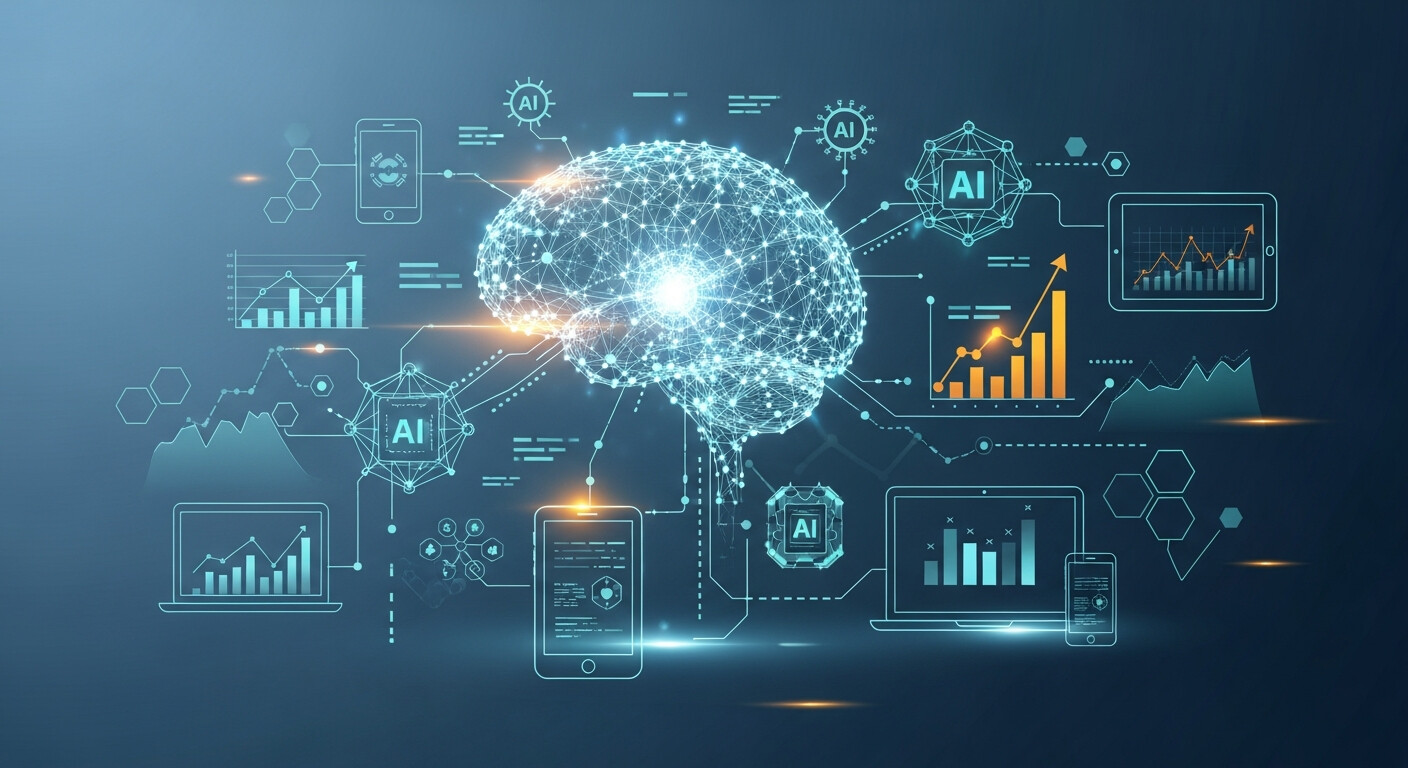
AI in Digital Marketing leverages machine learning, advanced data analysis, and predictive algorithms to gain a deeper understanding of target audiences and how they interact with marketing campaigns. By mimicking aspects of human intelligence, AI in digital marketing enables brands to automate repetitive tasks, personalize content, optimize ad targeting, and forecast customer behavior with greater accuracy. These intelligent systems help marketers make data-driven decisions, uncover patterns in consumer behavior, and deliver more relevant, timely, and effective marketing experiences across multiple channels. Ultimately, integrating AI in digital marketing not only enhances efficiency but also boosts engagement, conversion rates, and overall campaign performance.
For example:
- Suggest tailored content to visitors depending on their search and shopping patterns.
- Maximize the return on advertising spend by delivering campaigns to the right people, at the right time.
- Use massive data sets to understand customer preferences, forecast trends, and enhance user experience.
The aim of AI in digital marketing is straightforward yet powerful: to cut through the noise and make marketing easier, to drive a highly focused and personalized marketing effort to your audience.
AI Use in Digital Marketing Right Now
AI use in digital marketing right now is transforming the way brands plan, execute, and measure their campaigns. From automating repetitive tasks to delivering hyper-personalized experiences, AI is already reshaping how brands plan, execute, and measure campaigns. Businesses use AI to analyze massive datasets, predict behavior, optimize ad targeting, and improve content recommendations. These applications save time, enable smarter decisions, and enhance engagement. For a deeper dive, explore why digital marketing is the future. These applications not only save time and resources but also enable marketers to make smarter, data-driven decisions that enhance engagement, boost conversions, and drive measurable results. Here are some of the most important current uses of AI in digital marketing:
Customer Experiences
AI empowers brands to deliver highly personalized experiences that resonate with individual users. AI-powered platforms like Dynamic Yield and Adobe Sensei analyze customer behavior, browsing patterns, and purchase history to optimize user interactions in real time. For instance, when a returning customer visits an online store, AI can recommend products based on their past purchases, browsing habits, or even items trending among similar customers.
This level of personalization significantly enhances user satisfaction, reduces bounce rates, and boosts conversion rates. Research by Epsilon shows that 80% of consumers are more likely to buy from brands that offer personalized experiences, highlighting the direct impact of AI-driven personalization on customer loyalty and revenue growth.
Bots and Digital Assistants
Artificial intelligence-powered bots and digital assistants, including Drift, Intercom, and Zoho SalesIQ, are revolutionizing customer service. At C’est Normal Bot, for example, these virtual assistants operate 24/7, efficiently handling queries ranging from FAQs to order tracking.
These AI tools not only improve response times and customer satisfaction but also help businesses reduce operational costs and scale customer support without additional human resources. As a result, intelligent chatbots have become an essential component of modern digital marketing, offering seamless interactions while freeing marketing teams to focus on strategy and growth.
Programmatic Advertising
AI algorithms now manage ad bidding and placement in real time. Tools like Google Ads AI and The Trade Desk optimize campaigns automatically, improving ROI. For context, read what are display ads in digital marketing. Platforms like Google Ads and The Trade Desk use AI to analyze user behavior, optimize ad placements, and adjust bidding strategies dynamically based on performance metrics.
This approach saves time, minimizes wasted ad spend, and improves overall return on investment (ROI) by ensuring that campaigns are both targeted and efficient. With AI-driven programmatic advertising, marketers can scale campaigns quickly and make data-backed decisions that maximize reach and engagement.
Content Creation and Curation
AI tools are transforming the way marketers create and manage content. AI tools like Jasper, Grammarly, and Canva help create and manage content efficiently, from blog posts to social media. These platforms also assist with content curation, keeping audiences engaged. Learn more about digital marketing including social media.
In addition, AI helps with content curation by aggregating relevant articles, videos, and blog posts for newsletters or personalized user recommendations. This not only keeps audiences engaged but also ensures that brands maintain a consistent and relevant content presence across multiple channels.
Predictive Analytics
Predictive analytics powered by AI platforms such as Salesforce Einstein and IBM Watson enables businesses to anticipate customer behavior and market trends. By analyzing historical data, AI can forecast customer preferences, predict purchasing patterns, and identify emerging opportunities.
This insight allows marketers to proactively tailor email campaigns, adjust product inventory, and develop targeted promotions, ensuring they meet customer needs even before requests are made. By leveraging predictive analytics, companies can stay ahead of the competition, make smarter business decisions, and enhance overall customer satisfaction.
How to Integrate AI Into Your Marketing Strategy
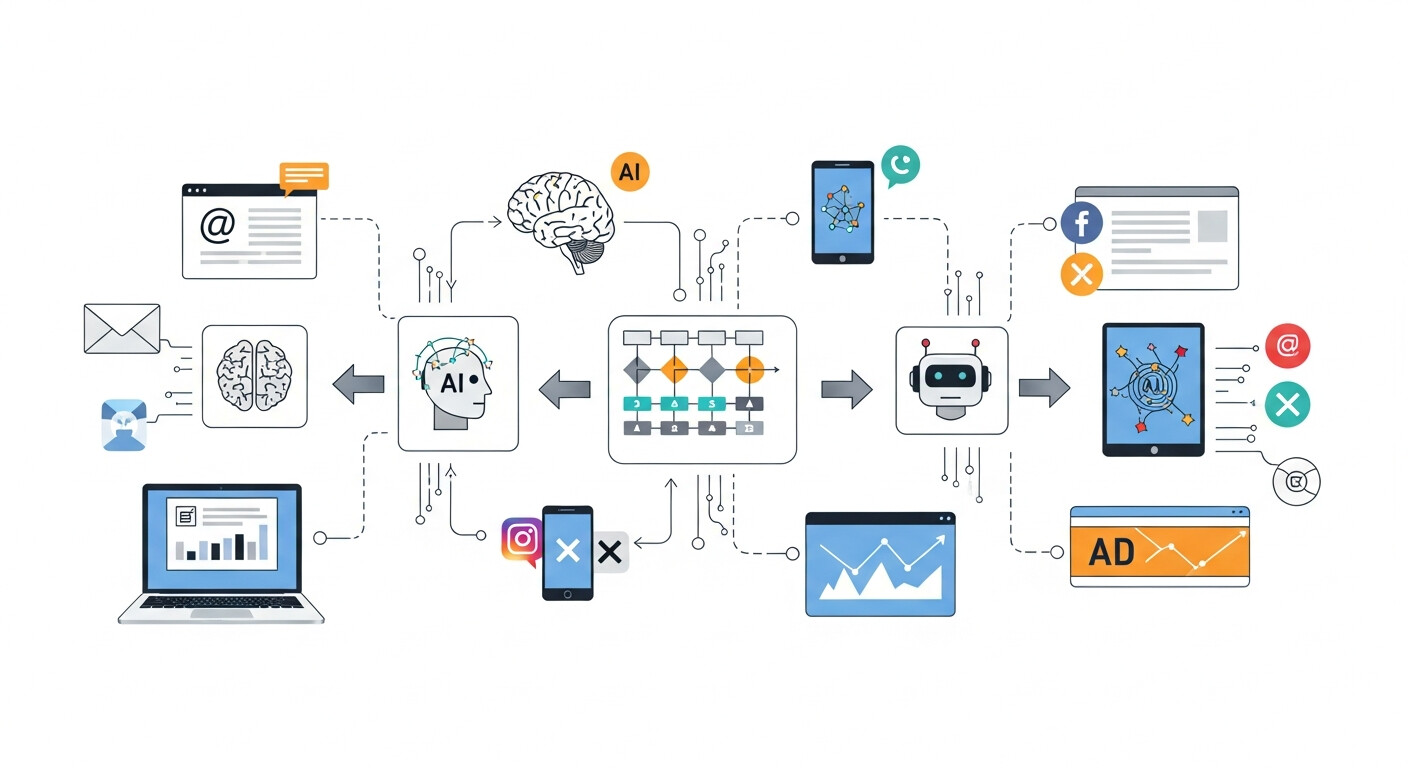
Integrating AI into your marketing strategy doesn’t have to be overwhelming. By approaching it systematically, businesses of all sizes can leverage AI to improve efficiency, personalization, and ROI. Here’s a step-by-step guide to effectively incorporate AI into your digital marketing efforts:
Audit Your Current Marketing Processes
Start by analyzing your existing marketing workflows to identify areas where AI can make the most impact. Look for repetitive, time-consuming tasks such as data entry, email segmentation, content scheduling, or ad targeting. Understanding your current processes helps you prioritize which areas to automate or optimize first.
Define Clear Goals and KPIs
Before implementing AI, outline what you want to achieve. Are you aiming to improve customer engagement, increase conversions, optimize ad spend, or enhance content personalization? Defining clear objectives and key performance indicators (KPIs) ensures you can measure the success of your AI initiatives accurately.
Choose the Right AI Tools
There is a wide variety of AI marketing tools available, each suited to different tasks. For example:
- Email Marketing: Mailchimp AI, HubSpot
- Customer Service: Drift, Intercom, Zoho SalesIQ
- Content Creation: Jasper, Grammarly, Canva AI
- Advertising: Google Ads AI, The Trade Desk
Select tools that align with your goals and integrate smoothly with your existing systems.
Start Small with Pilot Projects
Test AI on a small scale before full implementation. Run a pilot project in one area, such as automated email campaigns or AI-powered ad targeting, and track the results. Piloting helps you identify challenges, refine workflows, and build confidence in AI capabilities without risking large-scale failure.
Analyze Data and Optimize Continuously
AI thrives on data, but its effectiveness depends on regular monitoring and optimization. Continuously analyze the performance of AI-driven campaigns, refine algorithms, and adjust strategies based on insights. This iterative process ensures your AI tools become smarter over time and deliver better results.
Scale Successful AI Initiatives
Once your pilot projects demonstrate measurable success, gradually scale AI across multiple channels and campaigns. Expand its use to content personalization, predictive analytics, chatbots, and programmatic advertising to maximize impact across the customer journey.
Maintain Human Oversight
AI is a powerful tool, but it shouldn’t replace human creativity and strategic thinking. Ensure that marketers oversee campaigns, review AI recommendations, and make final decisions. Combining human insight with AI-driven data ensures balanced, ethical, and effective marketing strategies.
By following these steps, businesses can seamlessly integrate AI into their marketing strategy, improving efficiency, targeting, and customer engagement while driving measurable growth.
AI’s Impact on SEO
SEO is important in digital marketing, and artificial intelligence is playing a role in how we optimize for the search. Below are a few of the ways AI is directly affecting SEO:
- Voice Search Optimization
Now, thanks to the proliferation of voice assistants like Alexa, Siri, and Google Assistant, AI is changing how people search for things on the internet. SEO plans must now include NLP and long-tail keyword optimization to keep up with conversational queries. - Keyword Research & Content Insights
Search intent and high-converting keywords are analyzed far more proficiently by AI-powered tools like SEMrush, Ahrefs, and Clearscope, not human reviewers. You can even learn in real time what’s trending right now, related to your niche or industry. - Content Quality Analysis
Engines rank content based on relevance and authority. AI analytics tools like Surfer SEO or MarketMuse check your content against your competitors and recommend changes for you to implement to rank better. - Ranking by better UX
Brands can use AI to guide a more user-friendly, aesthetically pleasing website experience. Google’s Core Web Vitals metrics are closely related to user experience, and AI tools such as Hotjar supply you with important information that can be used to develop SEO-friendly layouts and navigation paths.
Upcoming AI Digital Marketing Trends
The scope of AI in digital marketing is endless, and there is no turning back. Here’s what the future holds:
- Hyper-Personalization in Bulk
Personalization in marketing will be stepped up, with AI integrated with data sources including IoT devices and wearables. Attendant customers will be accustomed to receiving offers and conversation in a live time that is completely tailored to what they want and when they want it. - Visual and Voice Search through AI
AI will take visual (and voice) searches further beyond text search. For instance, the capability to look up similar products across shopping platforms with an image could become a standard feature with the support of AI image recognition. - Emotion AI
Devices and systems that read our emotions, to teach us how to deliver more personalized messaging, or provide a support service. “Overall, this will manifest emotionally-charged user experiences for brands that can engage customers on a personal level.” - Automated Content Generation On Multiple Media
From blog posts to videos to podcasts, AI will gain more and more skill when it comes to producing high-quality content in a number of different formats. Entire campaigns could soon be managed autonomously by AI tools. - Enhanced Predictive Marketing
More sophisticated data integration will allow AI to anticipate future trends. Companies will know what customers, competitors, and hires are going to do before they do it, and they’ll anticipate the trends.
The Future of AI Digital Marketing
AI in digital marketing is not a trend; it’s a necessity. It’s changing the way businesses do strategy, deal with their customers, and allocate resources. Early AI adopters among brands will reap the rewards of greater efficiency, better customer experience, and higher ROI.
If you’re looking to take your digital marketing to the next level with AI, it’s a good time to start looking at AI marketing tools or AI marketing companies out there! Indeed, in an industry where rapid technological change leads to a highly competitive market, to keep ahead is to keep inventing.
AI is rapidly transforming digital marketing by enabling smarter automation, personalization, and data analysis. But to get the most out of your digital strategy, it’s also essential to master key advertising tactics. Explore our guide on The Ultimate Guide to Best Practices for SEM Success to learn how search engine marketing can complement AI-driven campaigns for maximum impact.
Frequently Asked Questions (FAQ)
What is AI in digital marketing and why is it important?
AI in digital marketing uses machine learning, data analysis, and automation to enhance marketing efficiency, personalize customer experiences, and optimize campaigns. It allows businesses to deliver the right message to the right person at the right time.
Can small businesses benefit from AI in digital marketing?
Yes. Even small businesses can use AI-powered tools for email automation, social media scheduling, content optimization, and customer segmentation. AI scales personalization and efficiency without requiring large teams.
Will AI replace marketers?
No. AI is a tool to enhance human capabilities, not replace them. Marketers still provide strategy, creativity, and oversight, while AI handles data analysis, predictive insights, and automation.
How does AI improve content marketing?
AI analyzes engagement data, recommends topics, suggests headlines, and can even create drafts or visuals. This improves efficiency, relevance, and SEO, helping businesses engage audiences more effectively.
What are the risks of using AI in digital marketing?
Risks include data privacy concerns, algorithmic bias, and over-reliance on automation. Brands must ensure ethical data use, maintain transparency, and integrate human oversight into AI-driven campaigns.
How can AI help with predictive marketing?
AI can forecast customer behavior, sales trends, and campaign effectiveness by analyzing historical data and current patterns. This allows businesses to proactively target high-value prospects and anticipate market demand.



Leave a Reply