


Search engine marketing is an effective digital marketing approach that helps businesses increase online visibility, attract potential customers, and generate qualified leads through paid search advertisements. By targeting relevant keywords, optimizing advertising budgets, and monitoring campaign performance, businesses can reach people who are actively searching for their products or services. This guide explores essential strategies, advertising techniques, keyword bidding, campaign optimization, and the differences between paid search and organic SEO to help businesses build successful marketing campaigns.
Search Engine Marketing Strategies
Successful search engine marketing begins with a clear strategy that connects advertising activities to measurable business objectives. Before launching a campaign, businesses should identify their target audience, understand customer needs, and determine whether their primary goal is website traffic, lead generation, sales, or brand awareness.
Keyword research is an essential starting point. Advertisers should identify the phrases potential customers use when searching for products or services. High-intent keywords, such as phrases containing “buy,” “hire,” or “near me,” can attract users who are closer to making a decision.
Businesses should also organize keywords into tightly related ad groups, create relevant advertisements, and direct visitors to landing pages that match their searches. Regular testing and performance reviews help identify opportunities for improvement. A broader digital strategy can strengthen these efforts. For example, businesses can combine paid search with email marketing automation to nurture leads after they submit a form or make an initial purchase.
Search Engine Marketing Services
Professional search engine marketing services help businesses plan, launch, manage, and improve paid advertising campaigns. Depending on their needs, companies may work with an agency, hire an in-house specialist, or manage campaigns independently.
Typical services include keyword research, competitor analysis, campaign setup, advertising copywriting, audience targeting, conversion tracking, budget management, and performance reporting. Specialists may also review landing pages to identify problems that prevent visitors from becoming customers.
Choosing the right service provider requires evaluating experience, communication, reporting practices, and the ability to connect campaign results with business objectives. Businesses should understand how management fees and advertising expenditure are separated.
An effective provider should explain which metrics matter, how campaign performance will be measured, and what changes are recommended. A well-managed search engine marketing campaign focuses on meaningful outcomes rather than clicks alone. Companies developing their broader online presence can also explore e-commerce business ideas to identify products, business models, and opportunities that may benefit from paid search advertising.
Paid Search Advertising
 Paid search advertising allows businesses to display sponsored listings on search engine results pages. Advertisers typically bid on keywords, and search platforms determine which advertisements appear using factors such as bids, ad relevance, expected performance, and landing page experience.
One of the biggest advantages of this approach is its ability to reach users with specific needs. Someone searching for an emergency plumber, for example, may be more likely to contact a service provider than someone browsing general home improvement information.
Businesses generally pay when users click their advertisements in standard pay-per-click campaigns. However, actual costs vary depending on competition, industry, targeting, and campaign settings.
To improve results, advertisements should communicate a clear value proposition and include a relevant call to action. Landing pages should provide consistent information, load quickly, and make the next step easy. Paid search works particularly well when it is integrated into a complete marketing plan. Businesses can review their digital marketing strategy guide to understand how search advertising can complement other digital channels.
PPC Advertising Campaigns
Pay-per-click advertising, commonly known as PPC, is a model in which advertisers generally pay when someone clicks their advertisement. PPC campaigns can be used to generate leads, increase product sales, promote local services, or drive visitors to specific website pages.
Effective PPC management starts with selecting a suitable campaign objective and establishing a realistic budget. Advertisers should group similar keywords together, write relevant ad variations, and ensure each advertisement directs users to an appropriate landing page.
Conversion tracking is especially important. Without it, businesses may know how many clicks they receive but remain uncertain about how many visitors become customers. Tracking purchases, calls, form submissions, and other meaningful actions provides a clearer picture of campaign performance.
Negative keywords can also reduce wasted expenditure by preventing advertisements from appearing for irrelevant searches. For example, a company selling premium products may exclude searches indicating that users are looking only for free alternatives. Businesses should evaluate PPC results over time rather than making decisions based on isolated daily fluctuations. A structured testing process helps identify which messages, audiences, and landing pages deliver the strongest results.
Google Ads Marketing
Google Ads is a widely used platform for creating paid search campaigns that appear in Google search results. It provides tools for keyword targeting, bidding, location settings, audience signals, conversion measurement, and campaign reporting. A successful Google Ads marketing approach begins with understanding customer search behavior. Businesses should select keywords relevant to their offerings and create advertisements that directly address the user’s needs.
For instance, a local cleaning company might target searches related to home cleaning services in its service area. Its advertisements could highlight available services, convenient booking, and a clear contact option. Advertisers can use different bidding approaches depending on their objectives. Manual bidding offers more direct control over bids, while automated strategies can optimize bids toward goals such as conversions or conversion value when sufficient data and suitable tracking are available.
However, automated bidding is not a substitute for effective campaign management. Businesses still need accurate conversion tracking, relevant landing pages, suitable budgets, and regular performance reviews. Search engine marketing through Google Ads becomes more effective when campaigns are organized around specific objectives and supported by reliable data. Advertisers should also review search terms and adjust targeting to avoid unnecessary spending.
Search Engine Advertising Techniques
Several advertising techniques can help businesses improve campaign relevance and attract more qualified visitors. Keyword matching is one of the most important because it influences which searches may trigger advertisements. Broad match can reach a wider range of relevant searches, while phrase match and exact match provide different levels of targeting control. The best choice depends on the campaign’s objectives, available data, and tolerance for irrelevant traffic.
Ad copy testing is another useful technique. Businesses can experiment with different headlines, descriptions, benefits, and calls to action to determine which messages encourage meaningful engagement. Location targeting helps companies reach customers in specific service areas, while scheduling adjustments may help align advertisements with operating hours or periods of strong conversion activity.
Remarketing and audience-based approaches can also support customer acquisition, subject to platform policies and applicable privacy requirements. Businesses should ensure their targeting methods are appropriate and that any required consent is obtained. Companies promoting time-sensitive offers can complement these techniques with seasonal marketing strategies. Coordinating search advertisements with seasonal demand can help businesses present relevant offers when customers are actively looking for them.
SEM vs SEO
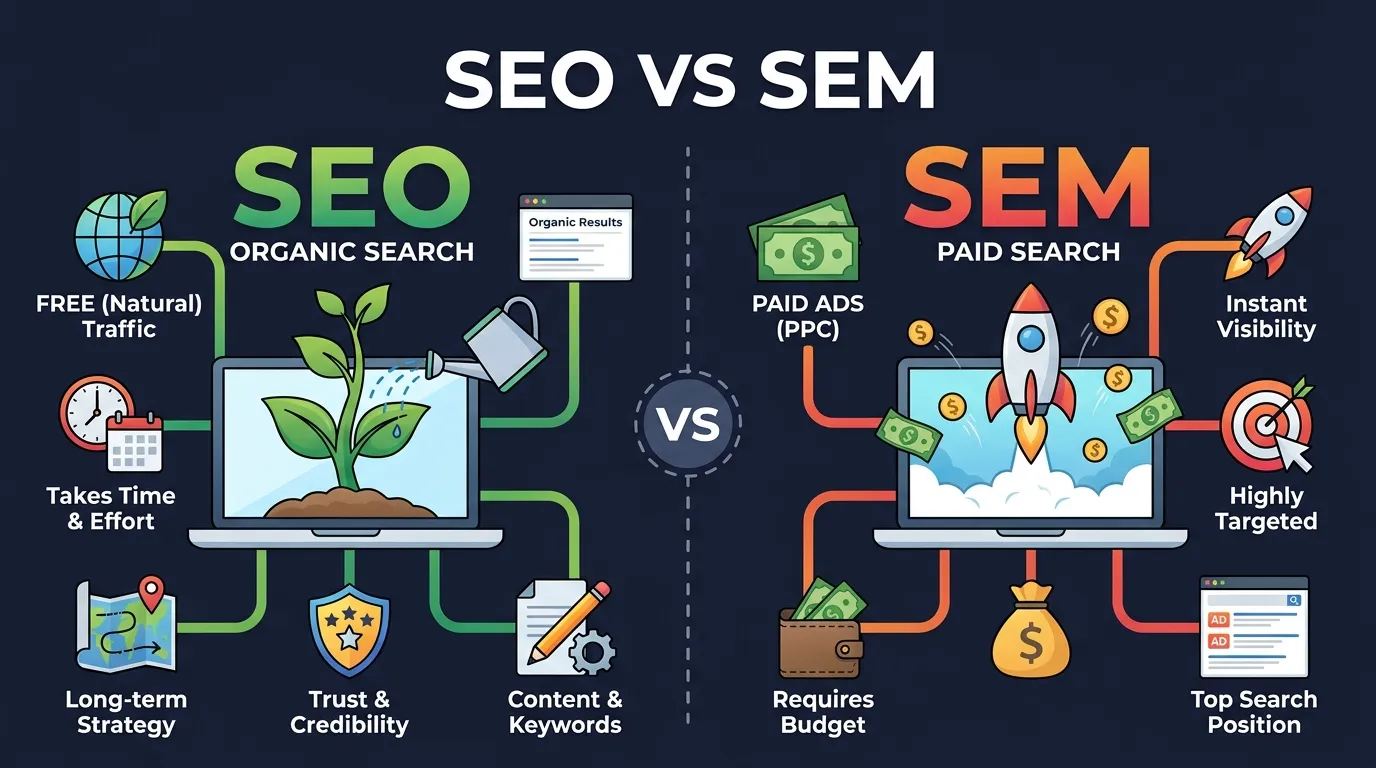 Search engine marketing and search engine optimization are closely related but serve different purposes. In common industry usage, SEM often refers specifically to paid search advertising, while SEO focuses on improving a website’s visibility in unpaid organic search results. Some broader definitions use SEM to include both paid and organic search activities.
Paid advertising can deliver visibility soon after a campaign launches, provided the ads are eligible and the budget is sufficient. Organic SEO usually requires ongoing work involving useful content, technical improvements, website structure, and the development of authority and relevance.
The two approaches also differ in their cost structures. Paid search involves advertising expenditure, whereas SEO requires investment in content, technical expertise, and continued optimization. Neither approach guarantees a specific ranking or business outcome.
For many businesses, combining both approaches offers a practical balance. Paid campaigns can test keyword demand and generate traffic while SEO builds long-term organic visibility. Understanding the difference between traditional marketing and digital marketing can also help businesses decide how search advertising fits into their overall promotional activities.
Keyword Bidding Strategies
Keyword bidding determines how much an advertiser is willing to pay for opportunities to show advertisements. However, the highest bid does not automatically guarantee the best placement or the strongest results. Businesses should begin by researching keyword competition, commercial intent, estimated costs, and expected conversion value. A highly competitive keyword may generate substantial traffic but still perform poorly if the visitors are unlikely to become customers.
Manual bidding can provide greater control over individual bids, while automated strategies can adjust bids according to campaign objectives and available signals. Strategies focused on clicks, conversions, or conversion value should be selected according to the business’s actual goals and tracking capabilities.
Budget allocation should reflect performance rather than assumptions. Advertisers can shift spending toward campaigns that generate valuable leads or sales, provided sufficient evidence supports the change. Search engine marketing bidding decisions should also account for profit margins, customer lifetime value, and the maximum acquisition cost a business can reasonably afford. This approach helps prevent spending decisions based solely on traffic volume.
Search Engine Marketing Benefits
One of the main benefits of paid search is its ability to connect businesses with users who are actively looking for relevant products or services. This can make advertisements particularly useful for generating qualified traffic and capturing existing demand. Another advantage is measurability. Advertisers can monitor impressions, clicks, click-through rates, conversions, cost per conversion, and return on advertising spend. These metrics help businesses understand where their budgets are going and which campaigns need improvement.
Paid search also offers flexible targeting and budget controls. Companies can adjust locations, keywords, schedules, and campaign expenditure as their needs change. Smaller businesses can begin with a manageable budget and expand when results justify additional investment.
Search advertising can also provide useful insights into customer behavior, including the language people use when searching and the offers that encourage them to take action. Businesses exploring multiple advertising channels may also learn from future-proofing TV advertising trends and strategies to understand how search campaigns can complement broader brand awareness initiatives.
Digital Marketing Campaign Optimization
 Campaign optimization is the ongoing process of improving advertising performance through measurement, testing, and informed adjustments. Launching a campaign is only the beginning; consistent monitoring helps businesses identify wasted expenditure and opportunities for growth. Start by reviewing the metrics that align with campaign objectives. If the goal is lead generation, qualified leads and cost per lead may be more important than total clicks. For online stores, purchase conversions, revenue, and return on advertising spend can provide greater insight.
Landing page performance should also receive attention. Slow loading times, confusing layouts, missing information, and complicated forms can reduce conversions even when advertisements attract relevant visitors. Advertisers should test changes systematically. Adjusting one major element at a time can make it easier to understand whether a new headline, bid strategy, keyword selection, or landing page improves results. However, tests need enough data to support reliable conclusions.
Search engine marketing optimization should also include regular checks of search terms, negative keywords, conversion tracking, and budget allocation. Changes should be based on evidence rather than reacting to every short-term fluctuation. Ultimately, successful campaigns combine relevant keywords, persuasive advertisements, useful landing pages, reliable measurement, and continuous improvement.
Conclusion
Search advertising can be a valuable part of a business’s digital growth strategy when campaigns are planned carefully and evaluated against meaningful goals. From keyword research and bidding to landing page improvements and conversion tracking, every stage contributes to overall performance. Search engine marketing is most effective when businesses understand their customers, manage budgets responsibly, and use campaign data to guide decisions. By combining paid search with SEO, email marketing, and other relevant channels, companies can build a more consistent approach to attracting and converting customers.
FAQ
1. What is search engine marketing?
Search engine marketing commonly refers to paid advertising on search engines that helps businesses display sponsored listings for relevant searches. It can generate website traffic, leads, and sales by reaching users who are actively looking for particular products or services.
2. How does search engine marketing work?
Advertisers select keywords, create advertisements, set budgets, and choose bidding strategies. Search platforms evaluate eligible advertisements using factors that may include bids, relevance, and landing page experience. Advertisers then monitor results and optimize their campaigns.
3. What is the difference between SEM and SEO?
Paid search advertising provides sponsored visibility through advertising budgets, whereas SEO focuses on improving organic search visibility. Paid campaigns may produce traffic quickly, while SEO generally requires sustained work over time.
4. How much does search engine marketing cost?
Costs depend on keyword competition, industry, targeting, advertising platform, and campaign goals. Businesses can often set daily or campaign budgets, but actual results and cost per click vary. A suitable budget should reflect expected returns and business objectives.
5. Is Google Ads suitable for small businesses?
Yes. Small businesses can use Google Ads to target specific locations, products, services, and customer searches. Starting with a manageable budget and tracking meaningful conversions can help them evaluate whether the investment is worthwhile.
6. Which keywords should I target?
Choose keywords that closely match your products or services and reflect your audience’s search intent. Consider relevance, competition, cost, and conversion potential. Reviewing search terms and excluding irrelevant queries can help improve campaign efficiency.
7. How long does it take to see results?
Advertisements may begin receiving impressions and clicks soon after campaigns become eligible to run. However, generating consistent conversions and gathering enough data for optimization can take longer, depending on traffic, competition, budget, and customer behavior.
8. How can I measure campaign success?
Use metrics aligned with your goals, such as qualified leads, purchases, conversion rate, cost per acquisition, and return on advertising spend. Accurate conversion tracking helps connect advertising activity with meaningful business outcomes.
9. Can paid search and SEO work together?
Yes. Paid campaigns can help businesses test keywords and capture immediate demand, while SEO supports long-term organic visibility. Using both approaches can provide complementary opportunities to reach potential customers throughout their buying journey.
10. How can I improve my search advertising campaigns?
Improve campaign performance by researching relevant keywords, refining advertisements, reviewing search terms, optimizing landing pages, tracking conversions, and adjusting bids based on reliable data. Regular testing and budget reviews help identify opportunities to improve results.



Leave a Reply