

Email marketing is one of the most practical ways for a business to build relationships with its audience, share useful information, and encourage repeat sales. This guide explains how to plan a clear strategy, create campaigns people want to read, choose automation tools, grow a permission-based list, and measure results. With relevant content and regular testing, email can support customer trust as well as business growth.
Email marketing strategy
A strong email marketing strategy starts with a specific goal. You may want to welcome new subscribers, educate potential customers, announce a product, recover abandoned carts, or bring previous buyers back. Choose one main objective for each campaign and decide how you will measure it, such as clicks, purchases, registrations, or replies. A clear goal keeps the message focused and makes the results easier to evaluate.
Next, understand your audience. Consider what subscribers care about, which questions they ask, and where they are in the buying journey. Divide your list into useful groups, such as new leads, active customers, and people who have not purchased recently. Then tailor the content to their needs. An email marketing plan should also align with sales goals and customer support capacity. Your wider plan should account for resources and expected returns; this is where marketing budgeting and spend optimization can help you think about costs, priorities, and p performance across marketing activities.
Email marketing campaigns
Effective email marketing campaigns deliver one clear message instead of trying to communicate everything at once. Start with a subject line that accurately previews the content, then use the opening paragraph to explain why the message matters to the reader. Keep the layout easy to scan, place the most useful information near the top, and include one primary call to action. A button or link should tell people what happens next, such as reading a guide, booking a consultation, or viewing a product.
Plan campaigns around the customer journey. A welcome message introduces your brand, an educational sequence helps subscribers understand their options, and a follow-up email can answer questions after a purchase. For event invitations and reminders, align each message with the audience’s reason to attend and the stage of registration. The guide to event marketing messaging that drives engagement is useful when shaping clear, benefit-led invitations and reminders. Avoid sending the same promotion repeatedly without adding fresh information.
Email marketing tips
 Useful email marketing tips begin with respect for the reader’s time. Write in plain language, lead with a benefit, and remove filler. Make the email readable on mobile devices, use descriptive links, and check that images have appropriate alternative text. A recognizable sender name and a reply-capable address can help make your communication feel trustworthy. Before sending, test the subject line, links, spelling, and display on different screen sizes.
Personalization should go beyond adding a first name. Recommend content based on a subscriber’s stated interests, past interactions, or purchase history when you have an appropriate reason to use that information. Keep each message relevant and avoid using personal details in ways that could feel intrusive. Consistency matters, but sending more messages is not automatically better. Use engagement and unsubscribe patterns to find a reasonable frequency.
Email automation tools
Email automation tools make it possible to send timely messages in response to subscriber actions. Common examples include welcome emails, onboarding sequences, abandoned-cart reminders, renewal notices, and post-purchase follow-ups. Automation can save time and help customers receive information when it is most useful, but it still requires planning. Map each workflow before activating it, decide what should trigger a message, and define when a subscriber should stop receiving the sequence.
Choose a platform based on the needs of your business rather than the number of features it advertises. Consider list size, segmentation, templates, integrations, analytics, deliverability support, ease of use, and cost. Start with one or two high-value automations, review their performance, and expand gradually. Check that automated messages remain accurate when prices, products, policies, or schedules change.
Email list building
Sustainable email list building means attracting people who genuinely want to hear from you. Offer something useful in exchange for an email address, such as a practical checklist, educational newsletter, product guide, webinar, or relevant discount. Explain what subscribers will receive and how often you expect to write. Use clear sign-up forms on relevant pages and keep the process straightforward.
Use permission-based practices and never buy a list. Purchased addresses can lead to complaints, poor engagement, and damage to sender reputation. Confirm subscriptions where appropriate, store consent records, and make it easy for people to unsubscribe. Focus on attracting the right subscribers rather than collecting the largest possible number. A smaller, interested audience is often more valuable than a large list that rarely responds.
Email marketing best practices
Following email marketing best practices helps protect trust and improve long-term performance. Send only to people who have given appropriate permission, identify your business clearly, and include a working unsubscribe option. Follow the privacy and anti-spam rules that apply in the regions where you and your subscribers operate. Keep your contact data secure, explain how subscriber information is used, and remove invalid addresses when needed.
Deliverability also depends on list quality, message relevance, and technical setup. Configure the authentication methods recommended by your email service provider, monitor bounce and complaint rates, and avoid misleading subject lines. Maintain a consistent sending pattern and regularly remove addresses that repeatedly fail. These steps cannot guarantee inbox placement, but they support responsible sending and help you spot problems before they grow.
Email newsletter marketing
Email newsletter marketing is useful for staying connected between major promotions. A newsletter can share original articles, practical advice, company updates, customer stories, curated resources, or answers to common questions. Choose a clear editorial focus so readers understand why they should stay subscribed. A predictable schedule helps build a habit, but the frequency should match your ability to deliver useful material. A simple email marketing calendar can keep topics, publication dates, and campaign objectives organized.
Your newsletter can also support other channels. For example, summarize a new article in the email and invite readers to continue on your website, or adapt a newsletter insight into a social post. Pairing email with a thoughtful social media marketing strategy can help your channels reinforce one another without copying the exact same content everywhere. Give subscribers a reason to click through by offering context, a helpful takeaway, or a deeper resource.
Email marketing for beginners
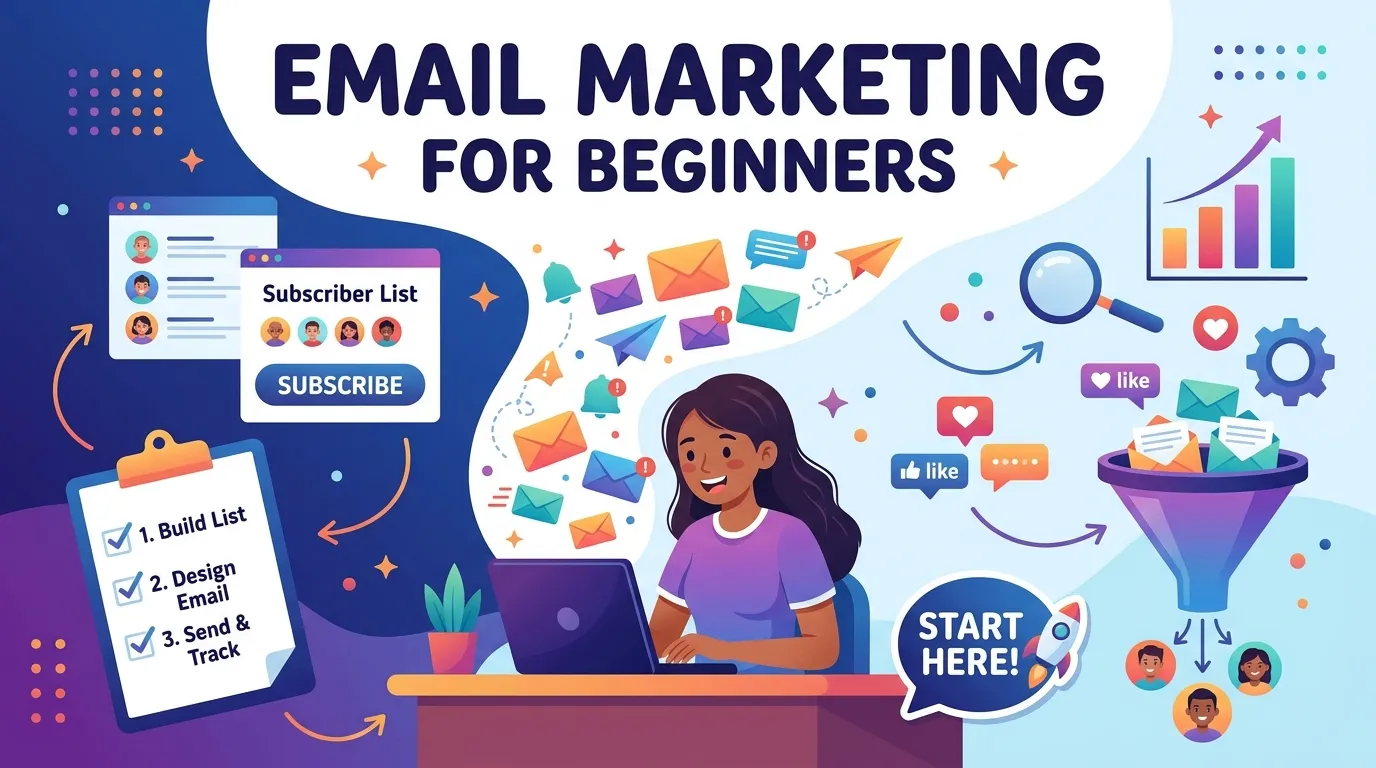 For beginners, email marketing works best when the plan is simple. Start with a clear sign-up form, a short welcome email, and a regular message that answers a real audience question. You do not need elaborate graphics or a complicated funnel at the beginning. A useful email with a clear point and one next step is often a stronger foundation than a highly designed message with no clear purpose.
Set up a basic measurement routine before increasing the volume of emails. Track delivered messages, clicks, conversions, unsubscribes, and complaints. Use the data to identify what readers find useful, but do not make decisions from a single send. Small improvements over several campaigns can help you understand your audience and develop a more reliable process.
Email campaign optimization
Email campaign optimization is an ongoing process of testing and learning. Test one meaningful variable at a time, such as the subject line, call-to-action wording, send time, or message length. If possible, use a controlled A/B test with a large enough sample to make the comparison useful. Define the success metric before the test begins; a subject line that raises opens may not necessarily lead to more purchases.
Review the full subscriber journey, not just the email itself. If people click but do not complete a purchase, the landing page, offer, pricing, or checkout process may need attention. Connect email reporting with website and sales data where possible, and use the findings to improve the next campaign. A broader understanding of the benefits of digital marketing can also help explain how email works alongside other channels in a coordinated marketing plan.
Email marketing conversion rates
Email marketing conversion rates measure the share of recipients who complete a desired action, such as making a purchase, submitting a form, or registering for an event. The right benchmark depends on your industry, audience, offer, list quality, and the way a conversion is defined. Instead of relying on a universal target, compare similar campaigns over time and establish a baseline for your business.
To improve results, make sure the email promise matches the landing page, the action is easy to complete, and the offer fits the audience’s needs. Check conversion rate alongside click-through rate, revenue per recipient, unsubscribes, and complaints so you can see both outcomes and potential trade-offs. Email marketing performs best when measurement leads to practical changes rather than a chase for a single impressive number.
Conclusion
Successful email marketing combines relevant content, permission-based list growth, thoughtful automation, and consistent measurement. Begin with a clear goal, send messages that respect subscribers, and improve your approach through testing. When email supports your website, social channels, and broader business objectives, it can become a dependable way to nurture relationships and encourage action.
FAQ
1. What is email marketing?
Email marketing is the use of email to share information, build customer relationships, promote products or services, and encourage actions such as purchases or registrations.
2. How often should I send email marketing campaigns?
Choose a frequency you can sustain while giving subscribers useful content. Test a schedule, monitor engagement and unsubscribes, and adjust based on your audience’s response.
3. What makes email marketing effective?
Relevant content, a clear subject line, one main call to action, good mobile readability, and a permission-based list all contribute to stronger results.
4. How do I build an email list?
Offer a useful resource or relevant update through clear sign-up forms, explain what subscribers can expect, and collect email addresses only with appropriate permission.
5. Can email marketing work for beginners?
Yes. Start with a welcome email and a simple newsletter, then learn from clicks, conversions, and subscriber feedback before adding more advanced features.
6. Which email automation tools should I use?
Choose a platform that fits your budget, contact volume, integrations, reporting needs, and technical comfort. Start with essential automations and expand when you understand their value.
7. What should an email newsletter include?
Include useful information such as advice, article summaries, product updates, relevant news, or customer stories. Keep the topic focused and give readers a clear next step.
8. How can I improve email campaign performance?
Test one element at a time, segment your audience, ensure the landing page matches the email, and evaluate outcomes using meaningful conversion data.
9. What is a good email marketing conversion rate?
There is no single rate that applies to every business. Compare campaigns with similar goals and audiences, and track changes against your own baseline.
10. Is email marketing still useful alongside social media?
Yes. Email gives businesses a direct way to communicate with opted-in subscribers, while social media can help introduce content and attract new audiences. Together, they can support a coordinated digital presence.



Leave a Reply