


Traditional marketing includes methods such as print advertising, television and radio commercials, direct mail, telemarketing, outdoor advertising, and promotional events. Affiliate marketing is a different approach that allows individuals and businesses to earn commissions by promoting products or services. Understanding both marketing approaches can help businesses reach the right audience, increase brand awareness, and generate sales. This guide explores affiliate marketing for beginners, how it works, the best programs and websites, effective strategies, and the tools needed to build a sustainable source of income.
Marketing plays an important role in helping businesses attract customers and increase sales. Traditional marketing uses established channels such as newspapers, magazines, television, radio, billboards, and printed promotional materials to communicate with potential customers. These methods can be particularly useful for reaching local communities and audiences who respond to offline advertising. However, digital marketing has introduced additional ways to promote products and services. One popular option is affiliate marketing, a performance-based model in which individuals earn commissions by recommending products or services through special tracking links. Unlike conventional advertising, affiliate marketing often rewards publishers when their promotional efforts result in a purchase, lead, or another qualifying action.
Affiliate Marketing for Beginners
Affiliate marketing is a business model that allows people to earn commissions by promoting another company’s products or services. Instead of creating their own products, affiliates recommend existing offerings through blogs, websites, social media accounts, email newsletters, or video content. For beginners, affiliate marketing can be an accessible way to explore online business because it usually does not require inventory, product manufacturing, or shipping. However, success depends on choosing suitable products, understanding an audience, and creating valuable content that helps people make informed decisions. For example, a blogger who writes about technology can recommend laptops, headphones, or software. When readers follow the affiliate links and complete qualifying purchases, the blogger may receive a commission. Choosing products relevant to the audience helps build trust and makes recommendations more useful.
How Affiliate Marketing Works
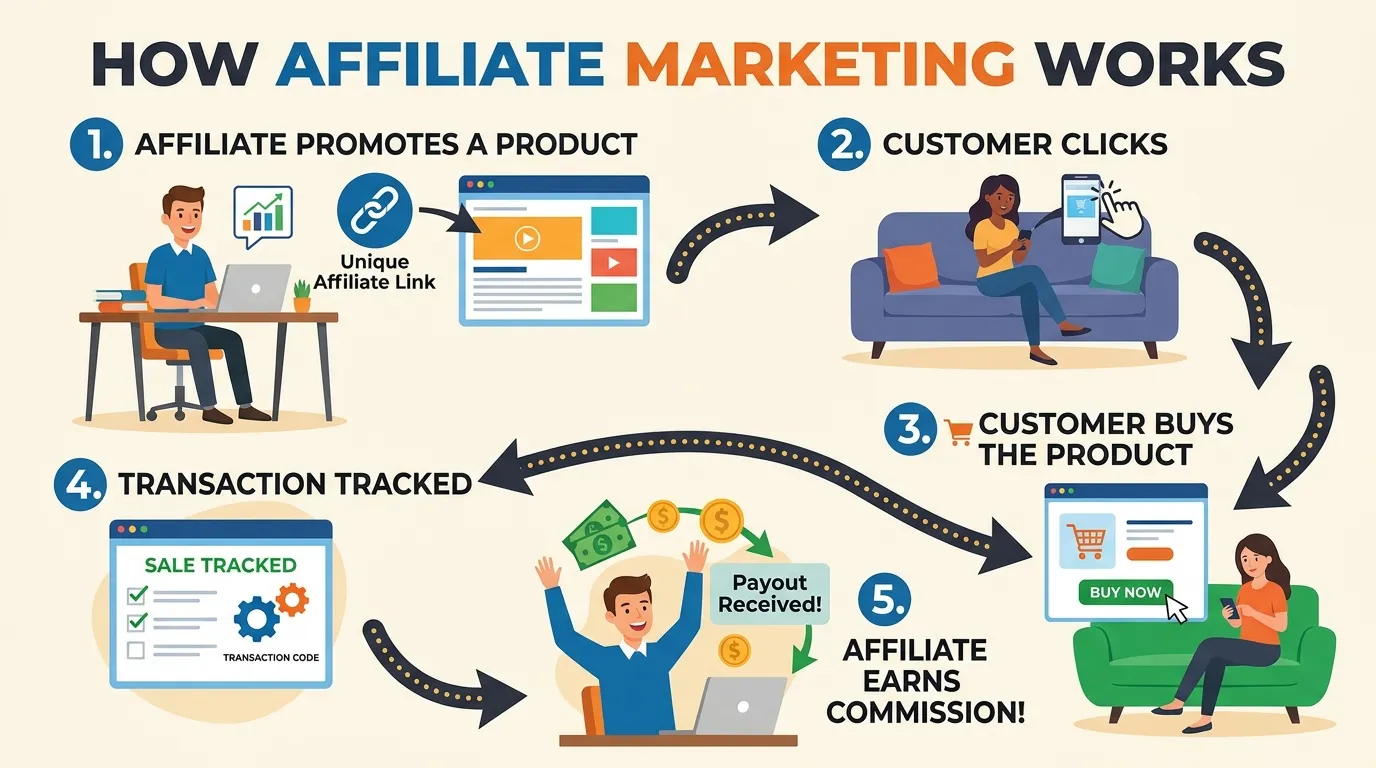 Affiliate marketing generally involves three main parties: the merchant, the affiliate, and the customer. The merchant provides the product or service and operates the affiliate program. The affiliate promotes the offer using a unique tracking link, while the customer purchases the product or completes another required action. When a customer clicks an affiliate link, the program’s tracking system records the referral.
Depending on the program’s terms, the affiliate may receive a commission when the customer purchases within the applicable attribution period or completes another qualifying action. Commission structures vary and may include a percentage of a sale, a fixed payment for a lead, or recurring payments for eligible subscriptions. To make this model work, affiliates need to create trustworthy content, attract relevant visitors, and explain the benefits and limitations of the products they recommend. Transparent affiliate disclosures are also important so readers understand when a publisher may earn a commission.
Affiliate Marketing Programs
Affiliate marketing programs allow businesses to work with publishers who promote their products in exchange for commissions. Many companies offer these programs directly, while others manage partnerships through affiliate networks. Choosing the right program requires more than looking at the commission rate. Affiliates should consider product quality, audience relevance, payment conditions, cookie duration, conversion potential, and the merchant’s reputation. A program offering a high commission may perform poorly if its products do not meet the audience’s needs.
Beginners can start by researching reputable companies in a familiar niche. Reviewing program rules and promotional restrictions before joining helps avoid problems later. As an affiliate gains experience, comparing conversion rates and earnings across programs can help identify the partnerships that provide the most value.
Best Affiliate Marketing Websites
Affiliate marketing websites provide opportunities to find products, discover partnership programs, and learn how to promote offers effectively. Some platforms connect affiliates with merchants, while others provide educational resources, product comparisons, or tools for managing campaigns.
When evaluating an affiliate marketing website, consider the range of available advertisers, reporting features, payment reliability, support services, and eligibility requirements. A useful platform should make it relatively easy to understand performance and identify which campaigns generate results. Your own website can also become a valuable asset. Publishing product reviews, detailed comparisons, practical tutorials, and answers to common questions can attract visitors through search engines. Social media and email newsletters can bring additional traffic, allowing you to reach readers across different channels.
Affiliate Marketing Strategies
Effective affiliate marketing strategies begin with understanding the audience. Rather than promoting every available product, focus on offers that solve specific problems for your readers. Helpful tutorials, honest product reviews, comparison articles, and demonstrations can explain why a product may be worth considering.
Search engine optimization can help this content reach people who are already looking for information about a product or service. Social media and video marketing can introduce products to new audiences, while email marketing can maintain relationships with readers who need more information before making a purchase.
Mobile optimization is also important because visitors may discover and purchase products using smartphones. Fast-loading pages, readable text, clear calls to action, and convenient navigation can create a smoother experience. For more ideas, explore these practical mobile affiliate marketing strategies to learn how mobile-friendly campaigns can support affiliate promotions.
Affiliate Marketing Tips and Tricks
Successful affiliates focus on earning their audience’s trust rather than publishing promotional links everywhere. Recommend products you understand, explain the reasons behind your recommendations, and acknowledge relevant disadvantages. This approach helps readers evaluate products based on their actual needs.
Consistency also matters. Publishing useful content regularly, updating outdated information, and responding to audience questions can strengthen your online presence over time. Instead of expecting immediate results, review your performance and identify which topics generate meaningful engagement and conversions.
Tracking is another essential practice. Monitor clicks, sales, conversion rates, and commission earnings to understand what is working. Testing different content formats, headlines, and calls to action can reveal opportunities for improvement. Always disclose affiliate relationships clearly and follow the rules of the platforms and programs you use.
How to Make Money With Affiliate Marketing
Making money with affiliate marketing requires a combination of relevant traffic, valuable content, and suitable offers. Start by selecting a niche that interests you and has products people genuinely need. Build a platform around that niche, such as a blog, a YouTube channel, or a focused social media presence, and publish content that answers real questions.
The next step is to join relevant affiliate programs and integrate their links naturally into your content. A product comparison article, for example, may help readers evaluate different options before buying. A detailed tutorial may demonstrate how a recommended tool solves a particular problem.
Income depends on several factors, including visitor numbers, audience trust, product prices, commission rates, and conversion rates. There is no guarantee of a particular income level, especially for beginners. Reviewing performance regularly and reinvesting in useful content can help build a more sustainable business over time.
Affiliate Marketing Networks
Affiliate marketing networks connect merchants with publishers and provide infrastructure for managing partnerships. They may offer access to multiple advertisers, tracking links, reporting dashboards, commission records, and payment management.
Networks can be convenient for beginners because they provide a centralized place to discover programs and compare opportunities. However, not every network offers the same merchants, payment terms, or approval requirements. Affiliates should check each network’s policies and verify that suitable programs are available for their niche and location.
Building relationships with reliable merchants is just as important as selecting a network. Prioritize programs with clear terms, dependable tracking, helpful support, and products that genuinely benefit your audience.
Affiliate Marketing Passive Income
Affiliate marketing is often associated with passive income because content can continue attracting visitors and generating commissions after it is published. For instance, a well-maintained product review may receive search traffic for months or years and produce sales without requiring a new promotional post every day.
However, passive income does not mean income without effort. Websites need maintenance, product recommendations become outdated, search rankings can change, and affiliate programs may alter their commission structures. Sustainable results usually require ongoing research, content updates, performance monitoring, and audience engagement.
Email marketing can also help affiliates maintain relationships with readers. A useful newsletter can share tutorials, product recommendations, and relevant offers with subscribers who have chosen to receive communications. If your audience includes online learners or course creators, this guide to email marketing for courses, from subscribers to enrollment, offers related ideas for nurturing an audience through email.
Affiliate Marketing Tools and Resources
 Affiliate marketing tools help publishers research keywords, create content, track referrals, analyze results, and manage campaigns. Depending on their needs, affiliates may use analytics platforms, SEO tools, link management software, email marketing services, and affiliate dashboards. Beginners do not need an expensive collection of tools to get started. A simple website, a reliable analytics setup, and the reporting tools provided by an affiliate program may be enough to begin measuring results. Additional software can be introduced when a specific challenge arises, such as researching competitors, improving content, or managing multiple campaigns.
The most useful tools are those that save time and support better decisions. To explore your options, read this comprehensive guide to affiliate marketing tools and resources. Selecting tools according to your goals and budget can make campaign management more organized as your business grows.
Conclusion
Understanding the different types of traditional marketing and how they compare with modern digital marketing can help businesses choose the right ways to reach their target audience. While traditional marketing methods such as print advertising, television, radio, and outdoor promotions remain valuable for building brand awareness, affiliate marketing offers another opportunity to generate sales through performance-based partnerships. For beginners, affiliate marketing can be a practical way to build an online business by promoting relevant products, creating valuable content, and earning commissions from qualifying referrals. Choosing the right affiliate programs, using effective marketing strategies, and investing in suitable tools can improve your chances of long-term success. Although earning passive income takes time and consistent effort, focusing on audience trust, quality content, and continuous improvement can help you build a sustainable affiliate marketing business.
FAQ
1. What are the main types of traditional marketing?
The main types of traditional marketing include print advertising, television advertising, radio advertising, direct mail, telemarketing, outdoor advertising, and in-person promotional events. Businesses choose between these channels based on their audiences, marketing objectives, and budgets.
2. Is affiliate marketing a type of traditional marketing?
Affiliate marketing is generally considered a performance-based marketing model rather than a traditional marketing channel. It commonly uses digital platforms, tracking links, and commission-based partnerships to generate sales or leads.
3. How does affiliate marketing work for beginners?
Beginners choose a niche, join a relevant affiliate program, and promote products using unique tracking links. When referrals complete the required action under the program’s terms, the affiliate may earn a commission.
4. Can I start affiliate marketing without a website?
Yes. You can promote affiliate products through eligible social media accounts, video platforms, newsletters, and other permitted channels. However, you must follow the affiliate program’s rules and disclose your affiliate relationships.
5. How much money can I earn from affiliate marketing?
Earnings vary according to traffic, audience trust, conversion rates, product prices, and commission structures. Some affiliates earn little or nothing, while established publishers may generate substantial revenue. Results are not guaranteed.
6. Which affiliate marketing programs are best for beginners?
The best programs are those that offer relevant products, clear commission terms, reliable tracking, and reasonable payment requirements. The right choice depends on your niche, audience, location, and promotional methods.
7. What is the difference between an affiliate program and an affiliate network?
An affiliate program is a specific partnership offered by a merchant. An affiliate network provides a platform through which publishers can discover and manage relationships with multiple merchants.
8. How can I increase affiliate marketing conversions?
Create useful content, recommend relevant products, explain product benefits honestly, and make affiliate links easy to understand and use. Tracking campaign performance can help you identify areas for improvement.
9. Is affiliate marketing a good source of passive income?
Affiliate marketing can generate ongoing commissions from content that continues to attract visitors. However, maintaining traffic, updating recommendations, and adapting to changes usually require continued effort.
10. What tools do I need to start affiliate marketing?
You may need a content platform, analytics software, keyword research tools, link tracking, and an email marketing service. Start with essential free or affordable tools and expand your setup as your needs grow.



Leave a Reply