

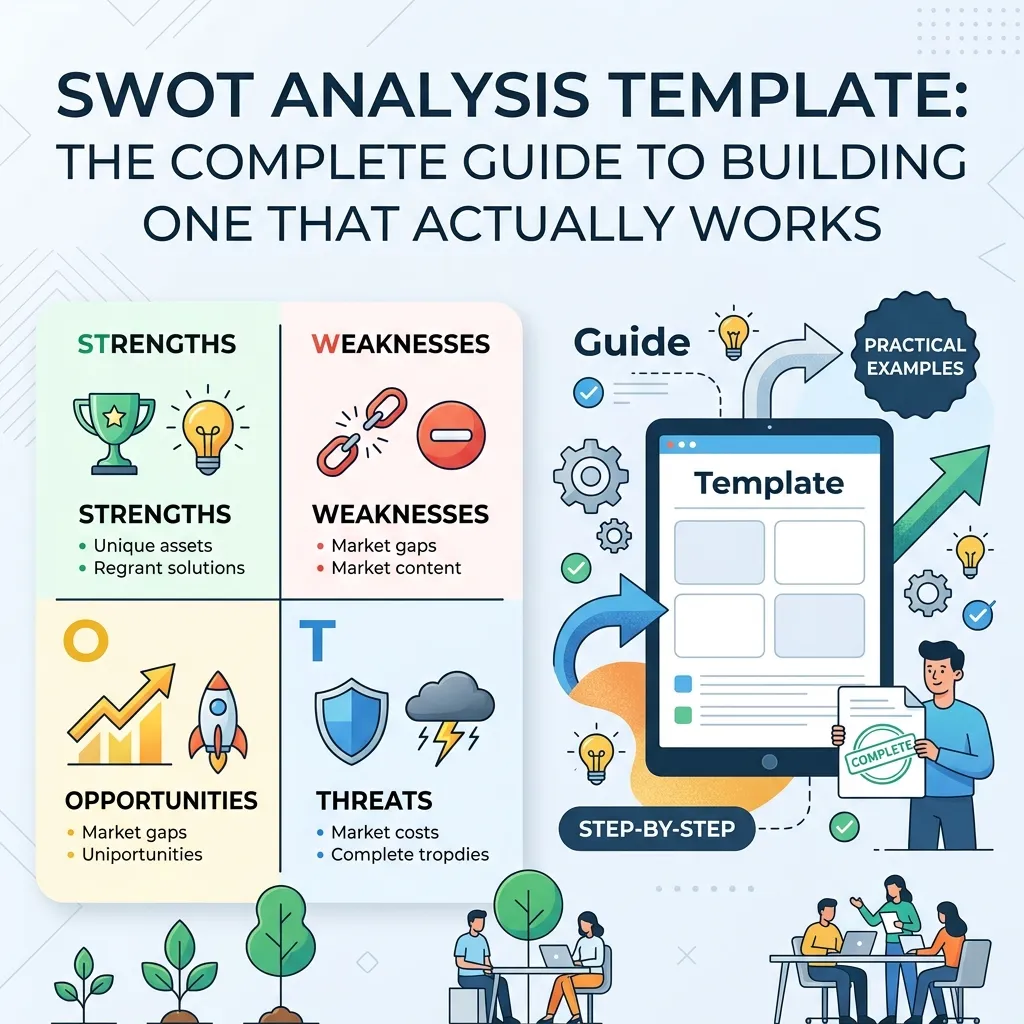
A SWOT analysis template is a structured framework that helps businesses evaluate their Strengths, Weaknesses, Opportunities, and Threats in one clear, easy-to-read format. Instead of starting from a blank page every time you need to assess your business, a ready-made SWOT analysis template saves time, keeps your thinking organized, and makes it easier to turn insights into action. In this guide, you’ll learn what a SWOT analysis template includes, how to build one step-by-step, the different types of templates available, common mistakes to avoid, and how to use your findings to shape a stronger business or marketing strategy. Whether you’re a startup founder, a marketing manager, or a student working on a business plan, this guide will help you create a SWOT analysis template that delivers real, usable results.
What Is a SWOT Analysis Template?
A SWOT analysis template is a pre-built worksheet, usually organized into a four-quadrant grid, that guides you through identifying the internal and external factors affecting your business or project. The four quadrants represent:
- Strengths – internal advantages your business has over others
- Weaknesses – internal limitations or areas needing improvement
- Opportunities – external factors you could take advantage of
- Threats – external risks that could hurt your business
Rather than jotting down random thoughts, a SWOT analysis template forces you to think in categories, which leads to more balanced and useful conclusions. As Wikipedia’s overview of the framework explains, SWOT analysis is a long-established strategic planning method used across business, government, and nonprofit sectors to support decision-making. This structured approach is exactly why so many businesses rely on a template rather than starting from scratch every time.
If you’re new to the concept entirely, it may help to first read a broader breakdown of what SWOT analysis is before diving into templates.
Why You Need a SWOT Analysis Template (Not Just a SWOT Analysis)
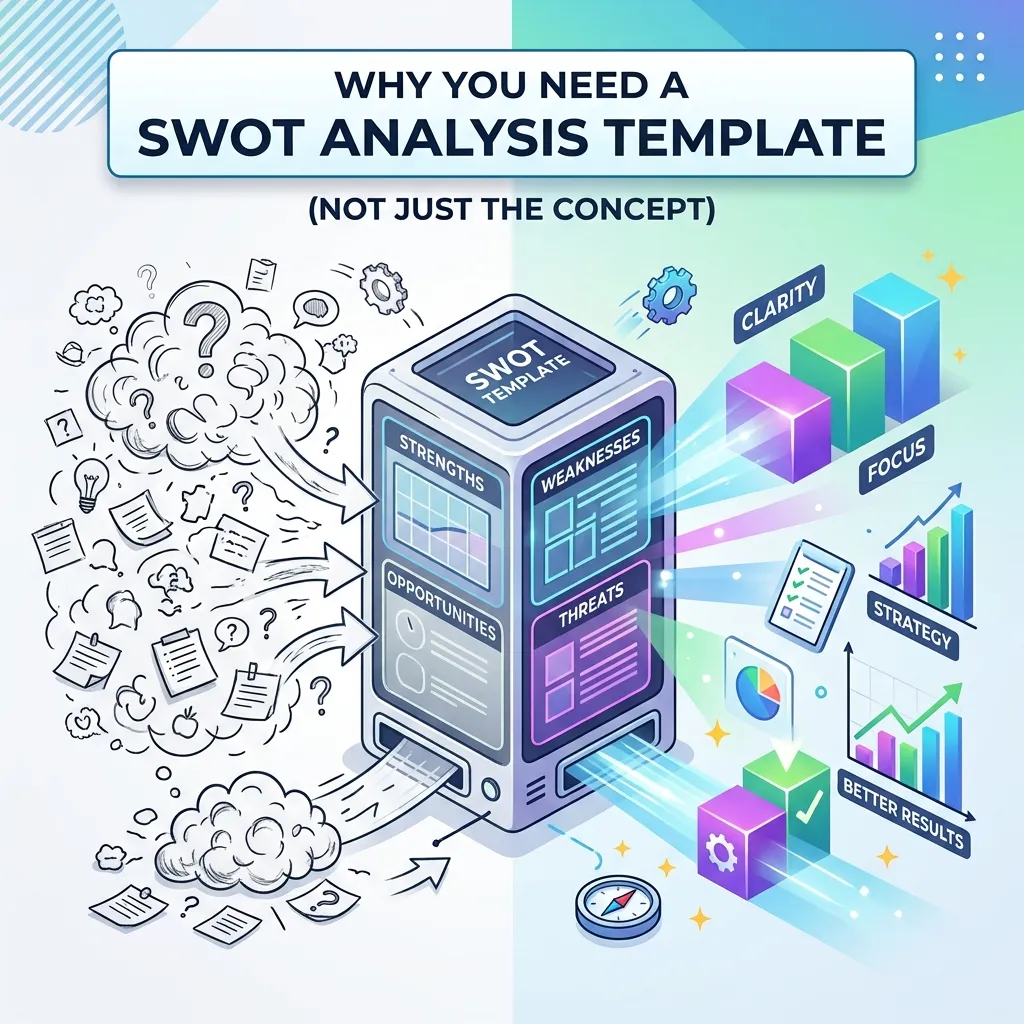
Doing a SWOT analysis without a template often leads to messy, unstructured notes that are hard to act on later. A good SWOT analysis template solves several problems at once:
- Consistency – Every analysis follows the same structure, making it easy to compare results over time.
- Speed – You’re not designing a new format every time; you just fill in the boxes.
- Clarity – Stakeholders can scan a template in seconds and understand the key takeaways.
- Actionability – A well-designed template often includes a section for next steps, turning analysis into strategy.
- Collaboration – Teams can fill out shared templates together, whether in a meeting or asynchronously.
If you’ve ever tried to explain your findings in a scattered document, you already know why a proper template matters. It’s the difference between a SWOT analysis that sits in a drawer and one that actually shapes decisions.
Core Components of an Effective SWOT Analysis Template
Before building your own, it helps to understand the standard components of a SWOT analysis that every solid template should include.
1. The Four-Quadrant Grid
This is the heart of any SWOT analysis template. Each quadrant should have enough space for 3–7 bullet points — enough to be thorough without becoming overwhelming.
2. A Scoring or Priority System
Advanced templates let you rank each point by impact (high, medium, low) so you know which strengths to leverage first and which threats need urgent attention.
3. Supporting Data Fields
Space to note the source of each insight — customer feedback, sales data, competitor research, or market reports — adds credibility and helps you revisit the reasoning later.
4. An Action Plan Section
The best SWOT analysis templates don’t stop at listing observations. They include a follow-up section where you translate each finding into a specific action, owner, and deadline.
5. Date and Version Tracking
Markets change. A template with a date field lets you track how your SWOT analysis evolves over quarters or years.
Types of SWOT Analysis Templates
Not every business needs the same format. Here are the most common types of SWOT analysis templates and when to use them:
Classic Four-Quadrant Template
The traditional 2×2 grid — simple, fast, and ideal for quick brainstorming sessions or small business owners doing a solo review.
Weighted SWOT Template
This version assigns a numerical weight to each factor based on importance, which is useful for larger organizations that need to justify strategic decisions with data.
TOWS Matrix Template
A TOWS matrix builds on a standard SWOT analysis template by cross-referencing strengths with opportunities, weaknesses with threats, and so on — helping you generate specific strategies rather than just a list of observations.
Personal SWOT Analysis Template
Used for career planning or personal development, this format applies the same four categories to an individual instead of a business.
Digital Marketing SWOT Template
Tailored specifically for marketing teams, this template focuses on channels, campaigns, and competitive positioning. If your goal is marketing-specific, it’s worth reading how SWOT analysis applies in digital marketing before customizing your template.
Industry-Specific Templates
Some sectors — like healthcare, real estate, or SaaS — benefit from templates pre-loaded with relevant prompts, since the typical threats and opportunities differ significantly by industry.
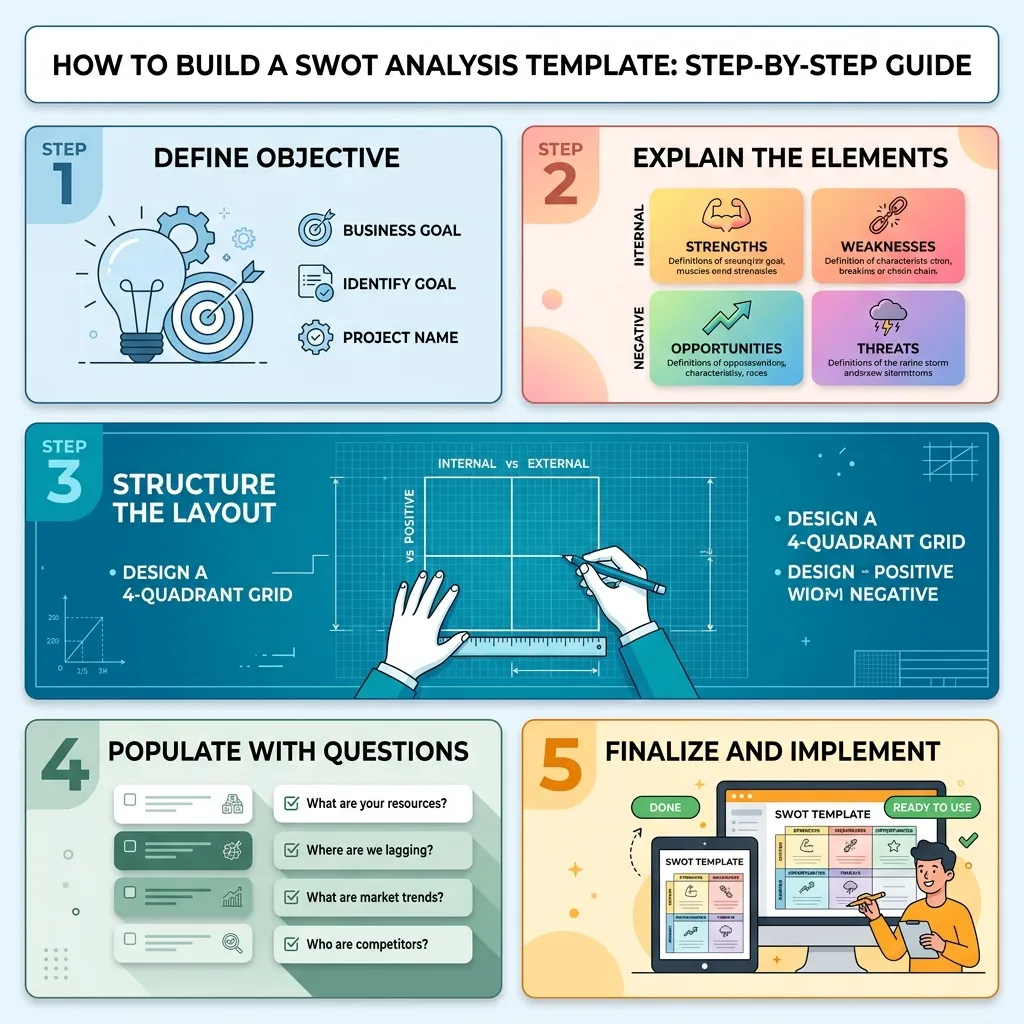
How to Build a SWOT Analysis Template Step-by-Step
Step 1: Define Your Objective
Before filling in a single box, clarify why you’re doing the analysis. Are you evaluating a new product launch, a marketing campaign, or the overall health of your business? Your objective shapes what belongs in each quadrant.
Step 2: Gather Your Data
A SWOT analysis template is only as good as the information going into it. Pull from customer surveys, financial reports, market research, and competitor analysis to ground your entries in reality rather than guesswork.
Step 3: List Your Strengths
Ask: What do we do better than our competitors? What resources, skills, or advantages set us apart? Be specific — “strong customer service” is weaker than “average 2-hour support response time, rated 4.8/5 by customers.”
Step 4: List Your Weaknesses
Be honest here. Common weaknesses include limited budget, small team size, outdated technology, or gaps in brand awareness. This is often the hardest quadrant to fill out truthfully, but it’s the most valuable for growth.
Step 5: Identify Opportunities
Look outward. New market trends, emerging technologies, regulatory changes, or shifts in customer behavior can all represent opportunities. This is a great place to reference findings from a broader digital marketing audit if you have one.
Step 6: Identify Threats
Consider competitors, economic shifts, supply chain issues, or changing customer preferences. Anticipating these external risks early is often what separates businesses that adapt smoothly from those caught off guard by disruption.
Step 7: Prioritize and Cross-Reference
Once all four quadrants are filled, rank each item by potential impact. Then cross-reference: How can a strength help you seize an opportunity? How can you shore up a weakness to defend against a threat?
Step 8: Turn Insights Into Action
Add a final section to your template listing 3–5 concrete next steps, each with an owner and a deadline. This is what separates a template that gathers dust from one that drives real change.
A Sample SWOT Analysis Template Layout
Here’s a simplified structure you can replicate in a spreadsheet, document, or whiteboard tool:
| Quadrant | Guiding Questions | Example Entries |
|---|---|---|
| Strengths | What do we do well? What unique resources do we have? | Strong brand loyalty, skilled team, proprietary technology |
| Weaknesses | Where do we fall short? What do competitors do better? | Limited marketing budget, high employee turnover |
| Opportunities | What trends or gaps can we capitalize on? | Growing demand for [niche], new export markets |
| Threats | What external risks could hurt us? | New competitor entry, rising raw material costs |
Add a fifth row or side panel for “Action Items” so the template doesn’t end at observation — it ends at execution.
Common Mistakes to Avoid When Using a SWOT Analysis Template
- Being too vague. Generic entries like “good team” or “market competition” don’t give you anything actionable.
- Mixing internal and external factors. Strengths and weaknesses are internal; opportunities and threats are external. Keep them separate.
- Skipping the follow-up. A SWOT analysis template without an action plan is just a list — it won’t move your business forward.
- Doing it once and forgetting it. Markets shift. Revisit your template every quarter or after major business changes.
- Ignoring data. Opinions without evidence weaken your analysis. Back up each point with real numbers or customer feedback wherever possible.
- Overcrowding each quadrant. Ten items with no ranking is harder to act on than five clearly prioritized ones.
Who Should Use a SWOT Analysis Template?
- Startup founders validating a new business idea before launch
- Marketing managers planning campaigns or evaluating channel performance, especially alongside a digital marketing strategy
- Small business owners reviewing yearly performance
- Students and consultants preparing business plans or case studies
- Nonprofit leaders assessing program impact and funding opportunities
- Individuals mapping out career strengths and growth areas using a personal SWOT format
No matter your role, the same core template structure applies — only the questions you ask within each quadrant change.
Digital Tools for Building a SWOT Analysis Template
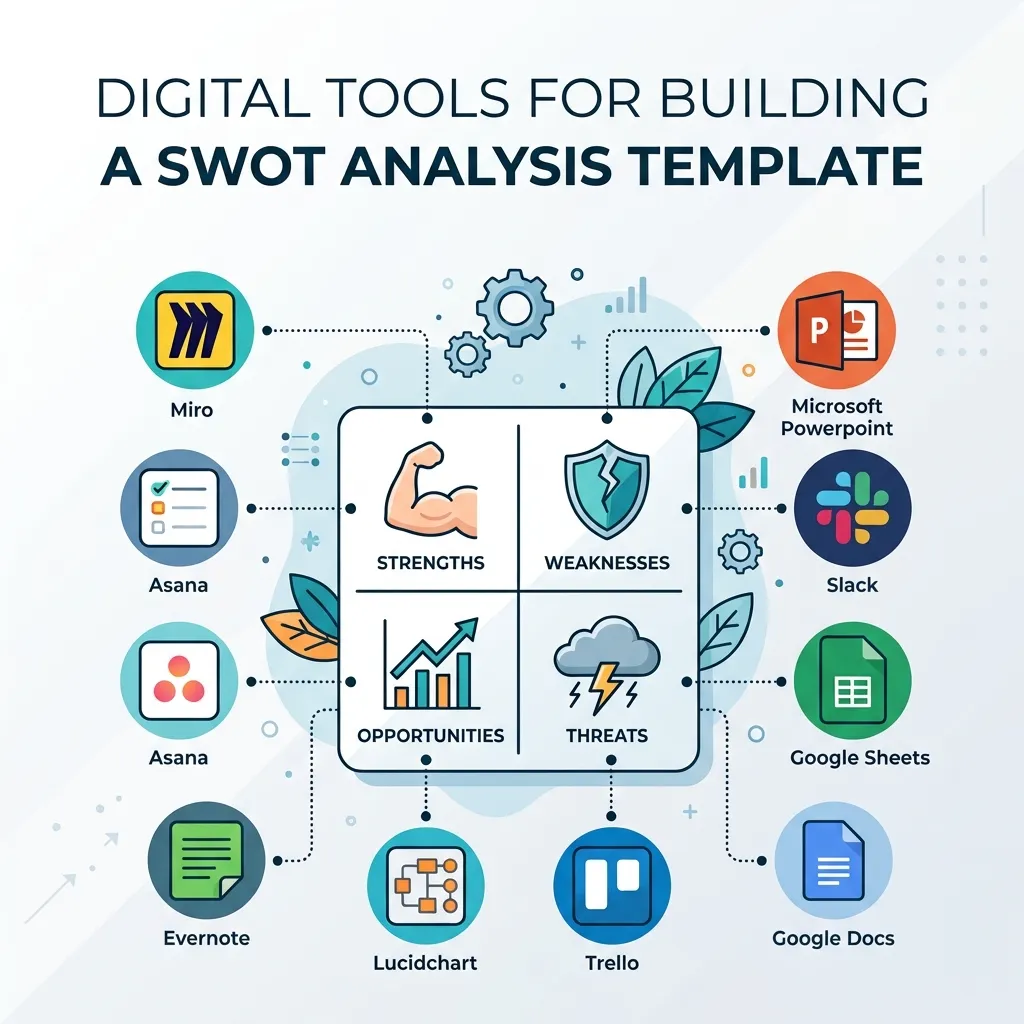
While pen and paper still work, most teams today prefer digital templates for easier sharing and updates. Popular options include:
- Spreadsheet tools (Google Sheets, Excel) for teams who want a data-driven, editable format
- Whiteboard tools (Miro, Canva) for visual, collaborative brainstorming sessions
- Document templates (Word, Google Docs) for simple, presentation-ready reports
- Project management tools that let you convert SWOT findings directly into tracked tasks
Whichever tool you choose, the goal stays the same: a clear, four-quadrant structure that leads directly into a plan of action.
Conclusion
A SWOT analysis template isn’t just a formatting shortcut — it’s a thinking tool that keeps your strategic planning organized, honest, and actionable. By separating strengths and weaknesses from opportunities and threats, and by building in space for prioritization and next steps, you turn a simple exercise into a genuine driver of business growth. Whether you’re launching a new product, refining your digital marketing plan, or simply taking stock of where your business stands, a well-built SWOT analysis template gives you the clarity to move forward with confidence. Start with the classic four-quadrant format, customize it to your industry, and most importantly — revisit it regularly so it keeps working for you long after the first draft.
Frequently Asked Questions (FAQs)
What is a SWOT analysis template used for?
A SWOT analysis template is used to organize and evaluate a business’s internal strengths and weaknesses alongside external opportunities and threats, helping guide strategic decision-making.
Is a SWOT analysis template free to create?
Yes. You can build a basic SWOT analysis template for free using tools like Google Sheets, Google Docs, or Canva. Paid project management tools often offer more advanced, pre-built versions.
How often should I update my SWOT analysis template?
Most businesses benefit from revisiting their SWOT analysis template quarterly, or whenever there’s a major shift in the market, leadership, or business strategy.
What’s the difference between a SWOT analysis and a TOWS matrix?
A standard SWOT analysis lists factors in four separate categories, while a TOWS matrix cross-references those categories to generate specific strategic actions.
Can a SWOT analysis template be used for personal development?
Yes. A personal SWOT analysis template applies the same four categories — strengths, weaknesses, opportunities, and threats — to an individual’s career or personal goals instead of a business.
What should I avoid putting in a SWOT analysis template?
Avoid vague statements, unverified assumptions, and mixing internal factors (strengths/weaknesses) with external ones (opportunities/threats).
How many points should each quadrant have?
Ideally, 3–7 well-prioritized points per quadrant. More than that can dilute focus and make the analysis harder to act on.
Does a SWOT analysis template work for small businesses?
Absolutely. In fact, small businesses often benefit the most, since a SWOT analysis template helps them compete strategically with limited resources by focusing on clear priorities.
What comes after filling out a SWOT analysis template?
The next step is converting each key insight into a specific action item, assigning an owner, and setting a deadline — this is what turns analysis into results.
Can I use a SWOT analysis template for marketing campaigns specifically?
Yes. Many teams use a dedicated digital marketing SWOT template that focuses on channels, ad performance, and competitive positioning rather than the whole business.
What’s the best format for a SWOT analysis template — spreadsheet or document?
It depends on your needs. Spreadsheets work well for data-heavy, collaborative analysis, while documents are better for presentation-ready reports shared with stakeholders.
Who invented the SWOT analysis framework?
The SWOT framework is widely credited to a research team at the Stanford Research Institute in the 1960s, though its exact origins are debated among business historians.



Leave a Reply