

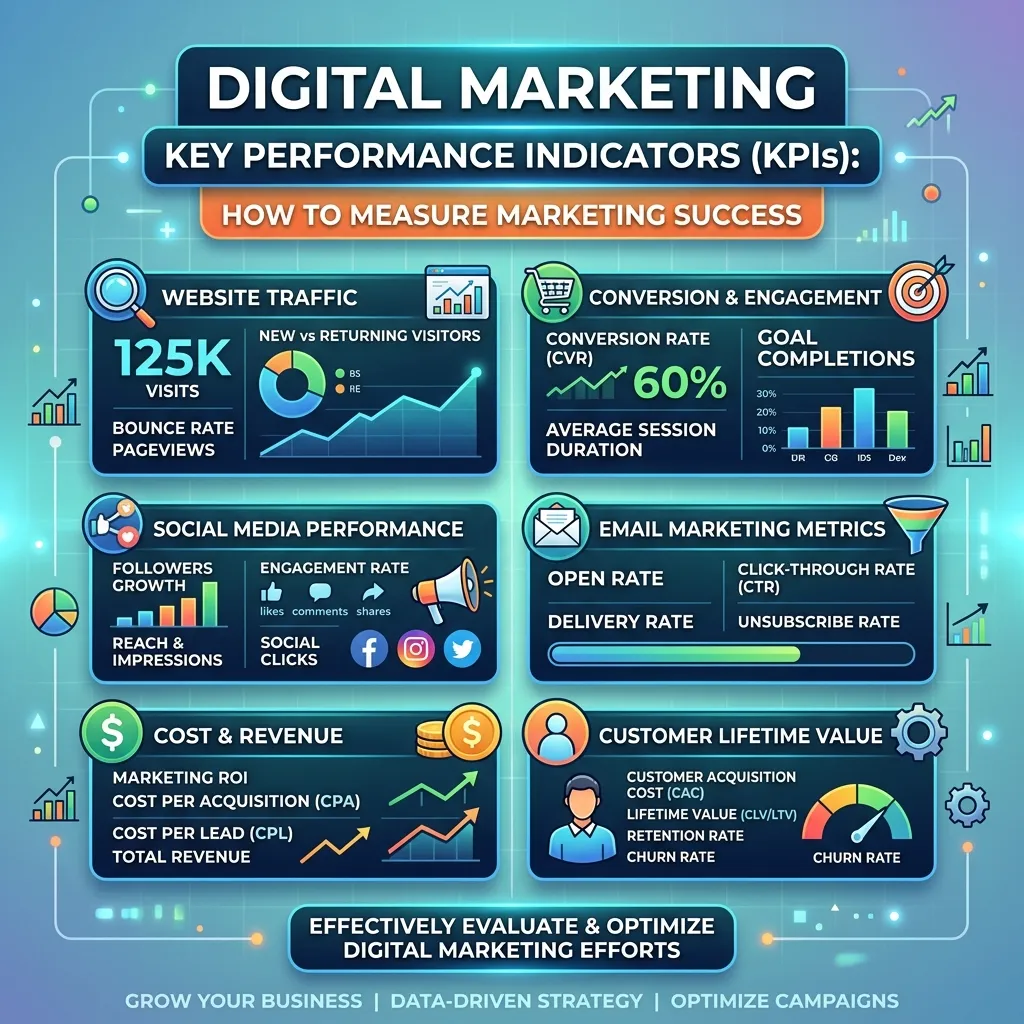
Marketing KPIs in Digital Marketing help teams measure what matters, connect activity to revenue, and improve decisions through clear goals, clean tracking, and consistent performance review.
Why Marketing KPIs in Digital Marketing Matter
Marketing KPIs in Digital Marketing are the numbers that tell you whether your strategy is moving in the right direction. Without them, a campaign can look active while producing weak results. With them, you can see which channels deserve more budget, which messages create interest, and which steps need improvement.
For businesses that want steady growth, Marketing KPIs in Digital Marketing are not optional. They are the language of performance. They show whether a website is attracting the right visitors, whether content is converting attention into action, and whether advertising is producing real value instead of noise. When leaders understand these numbers, they make smarter choices and waste less money.
Digital Marketing Matters for Business Growth because it gives companies a measurable way to attract, engage, and convert customers. The best campaigns are not built on guesswork. They are built on clear signals, consistent review, and the discipline to improve what the data reveals. Marketing KPIs in Digital Marketing give that discipline a structure.
Digital Marketing is Crucial for Modern Businesses because customers now research, compare, and decide online before they ever speak to a sales team. That means every impression, click, visit, and conversion can become part of a broader performance story. Marketing KPIs in Digital Marketing help you read that story clearly.
What Is a KPI in Digital Marketing
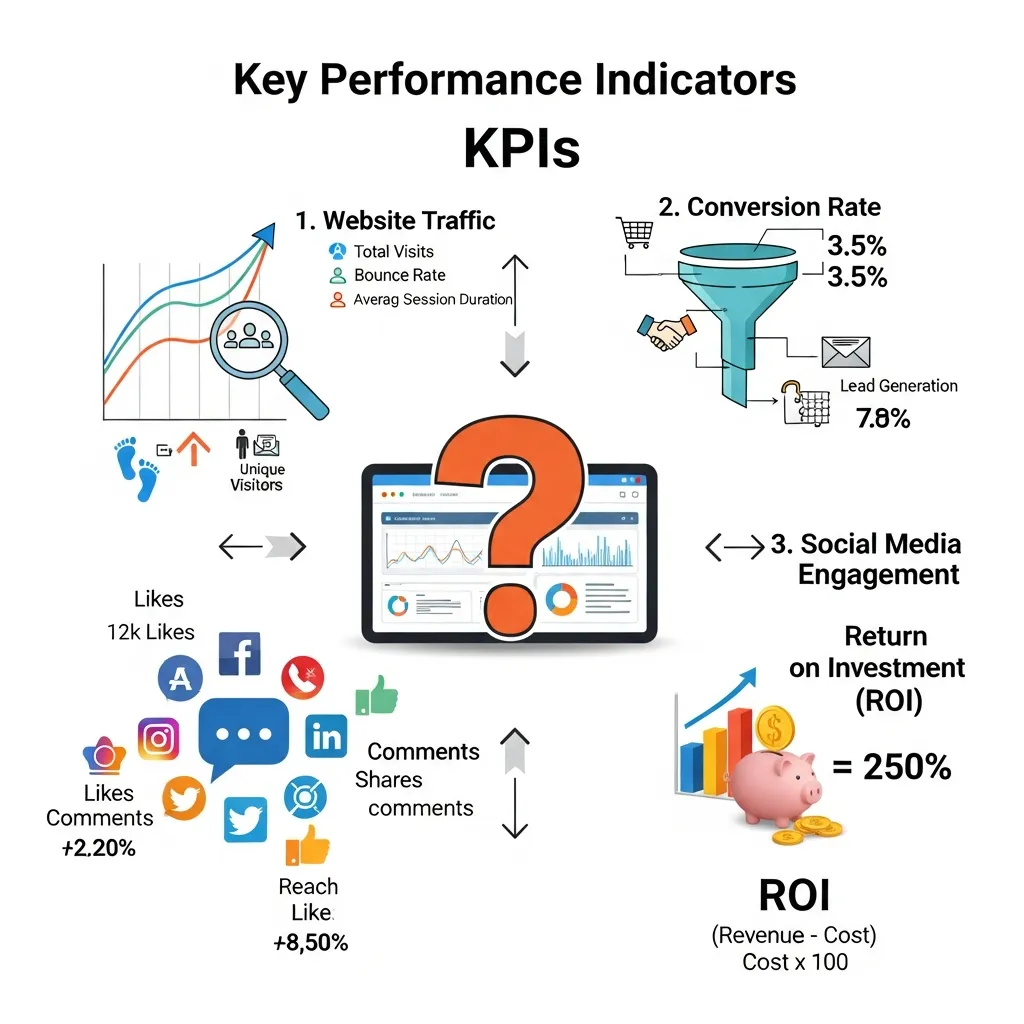
A KPI is a key performance indicator. In simple terms, it is a measurement that shows progress toward a business goal. Marketing KPIs in Digital Marketing might include website traffic, lead quality, conversion rate, cost per acquisition, customer lifetime value, or return on ad spend.
Not every metric is a KPI. Many numbers are useful, but a KPI must connect to a meaningful outcome. If a number does not help you make decisions, it is only a statistic. Marketing KPIs in Digital Marketing are different because they guide action. They help you answer questions like these: Are we attracting the right audience? Are we turning interest into sales? Are our campaigns efficient enough to scale?
The best KPIs are aligned with a business objective. If the goal is brand awareness, the KPI might focus on reach or impressions. If the goal is lead generation, the KPI might focus on form submissions or qualified leads. If the goal is revenue, the KPI might focus on conversion rate, revenue per visitor, or ROAS. Marketing KPIs in Digital Marketing only become valuable when they connect to the real purpose of the campaign.
The Psychology Behind KPIs
People do not react to numbers in the same way they react to stories, but the right numbers can still influence behavior deeply. Marketing KPIs in Digital Marketing work because they turn vague effort into visible progress. Teams feel more motivated when they can see improvement. Leaders trust decisions more when they are supported by evidence. Customers benefit indirectly when businesses use data to create better experiences.
There is also emotional relief in clarity. When performance is uncertain, teams often argue from opinion. When Marketing KPIs in Digital Marketing are tracked properly, conversations become more grounded. Instead of asking who “feels” the campaign is working, the team can ask what the numbers show and why.
This matters because human psychology often pushes businesses toward shortcuts. A visually attractive campaign can seem successful even when it is not producing sales. Marketing KPIs in Digital Marketing protect teams from that illusion. They keep attention on results, not appearances.
Core Marketing KPIs in Digital Marketing
1. Website Traffic
Website traffic shows how many people visit your site. It is one of the most basic Marketing KPIs in Digital Marketing, but it should never be viewed alone. Traffic without intent or engagement is not enough. You need to know where the traffic comes from, how long users stay, and whether they take meaningful actions.
2. Conversion Rate
Conversion rate measures how many visitors complete a desired action. This may be a purchase, a form fill, a sign-up, or a download. Among Marketing KPIs in Digital Marketing, conversion rate is one of the most important because it shows how well your message and offer are working together.
3. Cost Per Acquisition
Cost per acquisition tells you how much it costs to gain one customer or lead. It is one of the clearest Marketing KPIs in Digital Marketing for evaluating paid campaigns. If acquisition cost rises too high, growth becomes harder to sustain.
4. Click-Through Rate
Click-through rate shows how often people click after seeing an ad, email, or search result. It is a useful indicator of relevance. In Marketing KPIs in Digital Marketing, CTR often reflects how well your message matches user intent.
5. Bounce Rate
Bounce rate shows how many visitors leave after viewing only one page. It is not always a failure metric, but it can reveal a mismatch between promise and content. Marketing KPIs in Digital Marketing should always be interpreted with context, and bounce rate is a perfect example.
6. Engagement Rate
Engagement rate can include likes, shares, comments, time on page, scroll depth, and interactions. It helps measure audience interest. In Marketing KPIs in Digital Marketing, engagement is often a bridge between awareness and conversion.
7. Return on Ad Spend
Return on ad spend tells you how much revenue you earn for every unit of ad spend. It is especially valuable in paid advertising. Marketing KPIs in Digital Marketing often rely on ROAS when teams need to decide whether campaigns should be scaled or paused.
8. Customer Lifetime Value
Customer lifetime value estimates the total value a customer brings over time. This KPI is important because not all customers are equal in long-term value. Marketing KPIs in Digital Marketing become more strategic when they include lifetime value rather than only first-sale revenue.
A Simple KPI Framework
| Business Goal | Primary KPI | Supporting KPI | Why It Matters |
|---|---|---|---|
| Brand awareness | Reach | Impressions, CTR | Measures visibility and recall |
| Lead generation | Lead volume | Lead quality, CPL | Shows whether interest becomes leads |
| Sales growth | Conversion rate | ROAS, AOV | Shows revenue efficiency |
| Retention | Repeat purchase rate | CLV, churn rate | Shows long-term customer value |
| Content performance | Time on page | Scroll depth, shares | Shows content relevance |
Marketing KPIs in Digital Marketing become much easier to manage when they are grouped by business goal. This prevents teams from chasing every number at once.
How to Choose the Right KPIs
The best Marketing KPIs in Digital Marketing depend on the stage of your funnel and the objective of your campaign. A startup trying to gain attention needs different KPIs than an established brand trying to improve retention. The wrong KPI can lead to the wrong behavior.
First, define the outcome you want. Do you want awareness, leads, sales, loyalty, or education? Next, choose a KPI that reflects that outcome directly. Finally, add supporting metrics that help explain the result. Marketing KPIs in Digital Marketing should be simple enough to understand but detailed enough to guide action.
It is also important to avoid vanity metrics. A large number of likes may feel good, but it may not lead to revenue. A high number of impressions may show visibility, but not quality. Marketing KPIs in Digital Marketing must be judged by business relevance, not just surface-level appeal.
How KPIs Connect to the Funnel
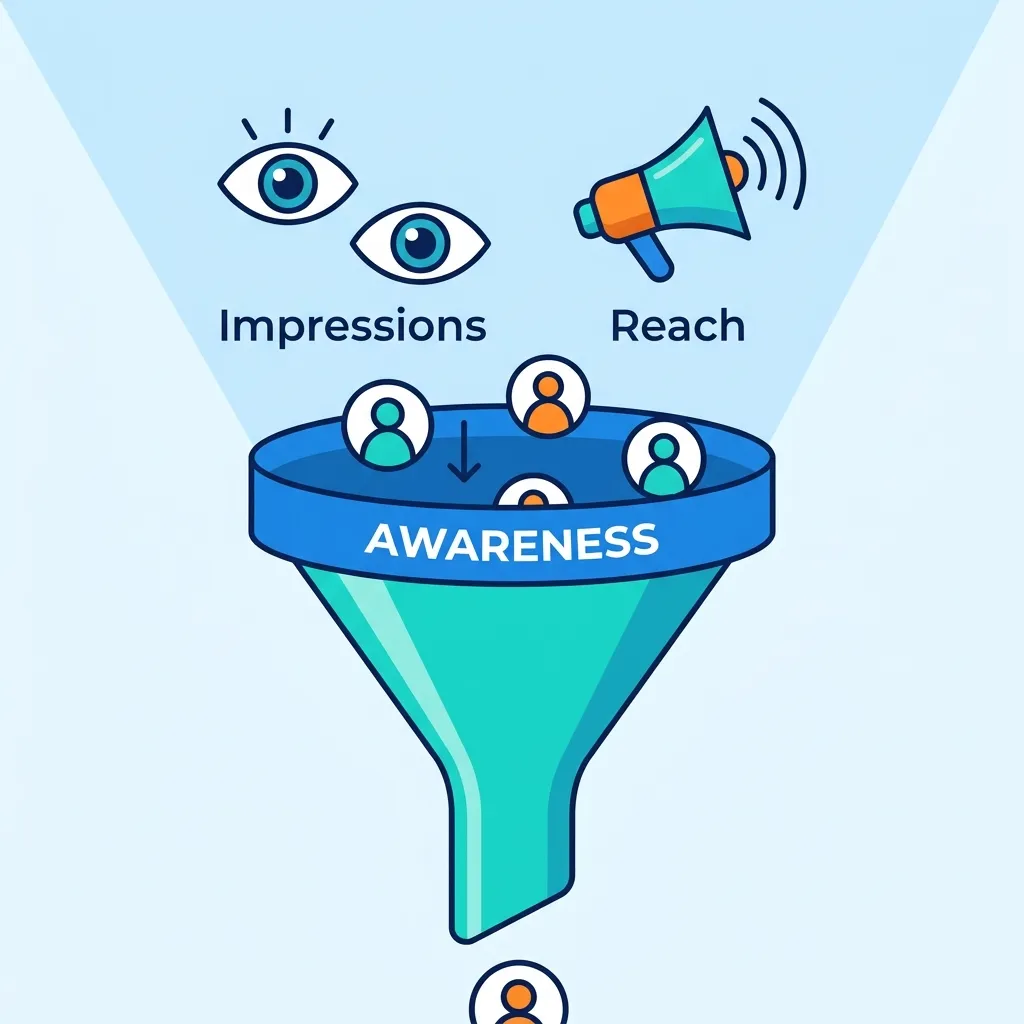
The customer journey usually moves from awareness to interest, then consideration, then conversion, and finally retention. Marketing KPIs in Digital Marketing should reflect each stage of that journey.
At the awareness stage, you may track reach, impressions, and website visits. At the interest stage, you may track engagement, content clicks, and repeat visits. At the consideration stage, you may track lead submissions, demo requests, or pricing page views. At the conversion stage, you may track sales, sign-ups, or purchases. At the retention stage, you may track repeat purchase rate, churn, or customer satisfaction.
This funnel approach matters because a business can fail quietly at any stage. Marketing KPIs in Digital Marketing reveal where the leak is happening. If traffic is strong but conversions are weak, the problem may be landing page clarity, offer fit, or audience mismatch. If conversions are strong but retention is weak, the problem may be onboarding or product experience.
Why SEO Should Be Measured Carefully
SEO Marketing is often evaluated too slowly or too shallowly. Some teams look only at rankings, but rankings alone do not show business value. Better SEO analysis includes organic traffic quality, keyword intent, engagement, and assisted conversions.
Marketing KPIs in Digital Marketing are especially important for SEO because organic search is often a long-term channel. You may not see instant returns, but you can see signs of progress through clicks, impressions, rankings, and on-site behavior. A page that ranks well but fails to convert is not fully successful. A page that attracts the right users and moves them toward action is far more valuable.
SEO Marketing works best when it is tied to business outcomes. That means content should be tracked not only for visits, but also for lead generation, purchases, or subscriber growth. Marketing KPIs in Digital Marketing help connect search visibility to practical results.
Why Paid Campaigns Need KPI Discipline
Paid media can scale quickly, but it can also waste budget quickly. That is why Marketing KPIs in Digital Marketing are essential for advertising. They show whether your spending creates profitable outcomes or just expensive clicks.
The most useful paid media KPIs often include CTR, CPC, conversion rate, CPA, ROAS, and frequency. Together, these numbers show whether the ad is attractive, efficient, and profitable. If one metric looks good while others look weak, the campaign may need deeper review.
CPA Marketing Strategies are useful here because they push marketers to focus on action-based outcomes. Whether the goal is a lead, a trial, or a sale, the campaign should be judged by what users actually do. Marketing KPIs in Digital Marketing help reveal whether the strategy is producing real business progress or only engagement on the surface.
Common Mistakes in KPI Tracking
Many teams track too many metrics and not enough meaning. Marketing KPIs in Digital Marketing should not become a reporting ritual with no strategic value. A dashboard full of numbers can still fail to answer the most important question: is the business moving forward?
Another mistake is changing KPIs too often. If the goal changes every week, the team cannot learn from the data. Marketing KPIs in Digital Marketing work best when they are stable enough to show patterns over time. Short-term noise should not replace long-term clarity.
A third mistake is ignoring context. A drop in traffic may not be a problem if conversion quality improves. A rise in clicks may not be good if bounce rate increases sharply. Marketing KPIs in Digital Marketing should be read together, not in isolation.
A fourth mistake is using vanity metrics to impress stakeholders. It may be tempting to highlight the biggest numbers on a slide, but that approach damages decision-making. Better to show fewer metrics that truly matter.
Building a KPI Dashboard That Actually Helps
A strong dashboard should answer questions quickly. Marketing KPIs in Digital Marketing become more useful when they are grouped by stage and objective. Instead of listing twenty metrics, focus on a small set that reflects the health of the funnel.
Your dashboard should ideally include:
- Traffic indicators
- Engagement indicators
- Conversion indicators
- Revenue indicators
- Retention indicators
Marketing KPIs in Digital Marketing should also be easy to compare over time. Trend lines matter more than isolated figures. A dashboard should help you see what improved, what declined, and what needs attention.
If the dashboard is too complicated, teams stop using it. If it is too simple, it hides useful detail. The best balance is clarity with enough depth to support decisions.
Using KPIs to Improve Content Strategy
Content performs better when it is guided by data. Marketing KPIs in Digital Marketing can show which articles attract the right audience, which pages hold attention, and which topics produce conversions. This makes content strategy much more practical.
For example, if a blog post gets traffic but no leads, the call to action may be weak or the topic may be too broad. If a page converts well but attracts low traffic, the SEO opportunity may be underdeveloped. Marketing KPIs in Digital Marketing help identify both strengths and gaps.
This is also where user psychology matters again. People respond to clarity, trust, and relevance. The best-performing content usually aligns with search intent, addresses a real need, and removes friction. Marketing KPIs in Digital Marketing show whether your content is doing that job well.
Using KPIs for Lead Quality
Lead volume alone can be misleading. Ten weak leads may be less valuable than two strong ones. Marketing KPIs in Digital Marketing should therefore include lead quality measures such as qualification rate, sales acceptance rate, or lead-to-close rate.
When marketing and sales teams define quality together, reporting becomes more useful. A campaign that generates fewer but better leads may deserve more budget than a campaign with high volume and low intent. Marketing KPIs in Digital Marketing can prevent teams from celebrating activity that does not create real revenue.
Lead quality is also one reason businesses must think beyond the first click. A visitor may not convert immediately but may return later through another channel. Marketing KPIs in Digital Marketing should account for this layered behavior whenever possible.
The Role of Reporting Rhythm
Performance should not be reviewed randomly. Weekly, monthly, and quarterly reviews each serve a different purpose. Marketing KPIs in Digital Marketing become more actionable when they follow a rhythm.
Weekly reviews help you catch sudden issues and quick wins. Monthly reviews help you identify patterns and compare channels. Quarterly reviews help you assess strategic direction. If your team only checks results when something goes wrong, you lose the chance to improve steadily.
A good reporting rhythm also reduces emotional decision-making. Instead of reacting to every small fluctuation, teams can focus on meaningful trends. Marketing KPIs in Digital Marketing should guide calm, informed action.
Turning KPI Data Into Better Decisions
Data only matters when it leads to action. Marketing KPIs in Digital Marketing should help you decide what to stop, start, or continue. If a channel has poor conversion but strong engagement, maybe the message is working but the offer is weak. If an email campaign gets good opens but poor clicks, the subject line may be fine but the content may need work.
Decision-making becomes easier when the KPI tells a story. What happened? Why did it happen? What should happen next? Marketing KPIs in Digital Marketing are most effective when they answer those questions clearly.
The most successful teams do not just collect data. They interpret it, discuss it, and act on it. That is how a reporting process turns into growth.
A Practical Example of KPI Thinking
Imagine a company launching a new service page. The page gets traffic from search, social, and email. At first glance, the numbers look healthy. But when the team checks Marketing KPIs in Digital Marketing, they see that visitors from search stay longer and convert more often, while social visitors leave quickly.
That insight changes the strategy. The company increases SEO content investment, adjusts the landing page for search intent, and revises the social message to better match audience expectation. Over time, conversion improves.
This is the power of Marketing KPIs in Digital Marketing. They turn general effort into focused improvement. They show where attention matters most and where change has the highest value.
How KPIs Support Business Growth
Marketing KPIs in Digital Marketing are directly tied to growth because they help businesses spend smarter, communicate better, and convert more efficiently. Growth is not only about reaching more people. It is about reaching the right people and giving them a reason to act.
Digital Marketing Matters for Business Growth because it creates measurable pathways from visibility to revenue. A business that tracks the right KPIs can improve those pathways systematically. It can see which campaigns work, which messages resonate, and which audiences have the strongest potential.
Digital Marketing is Crucial for Modern Businesses because customer behavior is now heavily digital. Buyers research online, compare online, and often decide online. Marketing KPIs in Digital Marketing help businesses keep pace with that reality and stay competitive.
Best Practices for KPI Management
The strongest KPI systems are simple, aligned, and consistent. Choose the few metrics that truly matter. Review them regularly. Tie them to business outcomes. Make sure the team understands what each KPI means and what action it should trigger.
Marketing KPIs in Digital Marketing should never be treated as decoration. They are working tools. They should guide planning, execution, and optimization. The more directly they connect to strategy, the more valuable they become.
It also helps to document definitions. If one team member defines a lead differently from another, reporting becomes unreliable. Clean definitions keep Marketing KPIs in Digital Marketing accurate and trustworthy.
Bringing Strategy and Measurement Together

A great strategy without measurement is only a guess. Measurement without strategy is only noise. Marketing KPIs in Digital Marketing connect the two. They allow a business to act with purpose and verify the result.
That connection is especially important in competitive markets. The companies that improve fastest are often the ones that measure most carefully. They do not assume success. They confirm it. They do not just publish content, run ads, or send emails. They examine how those actions perform and adjust accordingly.
Conclusion
Marketing KPIs in Digital Marketing give businesses a clear way to measure progress, improve campaigns, and connect activity to outcomes. When the right KPIs are chosen, teams can see what attracts attention, what builds trust, and what drives conversions. That clarity reduces waste and improves decision-making. It also helps leaders focus on growth, not guesswork. Whether your goal is brand awareness, lead generation, sales, or retention, the right KPI framework turns digital marketing into a measurable business asset. Strong tracking, consistent review, and honest interpretation are what make results sustainable.
FAQs
1. What are Marketing KPIs in Digital Marketing?
They are performance measurements used to evaluate how well digital marketing activities support business goals such as traffic, leads, sales, and retention.
2. Why are Marketing KPIs in Digital Marketing important?
They help businesses understand what is working, what is not, and where to improve for better results and smarter spending.
3. Which KPI is the most important?
There is no single universal KPI. The most important one depends on the goal, such as revenue, leads, awareness, or retention.
4. How do Marketing KPIs in Digital Marketing help with SEO?
They show whether organic traffic is bringing the right users, whether content is engaging, and whether SEO activity supports real business outcomes.
5. Should I track every metric available?
No. It is better to focus on a small group of meaningful KPIs that clearly connect to your business objectives.
6. What is the difference between a metric and a KPI?
A metric is any number you can track. A KPI is a metric tied directly to a strategic goal.
7. How often should I review KPIs?
Weekly, monthly, and quarterly reviews each have value. The right rhythm depends on your channel and campaign type.
8. Can KPIs improve content marketing?
Yes. Marketing KPIs in Digital Marketing help identify which content attracts, engages, and converts the right audience.
9. Why do some campaigns look successful but fail to grow the business?
They may be built on vanity metrics instead of meaningful KPIs, so the activity looks strong while the actual results remain weak.
10. How do I start using KPIs better?
Begin by defining your goals, choosing a few aligned KPIs, tracking them consistently, and using the results to make clear decisions.



Leave a Reply