

Discover how to elevate your property business with digital marketing for real estate agents. This comprehensive guide covers everything from SEO and website optimization to social media strategies, email campaigns, and paid advertising. Learn how to generate high-quality leads, build lasting client relationships, and dominate your local market online.
The real estate industry has undergone a massive transformation. Gone are the days when a simple newspaper ad or a bench sign was enough to keep a steady stream of clients rolling in. Modern buyers and sellers start their journeys online, swiping through listings and researching local market experts before ever making a phone call.
If you want to stay visible and competitive, adopting a robust online strategy is no longer optional. Implementing digital marketing for real estate agents is the most effective way to reach your target audience exactly where they spend their time. It allows you to showcase properties dynamically, build a trustworthy personal brand, and capture high-intent leads round the clock.
This guide explores the essential components of digital marketing for real estate agents. We will walk through building a strong online foundation, maximizing social media, leveraging email automation, and much more. Whether you manage your own campaigns or plan to hire a Digital Marketing Specialist, these strategies will set you up for long-term success.
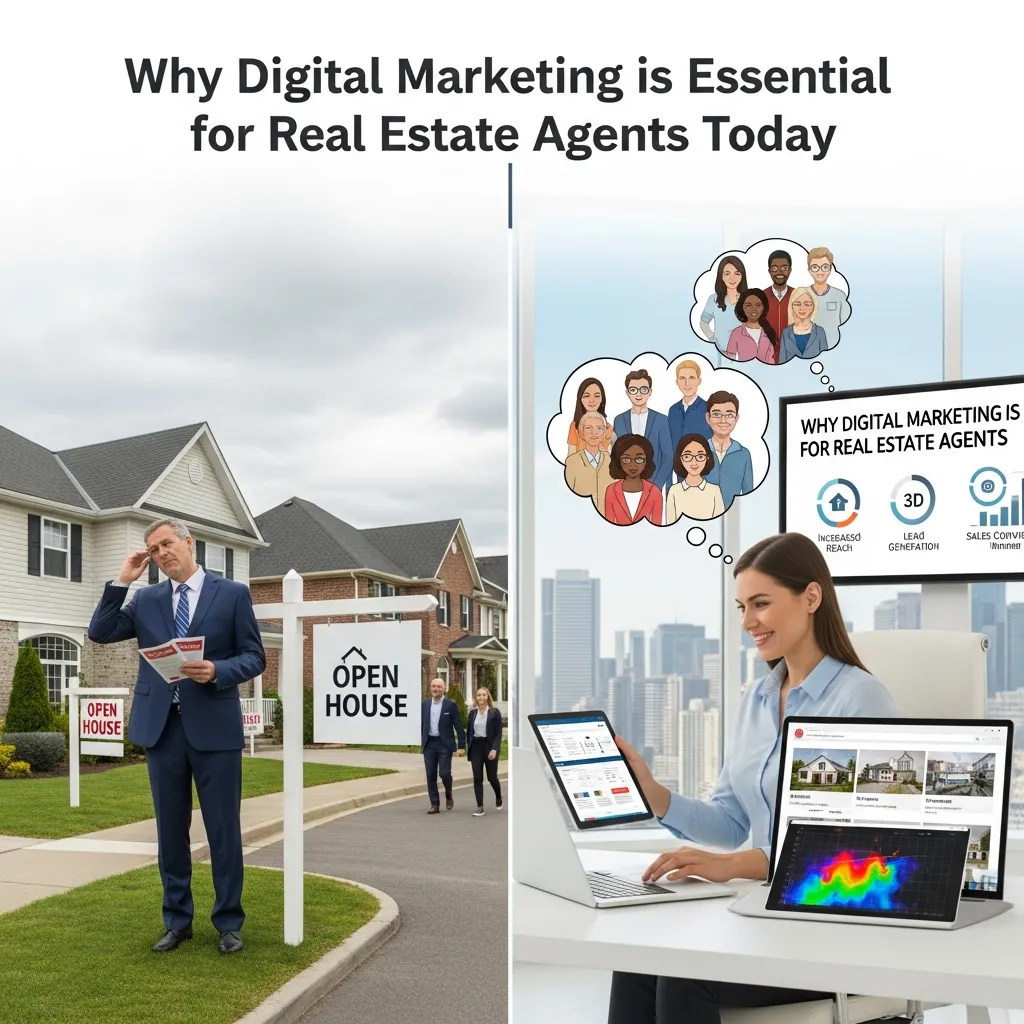
Why Digital Marketing is Essential for Real Estate Agents Today
Shifting Consumer Behavior
The overwhelming majority of home buyers begin their search online. They rely on search engines, property portals, and social media platforms to gather information. If your real estate business lacks a strong digital footprint, you are essentially invisible to a massive segment of potential clients. Digital marketing for real estate agents ensures you meet buyers and sellers right at the beginning of their journey.
Increased Competition
Your local market is likely crowded with other agents vying for the same listings and buyers. Digital marketing allows you to stand out. By consistently publishing valuable content, showcasing successful sales, and gathering positive reviews, you build a competitive edge that traditional methods simply cannot match.
Cost-Effectiveness Compared to Traditional Methods
Print advertising, billboards, and direct mail campaigns require significant upfront investment with limited tracking capabilities. Digital marketing for real estate agents offers a highly targeted approach. You can set precise budgets, track every click, and adjust campaigns in real time, ensuring a much higher return on investment.
Building Your Online Foundation: Website and SEO
The Agent’s Digital Hub: A Professional Website
Your website is the center of your online presence. It should be fast, mobile-friendly, and easy to navigate. Include clear calls-to-action, an intuitive property search feature, and detailed information about your services. A high-quality website acts as a 24/7 digital storefront for your business.
Mastering Local SEO for Real Estate
Search Engine Optimization (SEO) helps your website rank higher on Google when people search for terms like “homes for sale near me” or “best realtor in [City].” Optimize your site by claiming your Google Business Profile, using local keywords, and ensuring your name, address, and phone number are consistent across the web.
Content is King: Blog Posts and Neighborhood Guides
Creating valuable content is a cornerstone of digital marketing for real estate agents. Write blog posts about the home-buying process, local market trends, and home improvement tips. Develop comprehensive neighborhood guides that highlight schools, parks, and local amenities. This establishes you as the go-to local expert.
Social Media Strategies for Real Estate Agents
Choosing the Right Platforms (Facebook, Instagram, LinkedIn, TikTok)
Not all social media platforms serve the same purpose. Facebook is excellent for community building and targeted ads. Instagram is highly visual, perfect for property photos. LinkedIn is ideal for networking with investors and other professionals. TikTok offers a unique space for short, engaging, and often viral property walkthroughs.
Engaging Content Ideas (Virtual Tours, Agent Spotlights, Local Insights)
Avoid only posting “Just Listed” or “Just Sold” graphics. Mix up your feed with virtual property tours, behind-the-scenes glimpses of your workday, and highlights of local businesses. This humanizes your brand and keeps your audience engaged between transactions.
Paid Social Media Advertising for Targeted Leads
Organic reach on social media is often limited. Utilize paid ads to target specific demographics, geographic areas, and even behavioral traits. Running targeted lead generation ads on Facebook and Instagram is a highly effective tactic in digital marketing for real estate agents.
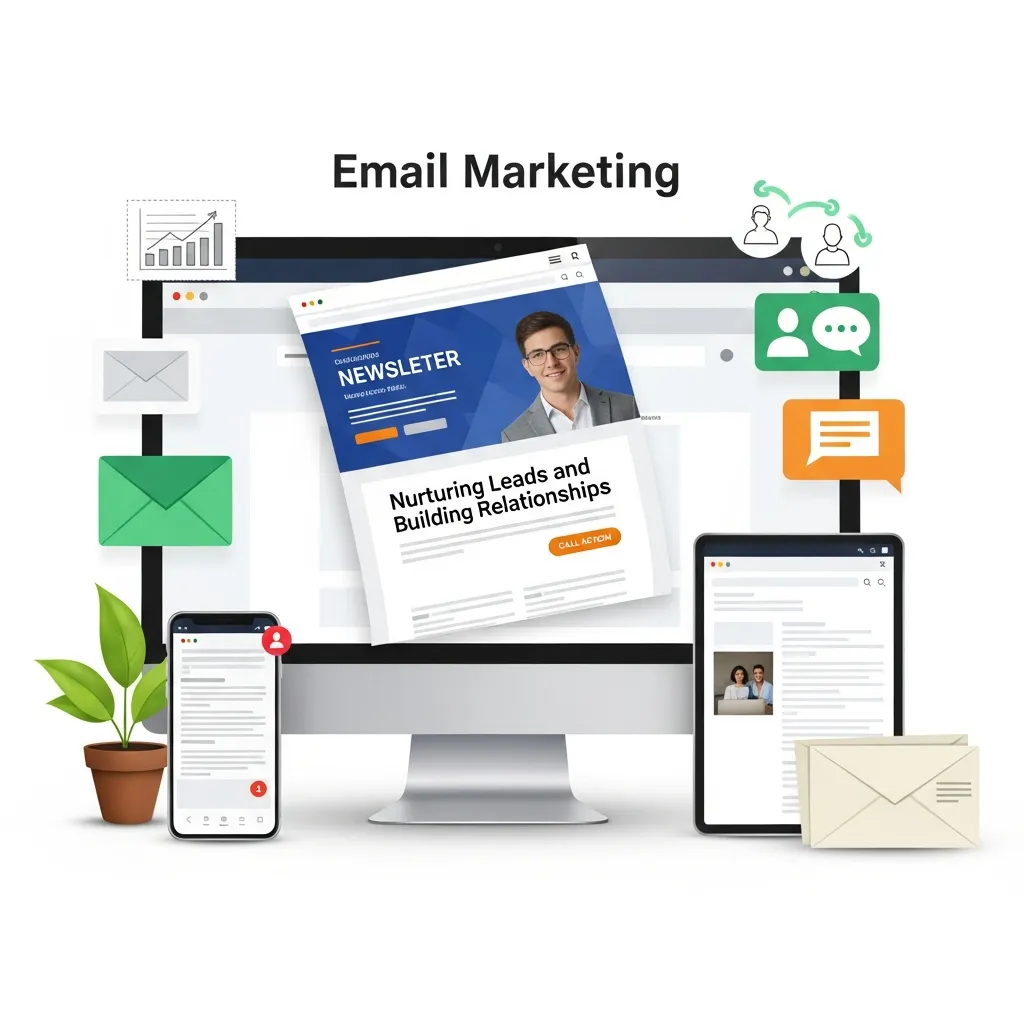
Email Marketing: Nurturing Leads and Building Relationships
Building Your Email List
Offer something of value in exchange for an email address. This could be a free guide for first-time homebuyers, a local market report, or a checklist for staging a home. Use lead capture forms on your website and social media channels to steadily grow your list.
Crafting Effective Email Campaigns (Newsletters, Property Alerts, Market Updates)
Keep your audience informed without overwhelming them. Send out a monthly newsletter featuring your latest blog posts, new listings, and community news. Set up automated property alerts so active buyers receive immediate updates when a home matching their criteria hits the market.
Automation for Efficiency
Use email marketing software to set up automated drip campaigns. When a new lead subscribes, they should automatically receive a sequence of welcoming emails that introduce you, provide valuable resources, and gently encourage them to schedule a consultation.
Leveraging Video Marketing in Real Estate
Property Walkthroughs and Virtual Tours
High-quality video walkthroughs give potential buyers a realistic sense of a property’s layout and flow. Virtual tours allow out-of-town buyers to explore homes at their own pace. Video is a non-negotiable aspect of modern digital marketing for real estate agents.
Agent Introductions and Testimonials
Record a professional introduction video detailing your experience, values, and approach to real estate. Additionally, capture video testimonials from satisfied clients. Seeing and hearing real people praise your services builds incredible trust.
Live Q&A Sessions and Webinars
Host live sessions on Facebook or Instagram to answer common real estate questions. You can also host webinars on topics like “How to Buy a Home in a Seller’s Market,” positioning yourself as an accessible and knowledgeable resource.
Paid Advertising: Google Ads and Beyond
Google Search Ads for Real Estate Leads
Capture high-intent traffic by bidding on specific search terms. When someone searches for “sell my house fast in [City],” your ad can appear at the very top of the search results, driving immediate, qualified traffic to your landing page.
Display Advertising for Brand Awareness
Display ads appear on various websites across the internet. While they may not generate as many direct leads as search ads, they are excellent for keeping your face and brand top-of-mind for people browsing local news sites and blogs.
Retargeting Strategies
Ever visit a website and then see ads for that company everywhere you go? That is retargeting. It is a crucial strategy in digital marketing for real estate agents, allowing you to re-engage people who visited your website but left without contacting you.
Reputation Management and Online Reviews
Encouraging Client Reviews
After a successful closing, explicitly ask your clients to leave a review on Google, Zillow, or Facebook. Make the process as simple as possible by providing direct links. Positive reviews act as powerful social proof.
Responding to Feedback (Positive and Negative)
Always reply to your reviews. Thank clients for their kind words to show you appreciate their business. If you receive a negative review, respond professionally, address the concern, and offer to take the conversation offline to find a resolution.
Building Trust and Credibility Online
Consistent positive reviews combined with active online engagement build a digital reputation that works for you around the clock. Your online credibility directly influences a potential client’s decision to hire you.
Measuring Success: Analytics and KPIs for Digital Marketing for Real Estate Agents
Key Metrics to Track
You cannot improve what you do not measure. Track your website traffic, lead conversion rates, email open rates, and social media engagement. Understanding these numbers helps you determine which strategies yield the best results.
Using Google Analytics and Social Media Insights
Install Google Analytics on your website to see where your visitors are coming from and which pages they spend the most time on. Use native social media insights to understand your audience demographics and peak engagement times.
Adjusting Your Strategy Based on Data
Review your analytics regularly. If your Facebook ads are generating cheap leads but your email open rates are low, reallocate your time and budget to optimize the underperforming areas. Data-driven decisions are the hallmark of effective digital marketing for real estate agents.
Emerging Trends in Digital Marketing for Real Estate
AI and Chatbots for Lead Qualification
Artificial intelligence is changing how agents interact with prospects. Chatbots on your website can answer basic questions, schedule appointments, and qualify leads 24/7, ensuring you never miss an opportunity.
Virtual Reality and Augmented Reality in Property Showings
VR and AR technologies are making it possible for buyers to visualize empty spaces with virtual furniture or take immersive 3D tours from anywhere in the world, drastically expanding your potential buyer pool.
Hyper-Personalization
Consumers expect tailored experiences. Using data, you can deliver highly personalized property recommendations and content to individual leads, increasing the likelihood of conversion.
The Role of a Digital Marketing Specialist in Real Estate
When to Hire a Specialist
As your business grows, managing your own marketing can become overwhelming. If you find yourself neglecting follow-ups or failing to post consistently, it might be time to bring in professional help.
What to Look for in a Digital Marketing Specialist
Look for someone with a proven track record in the real estate industry. A strong Digital Marketing Specialist will understand local SEO, lead generation compliance, and how to craft campaigns that speak directly to homebuyers and sellers.
Collaboration for Optimal Results
Hiring a Digital Marketing Specialist is a partnership. You provide the industry expertise, property details, and personal branding, while they handle the technical execution, ad optimization, and data analysis.
Dominating the Digital Landscape as a Real Estate Agent

Thriving in today’s property market requires a proactive and multifaceted online approach. Digital marketing for real estate agents is not a one-time project; it is an ongoing strategy that evolves with technology and consumer behavior. By optimizing your website, engaging on social media, running targeted ads, and nurturing leads through email, you position yourself as a prominent local authority. Embrace these digital tools, analyze your results, and watch your real estate business achieve new levels of success.
FAQ
1. What is digital marketing for real estate agents?
It is the use of online channels—like websites, search engines, social media, and email—to promote real estate services, generate leads, and build a recognizable personal brand in a specific market.
2. How much should a real estate agent spend on digital marketing?
Budgets vary based on goals and market size, but a general rule is to allocate 10% to 15% of your gross commission income toward your overall marketing strategy.
3. Which social media platform is best for real estate?
Facebook and Instagram are generally the most effective due to their visual nature and robust targeted advertising capabilities, though LinkedIn and TikTok also offer unique advantages.
4. Do I really need a website if my broker provides a profile page?
Yes. Having your own independent website gives you complete control over your brand, SEO, and lead capture, ensuring you keep your digital assets even if you change brokerages.
5. How long does it take to see results from real estate SEO?
SEO is a long-term strategy. It typically takes three to six months of consistent effort to see significant improvements in search engine rankings and organic traffic.
6. What should I include in a real estate email newsletter?
Include a mix of active listings, recently sold properties, local market statistics, community news, and helpful tips for homeowners or prospective buyers.
7. Why are Google Ads important for real estate agents?
Google Ads capture people who are actively searching for real estate services in real time, providing high-intent leads that are often ready to buy or sell immediately.
8. How can a Digital Marketing Specialist help my real estate business?
A Digital Marketing Specialist manages the technical aspects of campaigns, optimizes ad spend, improves SEO, and ensures your online presence is professional, allowing you to focus on closing deals.
9. What is a lead magnet in real estate?
A lead magnet is a valuable piece of free content (like a home staging guide or a neighborhood market report) offered in exchange for a prospect’s contact information.
10. How do virtual tours improve real estate marketing?
Virtual tours keep buyers on your website longer, increase engagement, and allow out-of-town or busy buyers to explore a property thoroughly before scheduling an in-person showing.
11. What is retargeting?
Retargeting is a form of online advertising that shows your ads specifically to people who have previously visited your website, helping to bring them back when they are ready to engage.
12. How do I handle negative online reviews?
Respond promptly and professionally. Acknowledge their frustration, avoid getting defensive, and offer to resolve the issue offline. This shows other prospects that you care about client satisfaction.



Leave a Reply