

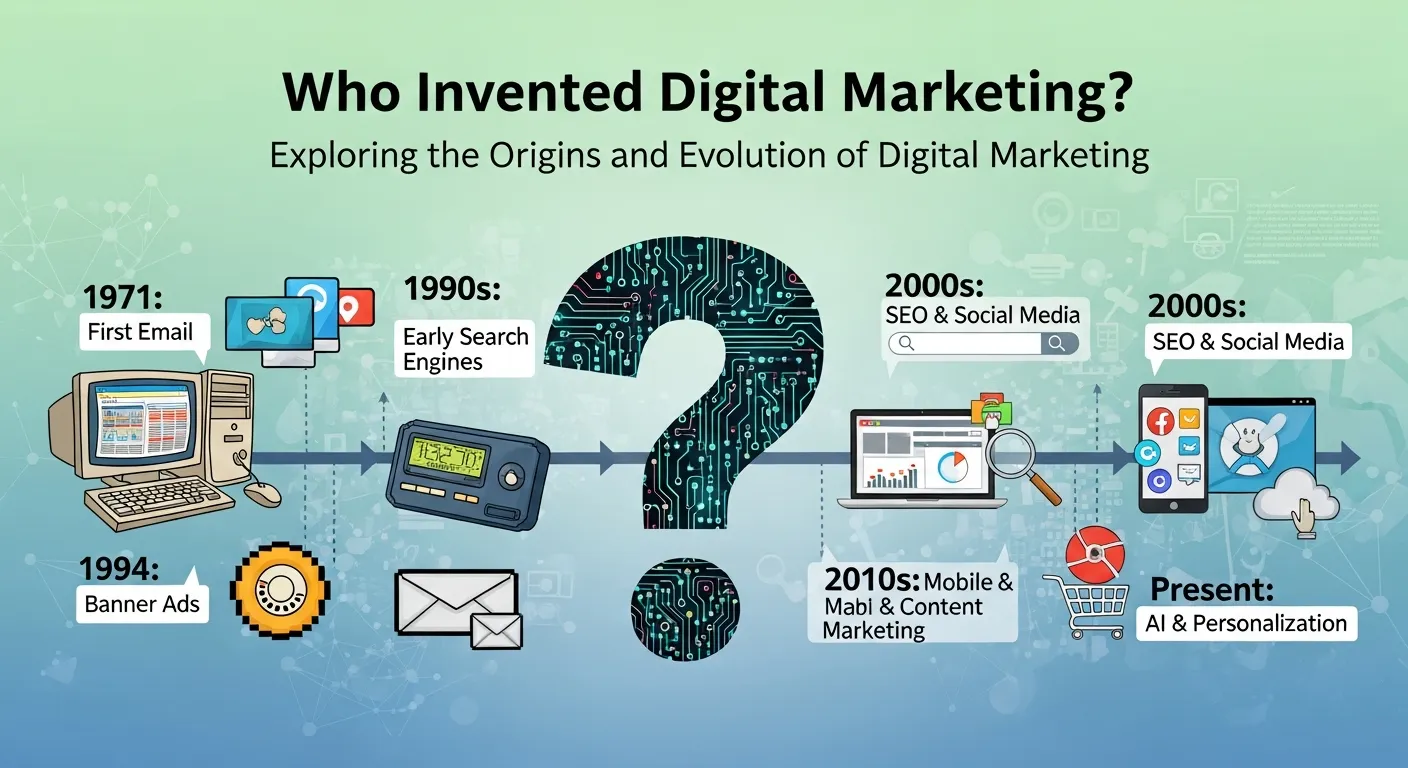
Digital marketing has transformed how businesses connect with customers, but who actually invented digital marketing? This comprehensive guide explores the pioneers, pivotal moments, and key innovations that shaped modern digital marketing—from the first email campaign to today’s AI-powered strategies. Discover how digital marketing evolved from simple banner ads to sophisticated social media campaigns, and learn about the visionaries who made it all possible.
The question “Who invented digital marketing?” doesn’t have a simple answer. Unlike inventions such as the light bulb or telephone, digital marketing emerged gradually through the contributions of countless innovators, technologists, and marketers. Understanding this evolution helps us appreciate the sophisticated digital marketing landscape we navigate today.
Digital marketing’s story begins in the early 1990s with the commercialization of the internet. Before that, marketing relied entirely on traditional channels like print, radio, and television. The shift to digital platforms revolutionized not just how businesses advertised, but fundamentally changed the relationship between brands and consumers.
What makes digital marketing’s origin story particularly compelling is how it mirrors the internet’s own development. Each technological breakthrough—from search engines to social media platforms—opened new possibilities for marketers to reach audiences in innovative ways.
The Dawn of Digital: Early Pioneers Who Shaped the Industry
The First Digital Marketing Moment
Many historians point to 1971 as the birth year of digital marketing, when Ray Tomlinson sent the first email. While Tomlinson’s message was simply a test between two computers sitting side by side, it planted the seed for what would become email marketing—one of digital marketing’s most enduring channels.
However, the first true marketing email didn’t arrive until 1978, when Gary Thuerk, a marketing manager at Digital Equipment Corporation, sent a mass email to approximately 400 potential clients. This campaign generated $13 million in sales, proving that digital channels could drive real business results.
The 1990s: When Digital Marketing Took Off
The real explosion of invented digital marketing occurred in the 1990s. Several milestone events transformed marketing forever:
The First Banner Ad (1994)
AT&T launched the first clickable banner ad on HotWired.com in October 1994. The ad simply read “Have you ever clicked your mouse right here? You will.” This seemingly simple innovation achieved a 44% click-through rate—numbers that would make any modern marketer envious.
The Birth of Search Engines
When Yahoo! launched in 1994 and Google followed in 1998, they created entirely new opportunities for businesses to be discovered online. Search engine optimization (SEO) emerged as a crucial discipline, fundamentally changing how companies thought about visibility and customer acquisition.
The Cookie Revolution
Lou Montulli’s invention of the HTTP cookie in 1994 enabled websites to track user behavior and preferences. This technology became foundational for personalized marketing, remarketing campaigns, and analytics—tools that any digital marketing agency relies on today.
The Evolution Continues: Key Developments That Shaped Modern Digital Marketing
Social Media Changes Everything
The introduction of social media platforms marked another pivotal chapter in digital marketing’s evolution. When Facebook opened to the public in 2006, followed by Twitter’s rise and Instagram’s launch in 2010, marketers gained unprecedented access to audiences.
Digital marketing now included social media as a critical component. Brands could build communities, engage in conversations, and create content that spread organically. Some entrepreneurs even became a millionaire from digital marketing by mastering these platforms and building personal brands that resonated with millions.
Social media fundamentally changed the power dynamic between brands and consumers. For the first time, customers could publicly praise or criticize companies, forcing businesses to become more transparent and responsive.
The Mobile Revolution
When Apple released the iPhone in 2007, it sparked another seismic shift in digital marketing. Suddenly, consumers carried the internet in their pockets. Marketers had to rethink everything:
- Websites needed to be mobile-responsive
- Ads had to work on smaller screens
- Location-based marketing became possible
- Apps opened entirely new engagement channels
Mobile technology also enabled features like QR codes, push notifications, and in-app advertising—expanding the toolkit available to marketers exponentially.
Content Marketing Emerges as King
As consumers grew weary of traditional advertising, content marketing rose to prominence. Rather than interrupting audiences with ads, smart marketers began creating valuable content that attracted customers organically.
Blogs, videos, podcasts, infographics, and downloadable guides became essential tools. This shift emphasized storytelling, education, and building trust—principles that remain central to effective digital marketing strategies today.
The Key Players: Companies and Individuals Who Pioneered Digital Marketing
The Technology Giants
Several companies played outsized roles in shaping digital marketing:
Google transformed how businesses think about online visibility through search advertising and AdWords (now Google Ads). Their algorithm updates continue to influence SEO strategies worldwide.
Facebook (now Meta) democratized advertising, allowing businesses of any size to target specific audiences with precision previously available only to major corporations.
Amazon pioneered affiliate marketing in e commerce, creating a model where individuals could earn commissions by promoting products—a system that’s now fundamental to online retail.
The Innovators and Thought Leaders
While corporations built the platforms, individual marketers developed the strategies that made digital marketing effective:
- Seth Godin popularized permission marketing and the concept of treating marketing as a service
- Neil Patel built his reputation by sharing data-driven insights that helped businesses improve their digital presence
- Gary Vaynerchuk demonstrated how personal branding and authentic content could build massive audiences on social media
These pioneers showed that success in digital marketing wasn’t just about technology—it required understanding human psychology, creating genuine value, and building relationships at scale.
How Digital Marketing Works Today: A Multi-Channel Ecosystem
Modern digital marketing encompasses numerous specialized disciplines:
Search Engine Marketing (SEM)
Combining organic SEO with paid search advertising, SEM helps businesses appear when potential customers are actively looking for solutions.
Social Media Marketing
Platforms like Instagram, LinkedIn, TikTok, and Pinterest allow brands to meet audiences where they already spend time. Successful social media marketing requires understanding each platform’s unique culture and algorithm.
Content Marketing and Inbound Strategy
Creating valuable content that attracts, engages, and converts audiences remains fundamental. Blogs, videos, webinars, and podcasts help establish authority and build trust.
Email Marketing
Despite being one of the oldest digital channels, email marketing continues delivering impressive ROI. Sophisticated automation and personalization have made it more effective than ever.
Affiliate Marketing in E Commerce
Partnerships between brands and content creators drive significant revenue. Affiliate marketing allows businesses to pay only for actual results, making it an efficient growth channel.
Data Analytics and Optimization
Modern marketers rely on data to make informed decisions. Tools like Google Analytics, heat mapping software, and A/B testing platforms enable continuous improvement.
The Role of Digital Marketing Agencies in Modern Business
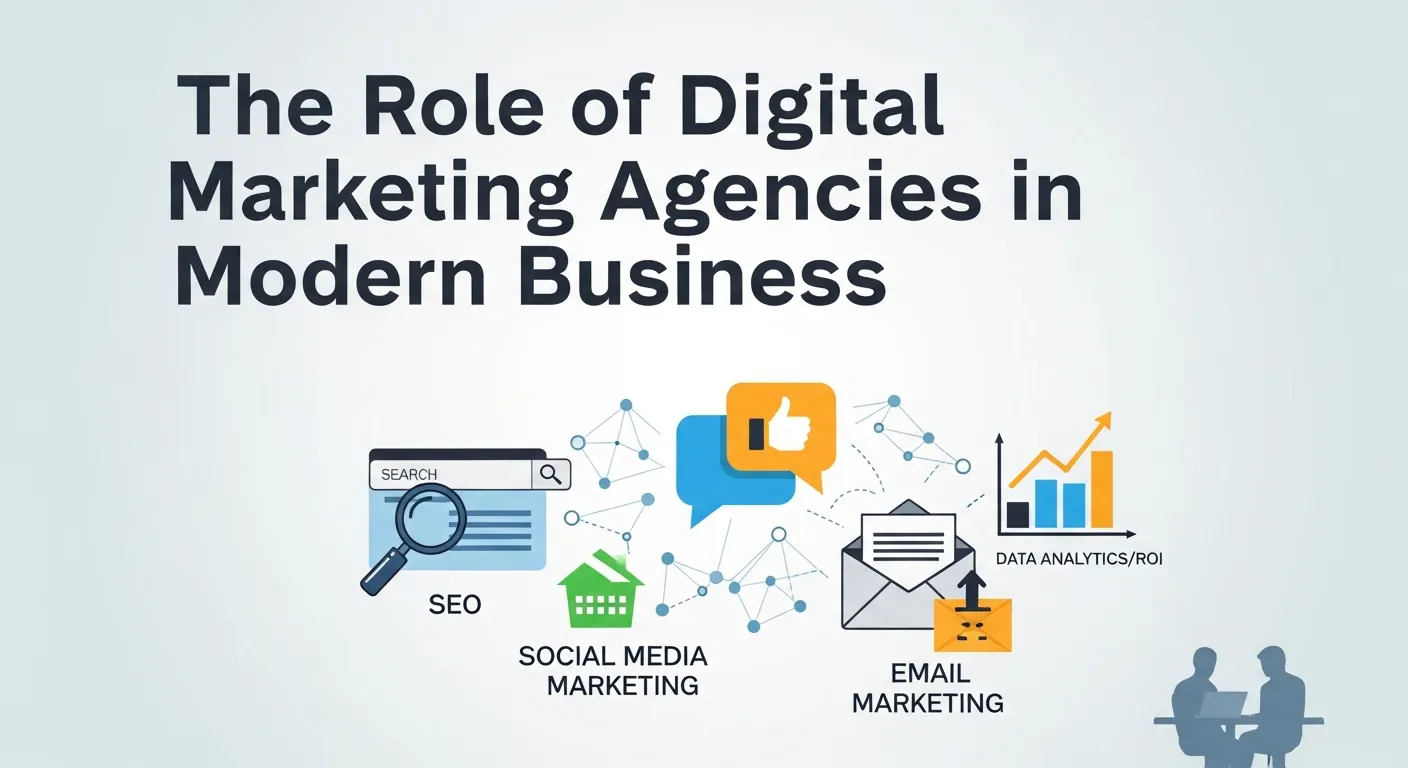
As digital marketing grew more complex, specialized digital marketing agencies emerged to help businesses navigate this landscape. These agencies offer expertise across multiple disciplines, from SEO and paid advertising to social media management and content creation.
Working with a digital marketing agency provides several advantages:
- Access to specialists across different digital channels
- Tools and technologies that might be cost-prohibitive for individual businesses
- Fresh perspectives and creative approaches
- Scalability as your marketing needs evolve
Many successful companies partner with agencies to complement their internal teams, creating a hybrid approach that combines institutional knowledge with specialized expertise.
The Future of Digital Marketing: Where We’re Heading
Digital marketing continues evolving at a rapid pace. Several trends are shaping its future:
Artificial Intelligence and Machine Learning
AI is transforming how marketers analyze data, personalize content, and automate campaigns. Chatbots, predictive analytics, and programmatic advertising are just the beginning.
Voice Search Optimization
As smart speakers become ubiquitous, optimizing for voice search requires rethinking keyword strategies and content structure.
Privacy and Data Protection
Regulations like GDPR and the phasing out of third-party cookies are forcing marketers to find new ways to reach audiences while respecting privacy.
Video and Interactive Content
Short-form video content, particularly on platforms like TikTok and Instagram Reels, continues gaining importance. Interactive content that engages users creates more memorable experiences.
Augmented Reality (AR) Experiences
AR technology allows customers to virtually try products before purchasing, bridging the gap between online and offline shopping experiences.
What This History Means for Modern Marketers
Understanding who invented digital marketing—or more accurately, how it evolved through countless innovations—provides valuable perspective for today’s marketers.
The most successful digital marketing strategies share common threads with those early pioneers:
- Testing and experimentation: Gary Thuerk’s first marketing email was an experiment. Today’s best marketers maintain that experimental mindset
- Focusing on value: Digital marketing works best when it provides genuine value to audiences
- Adapting to technology: Each new platform and tool creates opportunities for innovative marketers
- Building relationships: Whether through email, social media, or content marketing, success comes from authentic connections
The marketers who thrive understand that digital marketing isn’t static. The channels, tactics, and technologies will continue evolving. What remains constant is the need to understand your audience, provide value, and build trust.
Wrapping Up: The Ongoing Innovation of Digital Marketing
So who invented digital marketing? The answer is that digital marketing wasn’t invented by a single person at a specific moment. Instead, it emerged through the contributions of engineers, marketers, entrepreneurs, and visionaries who saw opportunities in new technologies.
From Ray Tomlinson’s first email to today’s AI-powered marketing automation, digital marketing represents decades of innovation. Each breakthrough—whether the first banner ad, the rise of social media, or the mobile revolution—built upon what came before.
For businesses today, this history offers important lessons. Digital marketing success requires staying curious about new technologies, remaining focused on providing value, and understanding that the landscape will continue changing. Whether you’re working with a digital marketing agency, building an in-house team, or pursuing opportunities like affiliate marketing in e commerce, the principles established by digital marketing’s pioneers still apply.
The most exciting part? The story of digital marketing is far from finished. New platforms, technologies, and strategies are emerging constantly. The next chapter of this evolution is being written right now—perhaps by you.



Leave a Reply