

SEO drives sustainable traffic, builds authority, and supports other marketing channels. With ongoing optimization and quality content, it boosts conversions and long-term growth.
Search Engine Optimization (SEO) sits at the heart of every successful digital marketing strategy. While social media campaigns grab attention and paid ads deliver immediate results, SEO works quietly in the background, building sustainable traffic that can transform your business for years to come.
Understanding SEO’s role within the broader digital marketing ecosystem can help you make smarter decisions about where to invest your time and budget. Whether you’re a small business owner trying to compete with larger competitors or a marketing professional looking to expand your skill set, grasping these fundamentals will give you a significant advantage.
This comprehensive guide breaks down SEO’s relationship with digital marketing, explores how it integrates with other marketing channels, and reveals why it remains one of the most valuable investments you can make for long-term growth.
Understanding SEO’s Place in Digital Marketing
SEO functions as the foundation of digital marketing, working to increase your website’s visibility when people search for products or services related to your business. Unlike paid advertising, which stops generating traffic the moment you stop paying, SEO builds momentum over time and continues delivering results long after you’ve invested the initial effort.
Digital marketing encompasses all marketing efforts that use electronic devices or the internet. This includes search engine marketing, social media marketing, email marketing, content marketing, and more. SEO specifically focuses on earning traffic through unpaid, organic search results on search engines like Google, Bing, and Yahoo.
The beauty of SEO lies in its ability to connect with potential customers at the exact moment they’re searching for solutions you provide. When someone types “best running shoes for beginners” into Google, they’re expressing clear intent. If your website appears in those search results because of strong SEO, you’re meeting demand rather than creating it.

How SEO Integrates with Other Digital Marketing Channels
Modern digital marketing operates most effectively when different channels work together rather than in isolation. SEO doesn’t exist in a vacuum—it amplifies and is amplified by other marketing efforts (digital marketing strategies that drive results).
Content Marketing and SEO
Content marketing and SEO share an inseparable relationship. Quality content gives search engines something to index and rank, while SEO research reveals what content your audience actually wants to find. Blog posts, guides, videos, and infographics all serve dual purposes: providing value to your audience and signaling to search engines that your site offers relevant, helpful information.
The most successful content strategies begin with keyword research. Understanding what questions your audience asks and what terms they use helps you create content that naturally attracts organic traffic. This approach ensures your content efforts support your SEO goals while genuinely serving your audience’s needs.
Social Media and SEO
While social media signals don’t directly influence search rankings, social platforms play a crucial supporting role in SEO success. Social media amplifies your content’s reach, potentially earning more backlinks and brand mentions that do impact rankings. Additionally, social profiles often appear in search results for branded queries, giving you more real estate on the search results page.
Social media also provides valuable insights into what content resonates with your audience. Popular social posts can inspire new content ideas that target relevant keywords, creating a feedback loop between your social strategy and SEO efforts.

Email Marketing and SEO
Email marketing supports SEO by driving engaged traffic back to your website. When email subscribers visit your site and spend time engaging with your content, these positive user experience signals can indirectly benefit your search rankings. Email also provides a direct channel to promote new content, helping it gain initial traction that can lead to organic sharing and linking.
The Business Value of SEO in Digital Marketing
SEO delivers unique value that sets it apart from other digital marketing channels. Understanding these benefits helps explain why businesses consistently rank SEO among their most effective marketing investments.
Long-term Traffic Generation
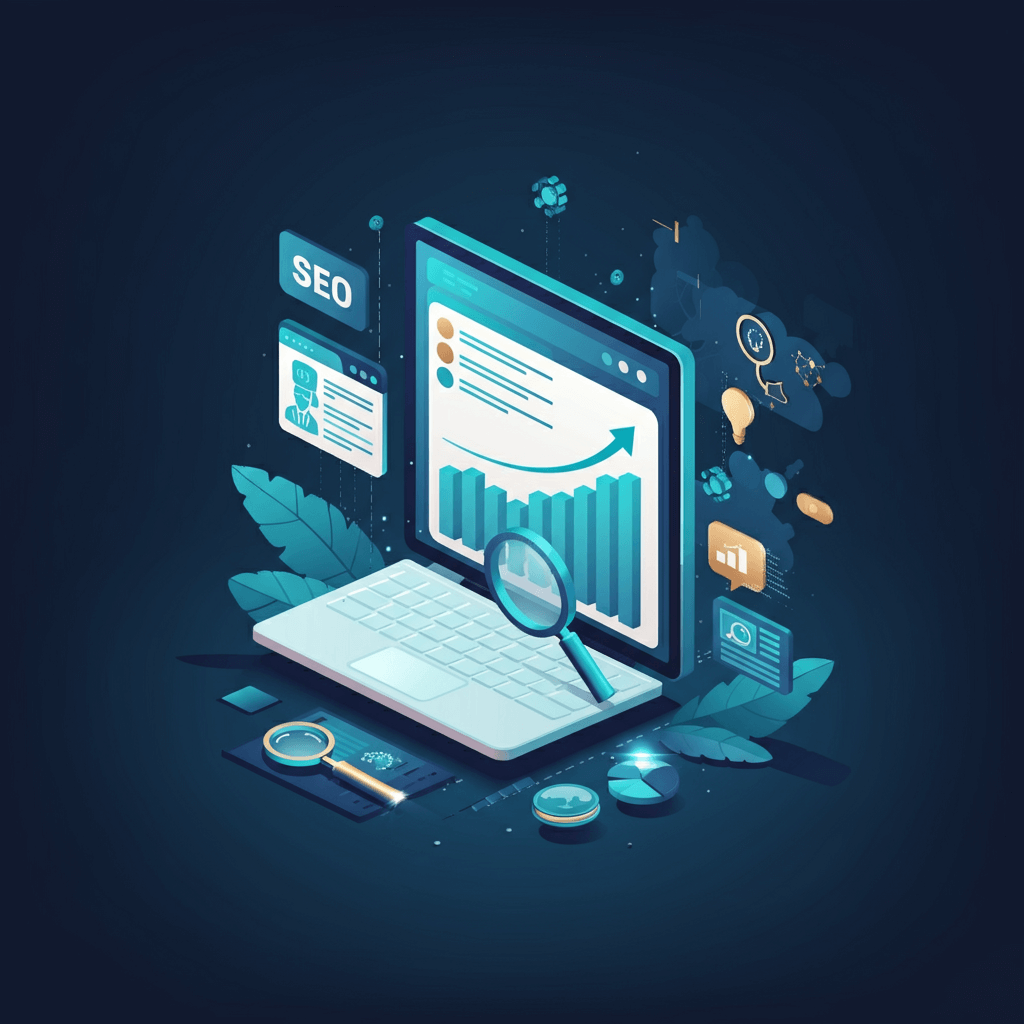
Unlike paid advertising, which requires ongoing investment to maintain traffic, SEO builds lasting value. A well-optimized page can continue attracting visitors for months or years after publication (mastering your digital marketing strategy).
Consider a local bakery that optimizes their website for “custom birthday cakes [city name].” Once that page ranks well, it can generate steady leads without additional advertising spend. The initial time investment in optimization continues paying off every time someone searches for that service.
Cost-Effective Customer Acquisition
While SEO requires upfront investment in time and expertise, it typically delivers the lowest cost per acquisition among digital marketing channels once established. Organic search traffic doesn’t require payment for each click, making it extremely valuable for businesses with limited advertising budgets.
The compound nature of SEO means early investments become more valuable over time. As your domain authority grows and more pages rank well, your overall organic visibility expands, creating a snowball effect of increasing traffic and leads.
Building Brand Authority and Trust
High search rankings signal authority and trustworthiness to potential customers. Most people trust organic search results more than paid advertisements, and appearing on the first page of Google lends credibility to your brand (digital marketing for finance). This trust factor can significantly impact conversion rates and customer lifetime value.
SEO also helps establish thought leadership within your industry. When your website consistently appears for relevant industry terms, you become a recognized authority on those topics. This authority extends beyond search engines, influencing how customers, partners, and competitors perceive your business.
SEO Strategy Within Your Digital Marketing Mix

Effective digital marketing requires strategic allocation of resources across multiple channels. SEO should complement, not compete with, your other marketing efforts.
Budget Allocation
Most successful businesses allocate 15-25% of their digital marketing budget to SEO efforts. This investment covers content creation, technical optimization, link building, and tools or professional services. The exact percentage depends on your industry, competition level, and current search visibility.
Newer businesses might invest more heavily in SEO during their first year to build foundation, while established companies might maintain steady SEO investments while experimenting with other channels. The key is viewing SEO as a long-term investment rather than a quarterly expense.
Timeline and Expectations
SEO operates on a different timeline than most digital marketing channels. While pay-per-click advertising can generate traffic immediately, SEO typically takes 3-6 months to show meaningful results and 6-12 months to reach full potential. This timeline requires patience but rewards those who commit to the process.
Understanding this timeline helps set realistic expectations and prevents premature abandonment of SEO efforts. Many businesses make the mistake of expecting immediate results and switching strategies before SEO has time to work.
Measuring SEO Success
SEO success should be measured using metrics that align with your broader business goals. While search rankings matter, they’re not the only indicator of SEO performance. More meaningful metrics include organic traffic growth, qualified lead generation, and revenue attributed to organic search.
Advanced businesses track how SEO supports other marketing channels. For example, brand awareness generated through high search visibility might improve email open rates or social media engagement. These cross-channel benefits demonstrate SEO’s true value within your marketing ecosystem.
Common SEO Mistakes in Digital Marketing
Many businesses undermine their SEO efforts through well-intentioned but misguided approaches. Avoiding these mistakes can dramatically improve your results.
Treating SEO as a One-Time Project
SEO requires ongoing attention and adaptation. Search algorithms evolve, competitors improve their strategies, and user behavior changes over time. Businesses that treat SEO as a “set it and forget it” project quickly lose ground to more committed competitors.
Regular content updates, technical maintenance, and strategy refinements keep your SEO efforts competitive. This doesn’t mean constant major overhauls—consistent, incremental improvements often deliver the best results.
Ignoring Technical SEO
Many businesses focus exclusively on content creation while neglecting technical SEO factors like site speed, mobile optimization, and proper indexing. Technical issues can prevent even the best content from ranking well, making this foundation crucial for success.
Regular technical audits identify and resolve issues that might be limiting your search performance. Simple fixes like optimizing images or improving page load times can deliver significant ranking improvements.
Keyword Stuffing and Over-Optimization
The temptation to overuse target keywords can actually harm your search rankings. Modern search algorithms recognize and penalize artificial keyword density, favoring content that reads naturally while covering topics comprehensively.
Focus on creating helpful, comprehensive content that naturally includes relevant keywords. Write for humans first, then optimize for search engines. This approach typically delivers better rankings and higher conversion rates.
Understanding the CRO Funnel: How Users Move Toward Conversion
Before you can optimize your conversions, you need to understand the journey your users take from the moment they first interact with your brand to the point they convert. The CRO funnel is essentially a series of touchpoints—awareness, interest, consideration, and action. Each stage requires a different optimization approach.
At the top of the funnel, users are just discovering your brand. They may land on your blog posts, social media content, or homepage. At this stage, your goal is to educate and build trust. Optimizations here often involve clearer messaging, faster load times, and guiding users toward high-value pages.
As users move further down the funnel, they begin evaluating your products or services. Your product pages, service pages, and comparison sections become critical. Optimizing these pages involves highlighting benefits, demonstrating credibility through reviews, and reducing friction in navigation.
Finally, at the bottom of the funnel, users are ready to take action—purchase, sign up, or submit a form. Streamlining your checkout or lead form experience, reducing distractions, and adding trust signals can significantly improve conversions. Understanding this funnel allows you to approach CRO with strategy instead of guesswork.
Psychology Behind Conversions: What Drives Users to Say ‘Yes’
Effective CRO is rooted in human psychology. People don’t convert simply because a page looks good—they convert because it feels right, makes sense, and solves their problem.
Elements like trust, clarity, and urgency play a powerful role. For instance, trust can be strengthened by displaying testimonials, security badges, and transparent policies. Clarity comes from straightforward headlines, simple forms, and logical page layouts. Urgency can be subtly conveyed using limited-time offers or highlighting low stock availability.
Another key psychological principle is social proof. When users see that others have purchased, used, or reviewed a product, they feel more confident about doing the same. By using these psychological triggers ethically, you create an environment where users naturally feel more inclined to convert.
Mobile Optimization: The Often Overlooked Conversion Driver
With mobile traffic surpassing desktop, a mobile-friendly site is essential. Implementing best practices from a mobile SEO guide can improve load speed, usability, and conversions across devices.
If your website isn’t mobile-friendly, even the best CRO strategies will fall flat. Mobile optimization involves improving load speed, ensuring buttons are easily tappable, using sticky CTAs that stay visible as users scroll, and simplifying navigation. A mobile-optimized site doesn’t just improve conversions—it enhances your overall user experience.
The Future of SEO in Digital Marketing
SEO continues evolving alongside changes in technology and user behavior. Understanding these trends helps future-proof your digital marketing strategy.
Artificial intelligence increasingly influences both search algorithms and user search behavior. Voice search, visual search, and AI-powered search features require new optimization approaches while maintaining focus on fundamental SEO principles.
The integration between SEO and other digital marketing channels will likely deepen as marketing automation tools become more sophisticated. Cross-channel data sharing will enable more precise targeting and attribution, making holistic digital marketing strategies even more valuable.
Building Your SEO-Powered Digital Marketing Strategy
SEO’s role in digital marketing extends far beyond simple search rankings. It builds the foundation for sustainable online visibility, supports other marketing channels, and delivers long-term value that compounds over time.
Start by conducting thorough keyword research to understand what your audience searches for, then create valuable content that addresses those needs. Ensure your website’s technical foundation supports your content efforts, and build authority through consistent value creation and relationship building.
Remember that SEO success requires patience, consistency, and adaptation. The businesses that treat SEO as a core component of their digital marketing strategy—rather than an optional add-on—consistently outperform competitors who rely solely on paid advertising or other short-term tactics.
Your SEO investment today builds the foundation for tomorrow’s business growth. Begin with solid fundamentals, maintain consistent effort, and watch as organic search becomes your most valuable source of qualified traffic and leads.
Frequently Asked Questions (FAQ)
How long does it take to see results from SEO?
SEO is a long-term strategy. Typically, meaningful results are visible within 3-6 months, while full potential can take 6-12 months depending on competition, website authority, and consistency of efforts.
Can I rely solely on SEO for my digital marketing?
While SEO is crucial for sustainable traffic, it works best when integrated with other channels like social media, email marketing, and paid campaigns. Each channel complements the others to create a comprehensive marketing ecosystem.
How does content marketing support SEO?
Content marketing provides the material that search engines index. By producing valuable, keyword-optimized content, businesses attract organic traffic and earn backlinks, which enhance authority and rankings.
Is technical SEO really necessary?
Yes. Without a technically sound website—fast loading, mobile-friendly, secure, and properly indexed—even the best content may fail to rank. Technical SEO is the foundation that ensures your content can be discovered and ranked effectively.
How do I measure SEO ROI?
Measure SEO success using a combination of organic traffic, keyword rankings, conversion rates, engagement metrics, and revenue attribution. Advanced analytics can also track cross-channel impact to demonstrate SEO’s full value.



Leave a Reply