

Digital marketing has become a necessity for small businesses looking to compete and grow. This comprehensive guide explores the key digital marketing benefits for small business owners, from increased visibility and cost-effective advertising to targeted customer engagement. Whether you’re just starting out or looking to expand your online presence, understanding these benefits will help you make informed decisions about your marketing strategy.
Running a small business means wearing multiple hats. You’re the CEO, accountant, customer service representative, and marketer—all rolled into one. With limited budgets and resources, every decision matters. That’s why understanding the digital marketing benefits for small business owners isn’t just helpful; it’s essential for survival and growth.
The business landscape has shifted dramatically over the past decade. Customers now research products online before making purchases, compare prices with a few clicks, and read reviews from strangers they trust more than traditional advertising. If your small business isn’t visible in these digital spaces, you’re essentially invisible to a significant portion of your potential customer base.
But digital marketing isn’t just about being present online. It’s about strategically positioning your business where your customers are already spending their time. It’s about building relationships, establishing trust, and creating meaningful connections that translate into loyal customers and sustainable growth.
This guide will walk you through the most compelling digital marketing benefits for small business owners, providing practical insights you can implement immediately—regardless of your budget or technical expertise.
Cost-Effectiveness Compared to Traditional Marketing
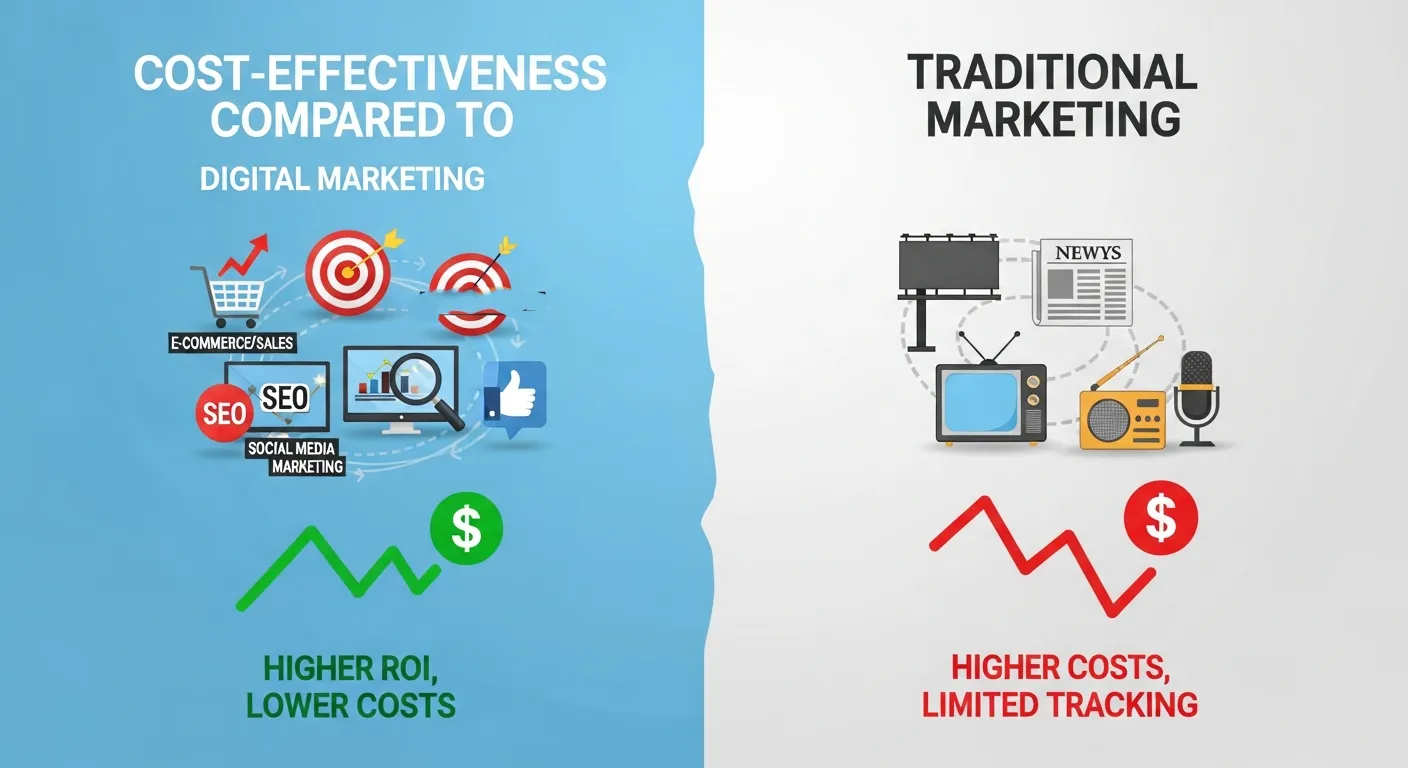
One of the most significant digital marketing benefits for small business owners is the dramatic reduction in marketing costs compared to traditional methods. Print ads, billboards, and TV commercials require substantial upfront investment with no guarantee of reaching your target audience. Digital marketing flips this equation.
With platforms like Google Ads and Facebook Ads, you can start with as little as $5 per day. You only pay when someone clicks your ad or takes a specific action. This pay-per-performance model means your budget goes directly toward reaching interested prospects rather than broadcasting to everyone and hoping the right people notice.
Email marketing offers even more impressive returns. For every dollar spent, email marketing generates an average return of $42. Compare that to direct mail campaigns that cost significantly more per piece and often end up in the recycling bin unread.
Key cost advantages include:
- Lower barriers to entry with minimal startup costs
- Flexible budgets that scale with your business
- Real-time adjustments to optimize spending
- Measurable ROI on every dollar invested
- Reduced need for expensive agency fees
Social media marketing takes cost-effectiveness even further. Creating business profiles on platforms like Instagram, LinkedIn, and Facebook is completely free. While paid promotion certainly helps, organic reach through consistent, valuable content can build your audience without spending a dime.
Precise Targeting and Audience Segmentation
Generic advertising wastes money. Digital marketing benefits for small business owners include the ability to target specific audiences with laser precision. Rather than hoping the right people see your message, you can ensure they do.
Digital platforms collect vast amounts of data about user behavior, interests, demographics, and online activities. This information allows you to create detailed customer profiles and target audiences for digital marketing based on factors like age, location, interests, purchasing behavior, and even life events.
For example, a local bakery can target people within a five-mile radius who have shown interest in baking, desserts, or special occasions like weddings and birthdays. A financial service provider can reach business owners aged 35-55 who have recently searched for investment opportunities or retirement planning.
This targeting capability extends beyond initial reach. You can segment your audience into groups based on where they are in the customer journey. New visitors might see educational content, while returning customers receive special offers or loyalty rewards. This personalization increases relevance and improves conversion rates.
Retargeting adds another layer of precision. When someone visits your website but doesn’t make a purchase, you can show them targeted ads as they browse other sites, gently reminding them of your products or services. This keeps your business top-of-mind without being intrusive.
Measurable Results and Data-Driven Decisions
Traditional marketing operates largely on faith. You place an ad and hope it works, with limited ability to track its actual impact. Digital marketing transforms guesswork into certainty through comprehensive analytics and reporting.
Every aspect of your digital marketing campaigns can be tracked, measured, and analyzed. You’ll know exactly how many people saw your content, clicked your links, visited your website, and completed desired actions. This transparency is among the most valuable digital marketing benefits for small business owners.
Google Analytics provides detailed insights into website traffic, user behavior, and conversion paths. You can see which pages perform best, where visitors spend their time, and at what point they leave your site. Social media platforms offer native analytics showing engagement rates, reach, and audience demographics.
This data empowers you to make informed decisions rather than relying on intuition. If a particular ad isn’t performing, you can pause it immediately rather than wasting your budget. If certain content resonates strongly with your audience, you can create more of it. Testing different approaches becomes simple—change one variable, measure the results, and optimize accordingly.
Measurable metrics include:
- Website traffic and visitor sources
- Conversion rates and customer acquisition costs
- Email open rates and click-through rates
- Social media engagement and follower growth
- Return on ad spend and overall ROI
For those interested in maximizing these insights, investing time to learn digital marketing fundamentals pays dividends. Many free resources and affordable courses can help you understand analytics and make data work for your business.
Building Brand Awareness and Credibility
Your brand is more than a logo—it’s the entire experience customers have with your business. Digital marketing benefits for small business owners include powerful tools for building and strengthening brand identity.
Consistent presence across digital channels creates familiarity. When potential customers repeatedly encounter your brand through social media posts, blog articles, email newsletters, and search results, you become a recognized name in your industry. This recognition builds trust, making people more likely to choose your business when they’re ready to buy.
Content marketing establishes your expertise and authority. By sharing valuable information, answering common questions, and solving problems for your audience, you position yourself as a trusted resource rather than just another business trying to make a sale. A plumbing company that publishes helpful guides about preventing frozen pipes or a consultant who shares industry insights demonstrates competence and builds credibility.
Online reviews and testimonials amplify this trust-building process. Encouraging satisfied customers to leave reviews on Google, Facebook, or industry-specific platforms creates social proof. Prospective customers see real people vouching for your quality and service, making them more comfortable doing business with you.
Social media humanizes your brand. Behind-the-scenes content, employee spotlights, and authentic interactions show the people behind your business. This transparency fosters connections that transactional relationships can’t match.
Competing with Larger Companies
The internet levels the playing field. Digital marketing benefits for small business owners include the ability to compete effectively against companies with much larger budgets and resources.
Search engine optimization (SEO) rewards quality and relevance over budget size. A well-optimized website with valuable content can outrank a corporate giant that neglects their online presence. Local SEO strategies help small businesses dominate search results in their geographic area, connecting them with nearby customers actively seeking their services.
Social media algorithms prioritize engagement over follower count. A small business with an authentic voice and engaged community can achieve better reach than a corporation posting bland, corporate content. Your agility allows you to respond quickly to trends, create timely content, and engage directly with customers in ways large companies struggle to replicate.
Niche targeting works in your favor. While big companies cast wide nets, you can focus on specific segments where you excel. A boutique financial service firm might target entrepreneurs in a particular industry, offering specialized expertise that generalist institutions can’t match. This focused approach often converts better than broad campaigns.
Digital marketing synergy multiplies your impact. When your website, social media, email marketing, and paid advertising work together cohesively, they create a presence that feels larger than the sum of its parts. Customers encountering your brand across multiple channels perceive you as more established and credible.
Flexibility and Real-Time Adaptation
Markets change rapidly, and successful businesses adapt quickly. Among the most practical digital marketing benefits for small business owners is the ability to pivot strategies in real-time based on performance and market conditions.
Traditional marketing campaigns require long lead times. Creating print materials, booking media placements, and distributing content takes weeks or months. Once launched, changes are expensive or impossible. Digital campaigns can be created, launched, and modified within hours.
Notice a particular product gaining traction? Increase your ad budget for it immediately. Discover that Tuesday afternoons generate the best engagement? Schedule your posts accordingly. Find that certain messaging resonates while other approaches fall flat? Adjust your content strategy on the fly.
This flexibility extends to seasonal opportunities and current events. A restaurant can promote special menus for local events, a retailer can quickly create campaigns around trending topics, and service providers can address timely concerns their customers face. Speed to market often determines success, and digital channels provide that speed.
A/B testing makes optimization systematic rather than random. Create two versions of an ad, email, or landing page with one key difference, then measure which performs better. This scientific approach to improvement continuously refines your marketing effectiveness without requiring perfect decisions upfront.
Enhanced Customer Engagement and Relationships
Digital marketing transforms customer relationships from transactional to relational. The ability to communicate directly with customers—and have them communicate back—creates engagement opportunities that traditional marketing can’t match.
Social media enables two-way conversations. Customers can ask questions, share feedback, and engage with your content. Responding thoughtfully builds rapport and loyalty. Even negative comments become opportunities to demonstrate excellent customer service publicly, showing potential customers how you handle issues.
Email marketing maintains ongoing connections. Unlike one-time ads that disappear, email keeps you in regular contact with people who’ve expressed interest in your business. Share updates, offer exclusive deals, provide valuable content, and stay top-of-mind between purchases. Personalized email sequences can guide customers through their journey, offering relevant information at each stage.
Content marketing attracts and nurtures prospects over time. Educational blog posts, helpful videos, and informative guides bring people to your website, often before they’re ready to buy. By providing value without asking for anything in return, you build goodwill. When these prospects eventually need your products or services, you’re the first business they think of.
Community building creates advocates. Encouraging customers to interact with each other—through social media groups, forums, or events—fosters a sense of belonging. These communities become sources of user-generated content, testimonials, and referrals that fuel organic growth.
Expanding Your Reach Beyond Geographic Boundaries

Physical location has always limited small businesses. Digital marketing benefits for small business owners include the ability to reach customers far beyond your local area.
E-commerce platforms enable you to sell products nationally or internationally without opening additional storefronts. A craftsperson in rural Montana can sell handmade goods to customers in New York City. A consultant in Chicago can serve clients across the country through video calls and digital delivery.
Local businesses can still benefit from expanded reach. Tourists and visitors often research dining, entertainment, and services online before or during their trips. Strong digital presence captures this transient traffic that might otherwise never discover your business.
Service-based businesses can offer digital products or virtual services. A yoga studio can sell online classes to remote students. A business coach can conduct group workshops via webinar. These digital extensions create new revenue streams without geographic constraints.
Content marketing attracts audiences regardless of location. Someone across the country searching for solutions might discover your blog post, appreciate your expertise, and become a customer even if they never visit your physical location. They might also recommend you to local connections, creating referral opportunities.
Staying Competitive and Relevant
Your competitors are already using digital marketing. Falling behind isn’t just about missing opportunities—it’s about actively losing ground to businesses that embrace these strategies.
Consumer expectations have evolved. People expect to find businesses online, read reviews, explore products and services digitally, and interact through multiple channels. Meeting these expectations isn’t optional; it’s the baseline for remaining relevant in modern commerce.
Younger demographics especially rely on digital channels for discovery and research. As purchasing power continues shifting to millennials and Gen Z, businesses without strong digital presence become invisible to these crucial markets. Even B2B sales increasingly involve younger decision-makers who prefer digital research over cold calls.
Digital marketing provides competitive intelligence. Monitoring competitors’ strategies, analyzing their campaigns, and learning from their successes and failures informs your own approach. Many digital marketing tools offer competitor analysis features that would have required expensive market research in the past.
Those who learn digital marketing skills or obtain digital marketing certification gain advantages in understanding these dynamics. While hiring experts helps, small business owners who grasp digital marketing fundamentals make better strategic decisions and manage external help more effectively.
Scalability as Your Business Grows
Digital marketing benefits for small business owners include infrastructure that grows with your success. Strategies that work when you’re starting out can scale as your business expands.
Automated marketing tools handle increased volume without proportional cost increases. Email sequences, social media scheduling, and customer relationship management systems process hundreds or thousands of interactions as easily as dozens. Your marketing efficiency improves as you grow rather than requiring linear increases in staff or budget.
Templates and systems create consistency. Once you’ve developed effective email templates, ad formats, and content frameworks, replicating success becomes straightforward. You’re not starting from scratch with each campaign—you’re building on proven foundations.
Data accumulation improves targeting over time. Each campaign generates insights about what works. Your customer database grows, providing more opportunities for segmentation and personalization. Past customer behavior predicts future responses, making your marketing increasingly effective.
Geographic expansion becomes simpler. Opening a new location or entering a new market doesn’t require completely separate marketing infrastructure. Digital strategies adapt to new areas while maintaining brand consistency and leveraging existing assets.
Taking the First Steps
Understanding digital marketing benefits for small business owners is just the beginning. Implementation requires planning, commitment, and willingness to learn as you go.
Start with foundations. Ensure your website is professional, mobile-friendly, and optimized for search engines. Claim and complete your Google Business Profile. Establish presence on social platforms where your customers spend time. These basics cost little but provide immediate value.
Focus on one or two channels initially rather than spreading yourself thin. Master email marketing or social media before adding paid advertising. Build skills progressively, learning what works for your specific business and audience.
Set clear, measurable goals. Vague objectives like “increase awareness” are hard to evaluate. Specific targets like “gain 100 email subscribers in three months” or “generate 50 website inquiries this quarter” provide direction and enable you to assess effectiveness.
Allocate consistent time and resources. Digital marketing requires ongoing effort, not one-time projects. Block regular time for content creation, engagement, and analysis. Even thirty minutes daily compounds into meaningful results.
Consider education and training. Free resources abound online, from platform-specific tutorials to comprehensive courses covering digital marketing fundamentals. Small investments in knowledge generate substantial returns through improved strategy and execution.
Your Digital Marketing Journey Starts Now
The digital marketing benefits for small business owners aren’t theoretical—they’re practical advantages being leveraged by competitors right now. Every day without digital presence is a day of lost opportunities, invisible products, and customers who never discover what you offer.
But this isn’t about perfection. It’s about progress. Your first social media post doesn’t need to be polished. Your initial email campaign won’t be flawless. What matters is starting, learning, and improving consistently.
Small businesses have unique advantages in digital marketing. You’re agile enough to adapt quickly, authentic enough to build genuine relationships, and focused enough to serve specific audiences exceptionally well. These qualities shine in digital spaces where mass marketing falls flat.
The tools, platforms, and strategies exist. The customers are online, searching for solutions you provide. The only missing element is your commitment to show up, engage, and compete in these digital spaces.
Your business deserves every advantage available. Digital marketing provides those advantages at scales and costs that simply weren’t possible in previous eras. The question isn’t whether digital marketing benefits your small business—it’s when you’ll start capturing those benefits.
The best time to start was yesterday. The second-best time is today.
Frequently Asked Questions
What are the main digital marketing benefits for small business owners?
The primary benefits include cost-effectiveness compared to traditional advertising, precise audience targeting, measurable results, increased brand visibility, the ability to compete with larger companies, flexibility to adapt campaigns quickly, enhanced customer engagement, expanded geographic reach, and scalability as your business grows.
How much should a small business budget for digital marketing?
Digital marketing budgets vary widely based on industry, goals, and competition. Many small businesses start with 5-10% of revenue allocated to marketing. The beauty of digital channels is that you can start small—even $100-500 monthly—and scale as you see results. Focus on high-impact, low-cost strategies initially, like SEO, email marketing, and organic social media.
Do I need digital marketing certification to market my small business effectively?
No formal certification is required, though education certainly helps. Many successful small business owners learn through free online resources, trial and error, and practical experience. However, courses and certifications can accelerate your learning and provide structured knowledge. The key is understanding core principles and continuously improving your skills.
Which digital marketing channels should small businesses prioritize?
Start with channels where your customers are most active. For most small businesses, this includes a well-optimized website, Google Business Profile for local search, email marketing for customer retention, and one or two social media platforms. Paid advertising can be added once you’ve established these foundations and have budget available.
How long does it take to see results from digital marketing?
Timeline varies by strategy. Paid advertising can generate immediate traffic and leads. SEO typically takes 3-6 months to show significant results. Social media and content marketing build momentum gradually, often showing measurable impact within 2-4 months of consistent effort. Email marketing can produce results quickly once you’ve built a subscriber list.
Can digital marketing really help small businesses compete with larger companies?
Absolutely. Digital marketing levels the playing field by prioritizing relevance, quality, and engagement over budget size. Small businesses often outperform larger competitors through better local SEO, more authentic social media presence, personalized customer service, and niche targeting. Agility and authenticity are competitive advantages that favor smaller operations.
What role does digital marketing synergy play in small business success?
Digital marketing synergy occurs when multiple channels work together cohesively, amplifying overall impact. For example, blog content improves SEO, provides social media material, and offers value in email newsletters. Paid ads drive traffic to optimized landing pages that capture email subscribers. This integrated approach creates more touchpoints and reinforces your message across platforms.
How can financial service businesses benefit specifically from digital marketing?
Financial service providers benefit greatly from digital marketing’s ability to build trust through educational content, showcase expertise, target specific demographics with relevant solutions, nurture leads through extended decision cycles, and maintain compliant communication channels. Digital platforms also enable financial businesses to reach underserved markets and offer specialized services to niche audiences.



Leave a Reply