


AR creates immersive, interactive experiences that boost engagement and sales. It helps customers try products virtually, reduces returns, and strengthens brand trust—making it a powerful marketing tool for 2025 and beyond.
Augmented Reality (AR) has emerged as a transformative force in the digital marketing landscape. By overlaying digital content onto the real world, AR enables brands to create interactive and immersive experiences that captivate audiences and drive engagement. In 2025, AR is no longer a novelty but a strategic tool that can enhance customer journeys, boost conversions, and set brands apart from competitors.
What Is Augmented Reality in Digital Marketing?
At its core, augmented reality merges computer-generated elements—such as images, audio, and animations—with a user’s natural environment. Unlike virtual reality (VR), which fully immerses a user in a digital world, AR layers digital content on top of the real one. In marketing, this technology can be delivered via mobile apps, web browsers, smart glasses, or in-store kiosks. These interactive experiences turn passive audiences into active participants, making them more likely to remember and share brand messages.

Key Benefits of AR Marketing
- Enhanced Engagement: AR experiences invite users to play, explore, and self-direct, leading to longer interaction times and deeper brand recall.
- Higher Conversion Rates: Interactive product demos, virtual try-ons, and immersive catalogs reduce purchase hesitation by letting consumers experience products before buying.
- Differentiation: Early adopters of AR stand out in crowded markets, positioning themselves as innovative and customer-focused. For small businesses, combining AR with small business digital marketing strategies can create a competitive edge.
- Data Insights: AR interactions generate rich analytics—heat maps, click paths, dwell times—that inform future campaigns and product development.
Top AR Strategies for 2025
To integrate AR effectively into your digital marketing mix, consider the following strategies:
- Virtual Try-Ons: Popular in fashion, beauty, and eyewear, virtual try-ons let customers test products on themselves via smartphone cameras or mirrors in-store. This reduces return rates and boosts confidence.
- Interactive Packaging: Use AR markers on product packaging to unlock tutorials, 3D models, or brand stories. This adds value to physical products and deepens brand relationships.
- Location-Based Experiences: Combine AR with geolocation data to deliver context-specific content—tourist information, local promotions, or scavenger hunts—that drive foot traffic and local engagement.
- AR-Enhanced Advertising: Enrich print ads, billboards, and direct mail with scannable QR codes that trigger AR experiences, turning static media into dynamic, shoppable content. This can integrate well with digital marketing advertising strategies.
- Live Events and Trade Shows: Create AR booths and demos to draw crowds, showcase products in 3D, and collect lead information through interactive games or experiences. Businesses can combine these efforts with mastering your digital marketing strategy for maximum impact.
Case Studies: AR Success Stories
1. IKEA Place: IKEA’s AR app allows users to virtually place furniture in their homes at scale. By replicating room dimensions and enabling true-to-size 3D models, customers can make confident purchase decisions, reducing returns and increasing basket sizes.
2. Sephora Virtual Artist: Sephora’s mobile app uses facial recognition and AR to let users try on makeup styles in real time. It tracks user preferences and recommends products, driving in-app sales and enhancing customer loyalty.
3. Pepsi Max AR Bus Shelter: Pepsi Max turned a London bus shelter into an AR portal, showing aliens and creatures invading the street. The viral campaign generated millions of views online, demonstrating the power of blending real-world environments with imaginative digital content.
Implementing AR: A Step-by-Step Guide
Deploying AR in your marketing requires planning, technology selection, and creative execution. Follow these steps to ensure success:
- Define Objectives: Start with clear goals—brand awareness, lead generation, or sales uplift. Align metrics to these objectives for post-campaign analysis.
- Choose the Right Platform: Decide between native apps, web-based AR, or smart glasses. WebAR requires no downloads but may have performance limits. Native apps offer deeper functionality.
- Develop Engaging Content: Storyboard user flows and design 3D assets that reflect your brand’s voice and aesthetic. Keep interactions intuitive to prevent user frustration.
- Test Rigorously: Conduct UX testing across devices and environments. AR can behave differently based on lighting, camera quality, and network conditions.
- Launch and Promote: Market your AR experience through social media teasers, email campaigns, and partnerships. Create tutorial videos to guide first-time users.
- Measure and Iterate: Analyze engagement metrics—session length, interaction rates, conversions—and refine content, prompts, and UX based on insights.

Overcoming Common Challenges
While AR holds immense promise, marketers may face hurdles:
- Technical Complexity: AR development can be resource-intensive. Partner with experienced agencies or use AR SaaS platforms to streamline production.
- User Adoption: Educate your audience with clear calls to action and simple instructions. Incentivize early adopters with exclusive content or discounts.
- Cross-Device Compatibility: Ensure experiences work on both iOS and Android, and across different browser versions if using WebAR.
- Privacy and Security: Be transparent about data collection. Obtain permissions for camera access and comply with GDPR and CCPA regulations.
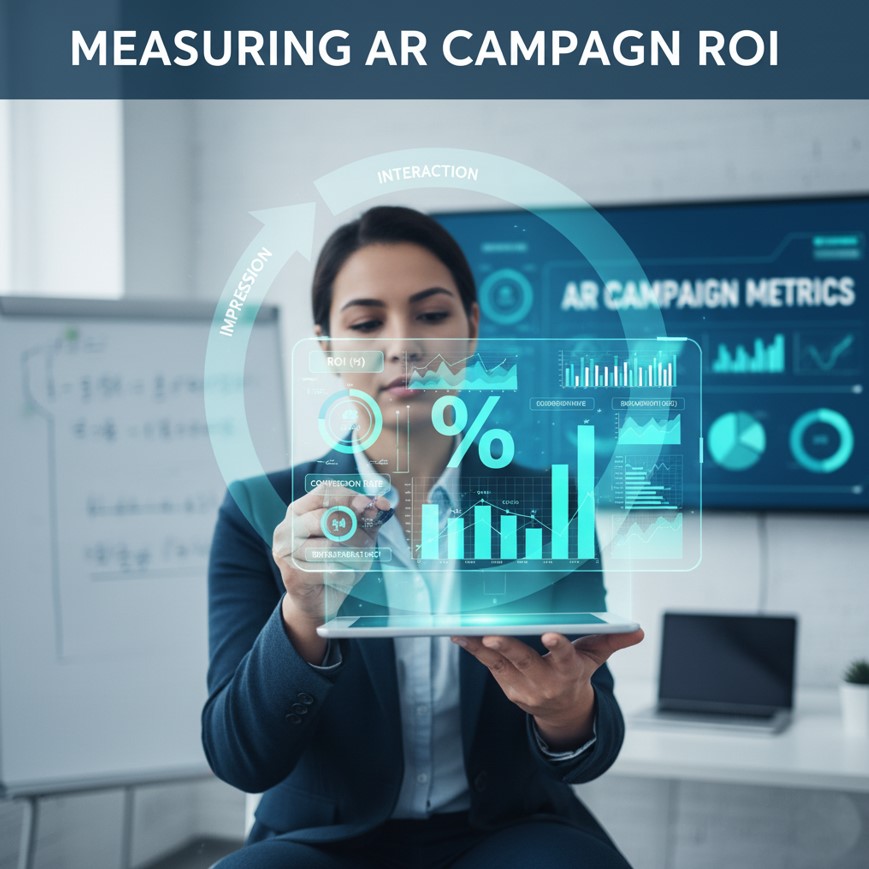
Measuring AR Campaign ROI
To justify investment, track both quantitative and qualitative metrics:
- Engagement Metrics: Time spent in AR, number of interactions, and completion rates of guided experiences.
- Conversion Metrics: Click-through rates on shoppable AR elements, in-app purchases, and link shares.
- Brand Lift: Surveys measuring awareness, favorability, and purchase intent before and after AR exposure.
- Social Amplification: User-generated content shares, social media mentions, and hashtag usage rates.
Future Trends in AR Marketing
As AR matures, expect these developments:
- 5G-Powered Experiences: Faster networks will support richer, multi-user AR experiences in real time.
- Wearable AR Devices: Smart glasses and light AR headsets will make hands-free marketing campaigns more accessible.
- Integrated AI: AI-driven personalization will tailor AR content to individual preferences and behaviors on the fly.
- Cross-Platform Ecosystems: AR will integrate seamlessly with metaverse platforms, e-commerce sites, and social media channels to deliver omnichannel experiences.
AR in E-Commerce: Transforming the Online Shopping Experience
E-commerce has long struggled with the “touch and feel” problem—customers cannot physically interact with products before purchasing. AR solves this challenge by letting consumers virtually try products in real-world contexts. For example, furniture retailers allow shoppers to visualize sofas or tables in their homes, while fashion brands let customers see how clothing fits or looks in different lighting conditions.
This immersive capability reduces hesitation, increases confidence, and significantly lowers return rates. Furthermore, AR can integrate directly into product pages, enabling customers to interact with 3D models, view product details from multiple angles, and even share their virtual experiences with friends for feedback. By making online shopping more interactive and realistic, AR transforms passive browsing into active engagement, boosting conversions and loyalty.
AR for Personalization and Customer Experience
One of the most transformative aspects of AR is its ability to deliver personalized experiences. Unlike standard web content, AR can respond to user input, location, or preferences in real time. For example, a furniture retailer can offer AR recommendations based on a user’s room dimensions, color preferences, and past purchase history. Similarly, beauty brands can personalize virtual makeup try-ons by detecting skin tone and facial features, creating a highly tailored shopping experience.
Personalization enhances engagement because it treats customers as individuals rather than a mass audience. By leveraging data collected through AR interactions—such as viewed products, time spent in experience, or items virtually “placed” in their environment—brands can refine future campaigns, optimize product recommendations, and even inform product development. This level of individualized experience strengthens brand loyalty and positions AR as a tool not only for marketing but also for long-term customer relationship management.
Cost Considerations and ROI of AR Marketing
While AR is increasingly accessible, brands must consider costs carefully to ensure a positive ROI. AR campaigns involve investments in content creation, 3D modeling, platform development, testing, and promotion. However, these costs can be offset by measurable benefits such as increased conversions, reduced product returns, higher engagement, and valuable data collection.
To calculate ROI effectively, brands should track both direct and indirect metrics. Direct ROI comes from sales generated through AR experiences, while indirect ROI includes brand awareness, social amplification, and customer satisfaction improvements. Pilot projects can help gauge the effectiveness of AR before scaling. By starting with a limited-scope campaign, brands can test engagement levels, iterate on design, and forecast the potential financial impact before committing to larger initiatives.
AR requires investment, but ROI can be strong when the experiences are strategic and well-executed. This mirrors how thoughtful digital PR services deliver compounding long-term value.
AR as a Driver of Innovation and Brand Storytelling
Beyond conversions and engagement, AR empowers brands to redefine storytelling. By merging the physical and digital worlds, AR allows marketers to craft narratives that are interactive, immersive, and memorable. Experiences such as virtual scavenger hunts, interactive product tutorials, or gamified brand journeys enable consumers to explore a brand’s story at their own pace, deepening emotional connection.
Innovative AR campaigns also position brands as forward-thinking and technology-savvy. In industries where differentiation is critical—such as fashion, retail, or entertainment—AR can serve as a hallmark of innovation. Brands that consistently experiment with new AR applications gain early-mover advantages, establish thought leadership, and create experiences that are widely shared across social media, further amplifying impact.
AR and Experiential Marketing: Creating Memorable Brand Interactions

Experiential marketing focuses on creating memorable, hands-on experiences that connect consumers emotionally to a brand. AR amplifies this by blending the digital and physical worlds in ways that are engaging, entertaining, and shareable. Brands can use AR in pop-up stores, trade shows, or public installations to offer interactive storytelling, gamified experiences, or product demonstrations.
For instance, a travel company could create an AR-enabled display at an airport, allowing travelers to “explore” destinations before booking. Similarly, an automotive brand could offer virtual test drives at events, letting users experience vehicles in a safe, immersive environment. These experiences leave lasting impressions, increasing brand recall and fostering emotional connections that drive loyalty.
Preparing Your Team for AR Adoption
Successful AR marketing requires more than technology—it demands the right people, skills, and processes. Teams should include cross-functional expertise in marketing strategy, creative design, 3D modeling, UX/UI, and data analytics. Training is critical, as AR is still a relatively new medium for many marketers.
Teams should also adopt an iterative mindset, testing small pilot campaigns to learn what works before scaling. Collaboration between marketing, product, and IT departments ensures smooth integration with existing systems, such as e-commerce platforms, CRM software, and analytics dashboards. By equipping your team with knowledge, tools, and processes, brands maximize the impact of AR campaigns and ensure that immersive experiences align with broader business goals.
Conclusion
Augmented reality is reshaping the way brands connect with consumers. By creating immersive, interactive experiences, AR not only drives engagement and conversions but also builds lasting emotional bonds. As we move through 2025, marketers who embrace AR strategically—defining clear objectives, crafting compelling content, and measuring ROI—will gain a competitive edge and set new standards for digital innovation. Start small with a pilot experience, learn from user data, and scale your AR initiatives to unlock the full potential of immersive marketing.
Ready to explore AR in your next digital marketing campaign? Share your thoughts and questions below!
Frequently Asked Questions (FAQ)
Is AR marketing suitable for small businesses?
Yes. While large brands often have bigger budgets, small businesses can leverage affordable AR solutions like WebAR, AR filters, or third-party AR apps to create engaging experiences without massive investment. The key is to start small, test the impact, and scale gradually.
How do I measure the success of an AR campaign?
Success can be measured using engagement metrics (interaction time, completion rates), conversion metrics (click-through rates, purchases), brand lift (awareness and favorability surveys), and social amplification (shares, mentions, hashtag use).
Do users need special devices to access AR experiences?
Not necessarily. While AR glasses and headsets offer advanced experiences, most AR marketing today works on smartphones via apps or web browsers. WebAR, in particular, requires no downloads and is accessible on both iOS and Android devices.
How can AR reduce product returns?
AR allows customers to visualize or try products before purchasing, reducing uncertainty and mismatched expectations. For example, furniture and fashion brands report lower return rates when customers use AR to preview items in real environments or on themselves.
What industries benefit most from AR marketing?
Retail, fashion, beauty, real estate, automotive, and tourism are early adopters, but any industry can leverage AR creatively—from interactive packaging in FMCG to immersive training demos in B2B sectors.
Can AR integrate with e-commerce platforms?
Absolutely. Many AR tools integrate seamlessly with e-commerce websites and apps, allowing virtual try-ons, 3D product exploration, and shoppable AR experiences that link directly to checkout pages.
What are the challenges of AR marketing?
Common challenges include development costs, cross-device compatibility, user adoption, and data privacy compliance. Careful planning, user education, and choosing the right technology partner mitigate these risks.
How will AR marketing evolve in the next 5 years?
Expect AI-driven personalization, 5G-enabled real-time experiences, wearable AR adoption, and deeper integration with social media, e-commerce, and the emerging metaverse, making immersive marketing ubiquitous and interactive at scale.



Leave a Reply