

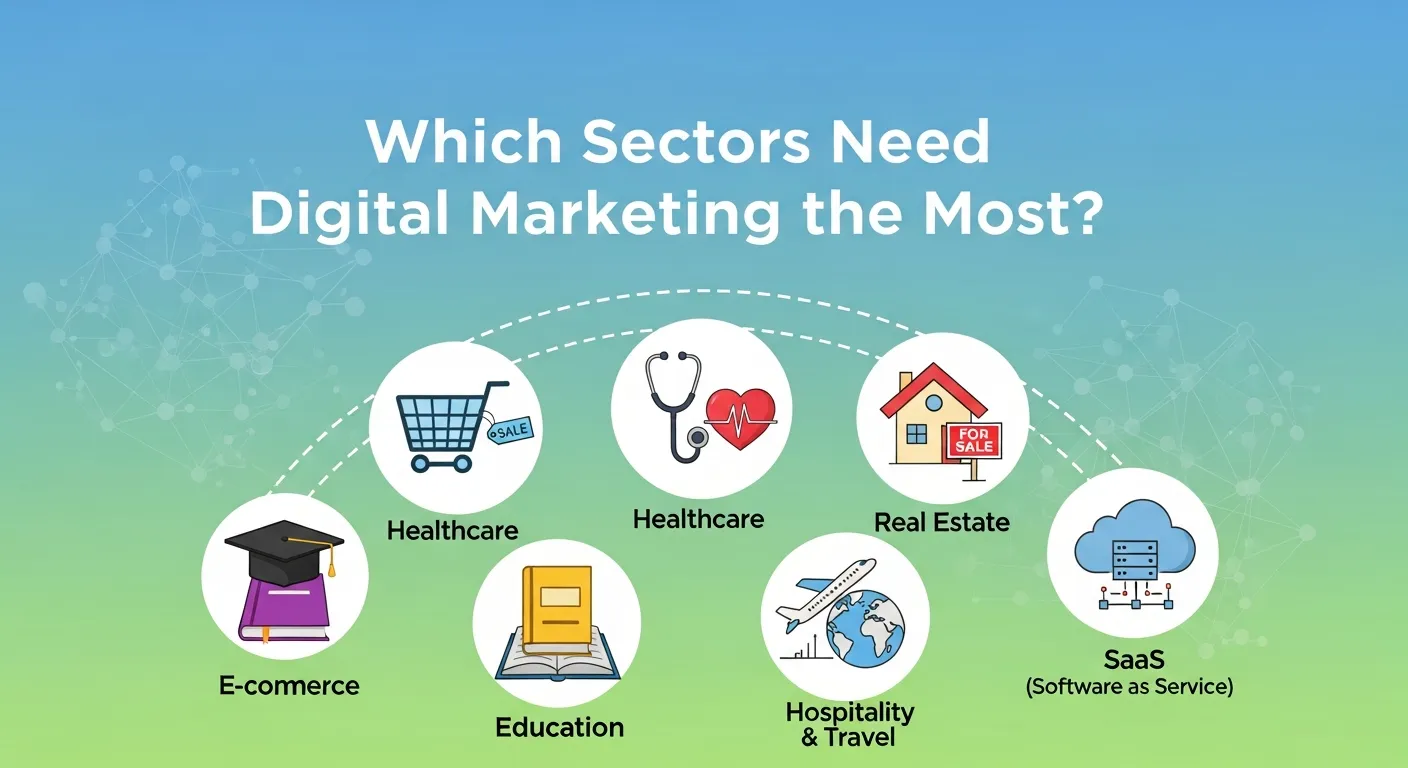
Digital marketing has become essential for businesses across nearly every industry. From healthcare to retail, companies need digital marketing to reach their audiences, build brand awareness, and drive sales. This comprehensive guide explores which sectors benefit most from digital marketing strategies, the essential digital marketing skills required, and how different industries can leverage digital marketing synergy to maximize their online presence.
The business landscape has transformed dramatically over the past decade. Consumers now spend an average of seven hours per day online, making digital channels the primary touchpoint for brand discovery and engagement. This shift has made digital marketing certification and expertise more valuable than ever before.
But not all industries face the same digital challenges or opportunities. Some sectors have embraced digital transformation more readily than others, while certain industries face unique obstacles that make their need for sophisticated digital strategies particularly acute.
Understanding which sectors need digital marketing most—and why—can help businesses allocate resources effectively and develop targeted strategies that deliver real results. Whether you’re a business owner evaluating your marketing budget or a professional considering which essential digital marketing skills to develop, this guide will provide the insights you need.
Why Every Sector Needs Digital Marketing
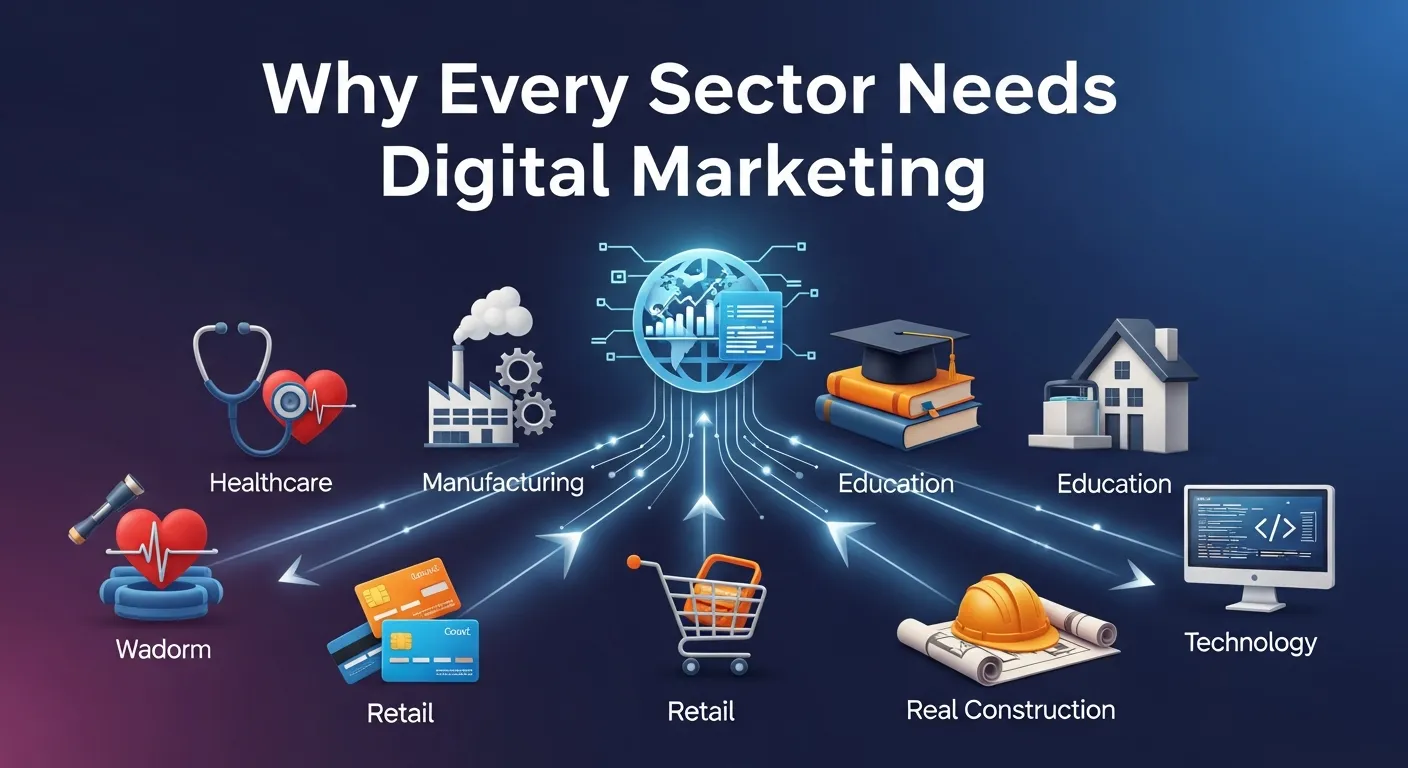
Before examining specific industries, it’s important to understand the universal factors driving the need for digital marketing across all sectors.
Consumer behavior has fundamentally changed. People research products online before making purchases, read reviews from strangers, and expect brands to maintain active social media presences. Companies that ignore these trends risk becoming invisible to their target audiences.
Digital channels also offer measurement capabilities that traditional marketing cannot match. Businesses can track exactly how many people saw their message, clicked their links, and converted into customers. This data-driven approach allows for continuous optimization and better return on investment.
Additionally, digital marketing provides cost-effective alternatives to expensive traditional advertising. Small businesses can now compete with larger competitors by targeting niche audiences through search engine optimization, social media, and content marketing.
Healthcare: Navigating Patient Trust and Compliance
The healthcare sector has one of the most pressing needs for digital marketing, though it also faces unique challenges that require specialized expertise.
Patients increasingly turn to online resources when seeking medical information or choosing providers. Studies show that 77% of patients use search engines before booking appointments. Healthcare organizations that don’t appear in these search results lose potential patients to competitors.
Why healthcare needs digital marketing:
- Patients research symptoms, treatments, and providers online
- Local search optimization drives appointment bookings
- Educational content builds trust and authority
- Online reputation management influences patient decisions
- Telemedicine services require digital promotion
However, healthcare marketing must navigate strict regulations like HIPAA compliance, making the benefits of mobile marketing particularly valuable for reaching patients while maintaining privacy standards. Healthcare providers need digital marketing professionals who understand both strategy and compliance requirements.
Medical practices, hospitals, dental offices, and specialty clinics all benefit from local SEO strategies that help them appear when patients search for nearby services. Content marketing that educates patients about conditions and treatments establishes authority while driving organic traffic.
E-commerce and Retail: Competing in a Crowded Marketplace
E-commerce businesses exist entirely in the digital space, making their need for digital marketing absolute. Without effective digital strategies, online retailers simply cannot reach customers or generate sales.
The competition in e-commerce is fierce. Thousands of businesses vie for attention on search engines and social media platforms. Success requires mastering multiple channels and creating cohesive campaigns that guide customers from awareness to purchase.
Essential digital marketing for e-commerce:
- Search engine optimization to drive organic traffic
- Pay-per-click advertising for immediate visibility
- Email marketing for customer retention
- Social media marketing for brand awareness
- Influencer partnerships for credibility
Traditional brick-and-mortar retailers also increasingly need digital marketing to compete with online-only competitors. The benefits of mobile marketing are particularly significant for retail, as mobile devices now account for over 70% of e-commerce traffic.
Retailers must develop digital marketing synergy across channels, creating seamless experiences whether customers shop online, in-store, or through mobile apps. Those pursuing digital marketing certification should pay special attention to e-commerce strategies, as this sector offers abundant career opportunities.
Real Estate: Building Trust Through Digital Presence
Real estate represents another sector where the need for digital marketing has become critical. Property buyers and renters begin their searches online, making digital visibility essential for agents and agencies.
The real estate buying process involves significant research and consideration. Potential buyers view dozens of properties online before scheduling in-person visits. Agents who showcase properties through high-quality photos, virtual tours, and detailed descriptions capture more leads.
Digital marketing allows real estate professionals to target specific demographics and geographic areas with precision. A luxury home agent can reach high-income professionals in specific neighborhoods, while a commercial real estate firm can target business owners looking to expand.
Social media platforms like Instagram and Facebook provide powerful tools for showcasing properties and building personal brands. Video content on YouTube and TikTok helps agents demonstrate expertise while reaching younger buyers entering the market.
Local SEO ensures that agencies appear when potential clients search for “homes for sale near me” or “real estate agent in [city].” Reviews and testimonials on Google and specialized real estate platforms build trust and credibility.
Financial Services: Establishing Authority and Trust
Banks, investment firms, insurance companies, and financial advisors face particular challenges in digital marketing. Financial decisions involve significant trust, and consumers carefully evaluate providers before committing.
The financial services sector benefits enormously from content marketing that educates audiences. Blog posts, videos, and guides about budgeting, investing, and financial planning demonstrate expertise while building relationships with potential clients.
Digital marketing priorities for financial services:
- Educational content that builds authority
- Search engine optimization for local and national reach
- Reputation management across review platforms
- Email marketing for client nurture campaigns
- Compliance-friendly social media engagement
Financial institutions must balance promotional messaging with genuine value. Audiences respond well to helpful information that improves their financial literacy, creating opportunities for relationship-building before sales conversations.
The benefits of mobile marketing extend naturally to financial services, where consumers increasingly manage money through smartphone apps. Financial institutions that create user-friendly mobile experiences while promoting them effectively gain competitive advantages.
Professional Services: Demonstrating Expertise Online
Lawyers, accountants, consultants, and other professional service providers need digital marketing to attract clients in increasingly competitive markets. These services typically involve high consideration and significant research before purchase decisions.
Professional services firms must establish thought leadership to differentiate themselves. Publishing insightful content on industry topics demonstrates expertise and builds trust with potential clients who research extensively before reaching out.
Search engine optimization helps professional services appear when potential clients search for solutions to specific problems. A tax attorney specializing in international business can attract ideal clients by ranking for relevant long-tail keywords.
Essential digital marketing skills for professional services include content strategy, search optimization, and LinkedIn marketing. These platforms allow professionals to share expertise, network with peers, and connect with decision-makers at target companies.
The concept of digital marketing synergy is particularly important for professional services. Combining content marketing, social media engagement, email campaigns, and thought leadership creates a comprehensive digital presence that consistently generates qualified leads.
Education: Reaching Students in Digital Spaces
Educational institutions from universities to online course providers increasingly need digital marketing to attract students. The education sector has become highly competitive, with institutions competing globally for enrollment.
Students and parents conduct extensive online research when evaluating educational options. They compare programs, read reviews, watch campus tours, and engage with current students through social media. Institutions that don’t maintain strong digital presences lose prospective students to competitors.
Digital marketing strategies for education:
- Social media marketing targeting students and parents
- Content marketing showcasing student success stories
- Search advertising for program-specific keywords
- Email campaigns for prospective student nurture
- Virtual campus tours and webinars
The benefits of mobile marketing are substantial in education, as students primarily use smartphones for information gathering. Mobile-optimized websites and app-based experiences improve engagement and enrollment conversion rates.
Online education providers face even greater digital marketing needs, as they exist entirely in digital spaces and compete with thousands of alternatives. These organizations require sophisticated digital marketing certification and expertise across multiple channels.
Technology and SaaS: Educating Complex Audiences
Software companies and technology providers need digital marketing to explain complex products and reach decision-makers. B2B technology sales typically involve long consideration cycles and multiple stakeholders.
Content marketing plays a central role in technology sector digital strategies. Whitepapers, case studies, webinars, and detailed blog posts help potential customers understand how solutions solve their problems. This educational approach builds trust while moving prospects through sales funnels.
Technology companies benefit from digital marketing synergy that combines organic and paid strategies. Search engine optimization attracts researchers in early buying stages, while retargeting campaigns re-engage visitors who explored specific solutions.
The technology sector also offers abundant opportunities for professionals developing essential digital marketing skills. Understanding technical audiences, creating compelling B2B content, and measuring complex attribution models are valuable capabilities.
Hospitality and Travel: Inspiring and Converting Travelers
Hotels, restaurants, travel agencies, and tourism boards need digital marketing to attract guests and drive bookings. The hospitality sector thrives on visual storytelling and social proof, making platforms like Instagram and TikTok particularly valuable.
Travelers conduct extensive online research before booking trips or choosing restaurants. They read reviews on TripAdvisor, browse photos on Instagram, and compare options on booking platforms. Hospitality businesses must maintain active digital presences across these channels.
Local SEO is critical for hospitality businesses, as travelers frequently search for “hotels near me” or “restaurants in [city].” Appearing in local search results and map listings directly influences booking decisions.
The benefits of mobile marketing are especially pronounced in hospitality. Travelers use smartphones throughout their journeys to discover attractions, make reservations, and share experiences. Mobile-optimized booking experiences remove friction from conversion processes.
Essential Digital Marketing Skills for Every Sector
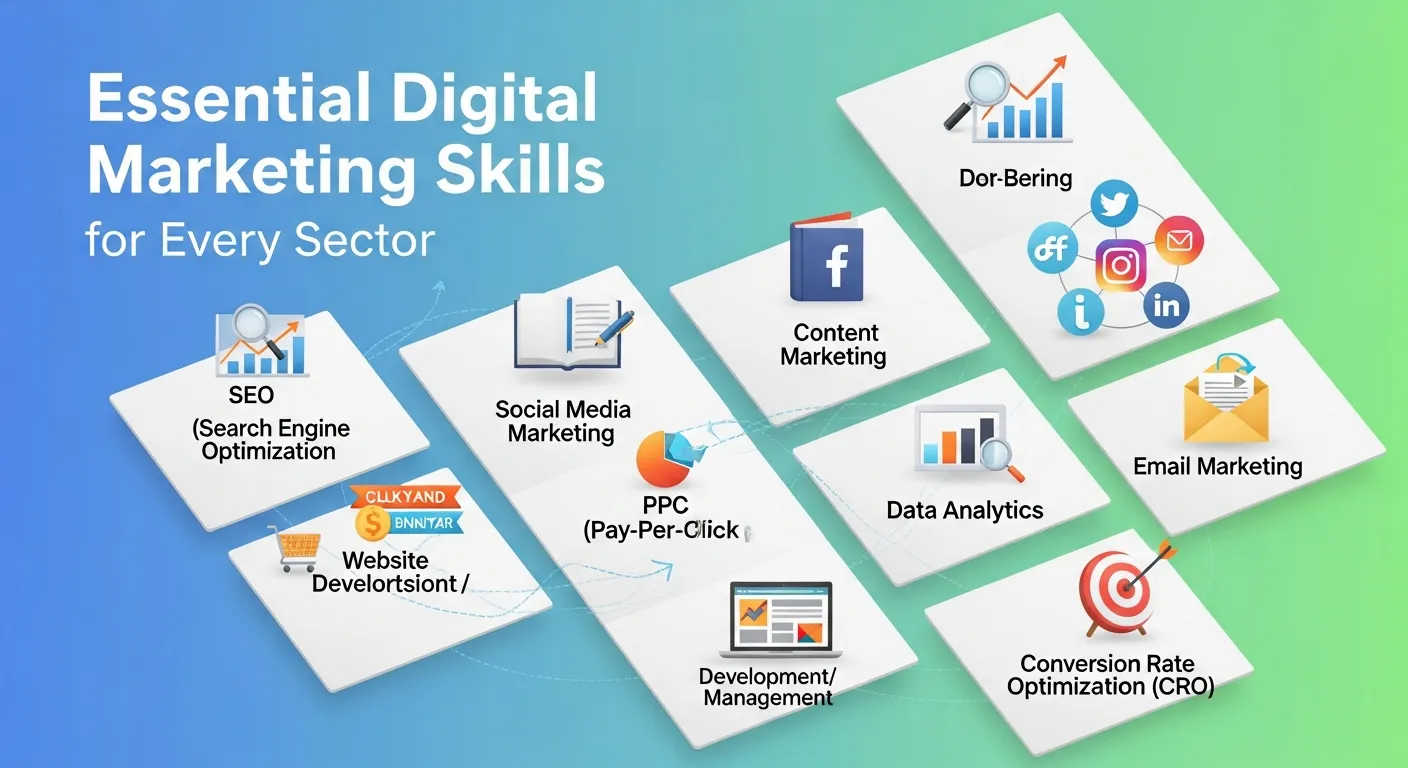
Regardless of industry, certain essential digital marketing skills remain universally valuable. Professionals who develop these capabilities can succeed across sectors:
Core competencies include:
- Search engine optimization and keyword research
- Content strategy and creation
- Data analysis and performance measurement
- Social media management and advertising
- Email marketing and automation
- Conversion rate optimization
- Basic graphic design and visual communication
Those pursuing digital marketing certification should focus on programs that teach both strategic thinking and tactical execution. The most effective digital marketers understand how different channels work together to achieve business objectives.
Digital marketing synergy—the coordinated use of multiple channels to amplify results—represents an advanced skill that separates strategic marketers from tactical executors. Understanding how blog content supports SEO, which feeds email campaigns, which complement social media efforts, creates compound effects that maximize return on investment.
Building Digital Marketing Synergy Across Channels
The most successful digital marketing strategies don’t rely on single channels. Instead, they create synergy by coordinating efforts across multiple touchpoints to guide customers through awareness, consideration, and purchase stages.
A comprehensive approach might include content marketing that drives organic search traffic, social media that builds community and engagement, email marketing that nurtures relationships, and paid advertising that accelerates results. Each channel supports and amplifies the others.
For example, a healthcare provider might publish a detailed blog post about managing diabetes. This content ranks in search results, attracting patients researching the condition. Social media posts share key insights from the article, driving additional traffic. An email campaign sends the resource to existing patients who might benefit. Paid search ads target high-intent keywords to capture patients ready to schedule appointments.
This coordinated approach creates digital marketing synergy where the whole exceeds the sum of individual parts. Businesses that master this integration see significantly better results than those treating each channel as isolated.
The Growing Importance of Mobile Marketing
The benefits of mobile marketing extend across all sectors discussed in this guide. Mobile devices now generate over 60% of web traffic, making mobile optimization non-negotiable for digital success.
Mobile marketing encompasses responsive website design, mobile-specific advertising formats, location-based targeting, and app-based experiences. Businesses must ensure that every digital touchpoint functions seamlessly on smartphones and tablets.
Location-based mobile advertising offers particular value for sectors like retail, hospitality, and healthcare. Businesses can target potential customers when they’re physically near locations, driving foot traffic and immediate conversions.
Mobile-first content strategies also recognize that users consume information differently on smartphones. Shorter paragraphs, scannable formatting, and easily clickable calls-to-action improve mobile user experiences and conversion rates.
Investing in Digital Marketing Education
As the need for digital marketing grows across sectors, so does demand for skilled professionals. Organizations can build internal capabilities by investing in digital marketing certification programs for existing employees.
Numerous reputable organizations offer digital marketing certification, including Google, HubSpot, Facebook Blueprint, and Hootsuite. These programs teach both foundational concepts and platform-specific skills.
Businesses should also consider which essential digital marketing skills align with their specific industry needs. A healthcare provider might prioritize local SEO and reputation management, while an e-commerce business focuses on conversion optimization and paid advertising.
The investment in digital marketing education delivers returns through improved campaign performance, reduced reliance on agencies, and enhanced ability to evaluate external marketing partners. Organizations that build strong internal capabilities gain competitive advantages.
Making Digital Marketing Work for Your Sector
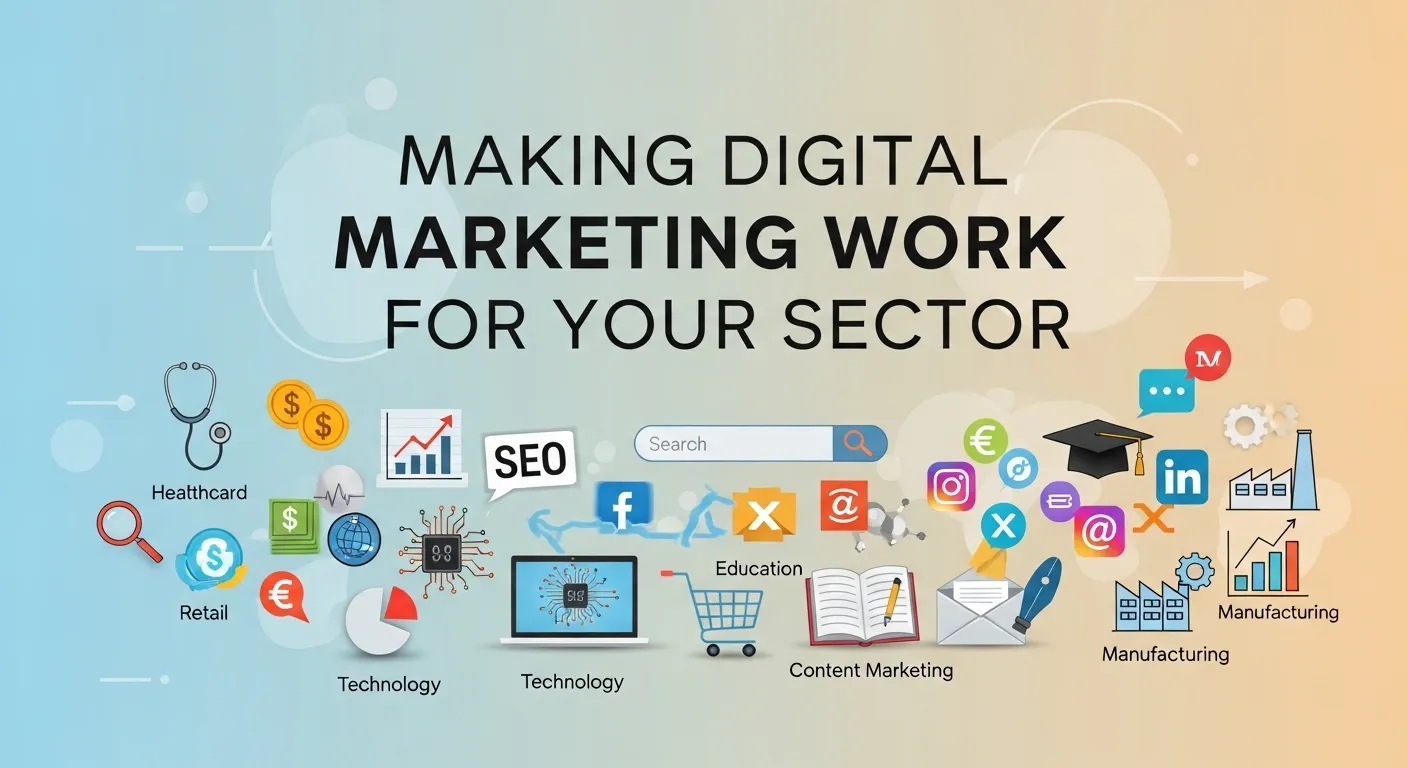
Every sector needs digital marketing, but effective strategies vary based on industry-specific factors like customer behavior, sales cycles, regulatory requirements, and competitive dynamics.
Healthcare providers must balance patient education with HIPAA compliance. E-commerce businesses need sophisticated conversion optimization and retargeting strategies. Professional services firms focus on thought leadership and relationship building. Understanding these nuances ensures that digital marketing investments deliver maximum returns.
The sectors that need digital marketing most share common characteristics: high competition, informed consumers who research extensively, and buying decisions significantly influenced by online information. Organizations in these sectors cannot afford to neglect digital channels.
However, even traditionally offline sectors like manufacturing, agriculture, and industrial services increasingly need digital marketing as business buyers shift research and purchasing online. B2B buyers now complete over 70% of their buying journey before contacting sales representatives, making digital presence essential across all sectors.
Conclusion: Digital Marketing as a Business Imperative
The question is no longer whether businesses need digital marketing, but rather how to implement strategies effectively within sector-specific constraints and opportunities. From healthcare to e-commerce, professional services to education, digital channels now serve as primary connections between organizations and their audiences.
Sectors facing the greatest need for digital marketing share characteristics like intense competition, long customer consideration periods, and audiences that extensively research before making decisions. However, the universal shift in consumer behavior toward digital channels means every industry must develop strong online presences to remain competitive.
Success requires more than simply having a website or social media accounts. Effective digital marketing demands strategic thinking, essential digital marketing skills, and the ability to create digital marketing synergy across multiple channels. Organizations that invest in digital marketing certification for their teams or partner with knowledgeable agencies position themselves for sustained growth.
The benefits of mobile marketing, content strategies, search optimization, and social engagement compound over time. Businesses that commit to consistent, strategic digital marketing efforts build valuable assets that generate returns for years to come. Those that delay risk falling behind competitors who recognize digital marketing as the business imperative it has become.
Frequently Asked Questions About Need Digital Marketing
1. Which industries most need digital marketing?
Almost every industry needs digital marketing, but sectors like healthcare, e-commerce, real estate, financial services, education, technology, and hospitality especially need digital marketing due to high competition and informed online consumers.
2. Do small businesses really need digital marketing?
Yes, small businesses often need digital marketing even more than large corporations. Because traditional advertising is expensive, small businesses need digital marketing to target niche audiences affordably through SEO, content marketing, and social media.
3. Why do modern businesses need digital marketing skills?
Businesses need digital marketing skills like SEO, content creation, data analytics, email marketing, and social media management to compete effectively. Without these essential skills, companies struggle to reach today’s online-driven customers.
4. Why does a brand need digital marketing synergy?
Brands need digital marketing synergy because combining channels improves results. For example, SEO brings traffic, social media promotes content, email nurtures leads, and paid ads accelerate growth. Businesses that need digital marketing success must integrate all channels strategically.
5. Why do companies need digital marketing for mobile users?
With over 60% of web traffic coming from mobile devices, businesses need digital marketing strategies that are mobile-friendly. Mobile marketing enables location-based targeting, faster engagement, and better user experiences.
6. Do professionals need digital marketing certification?
Many professionals who need digital marketing credibility pursue certifications. Recognized programs from Google, HubSpot Academy, and Facebook help validate expertise and build trust with employers or clients.
7. How much budget does a company need for digital marketing?
Businesses that need digital marketing typically allocate 7–12% of revenue toward marketing efforts. However, industries like e-commerce may need digital marketing budgets on the higher end due to strong competition.
8. Do companies need digital marketing agencies or in-house teams?
Companies that need digital marketing can either hire agencies or build in-house teams. Small businesses often start with agencies, while larger companies that need digital marketing at scale may combine internal teams with outsourced specialists.
9. How quickly do businesses see results when they need digital marketing?
When companies need digital marketing, they should understand timelines: SEO takes 3–6 months, content marketing may take 6–12 months, while paid advertising can deliver immediate traffic. Patience is crucial when you need digital marketing long-term success.
10. What metrics matter most when businesses need digital marketing?
Organizations that need digital marketing must track website traffic, conversion rates, cost per acquisition, ROI, email engagement, and customer lifetime value. Tracking the right data ensures that businesses truly benefit when they need digital marketing strategies.
11. Do B2B companies need digital marketing differently than B2C?
Yes, both B2B and B2C companies need digital marketing, but strategies differ. B2B focuses on long sales cycles and professional platforms like LinkedIn, while B2C brands often rely on platforms like Instagram and Facebook for emotional and visual engagement.
12. Why will businesses continue to need digital marketing in the future?
Businesses will always need digital marketing because of trends like AI personalization, video dominance, voice search, privacy-focused advertising, and omnichannel integration. As consumer behavior evolves, companies will increasingly need digital marketing to stay competitive and visible online.



Leave a Reply