

A full-service digital marketing agency manages all aspects of your online presence—from SEO and content to social media and paid ads. This guide explores what these agencies offer, how to choose one, and why partnering with experts can transform your business growth and digital strategy.
Finding the right partner to handle your online presence can feel overwhelming. With so many options available, how do you know which agency will deliver real results?
A full-service digital marketing agency offers a comprehensive solution. Instead of juggling multiple vendors for different marketing needs, you get everything under one roof—SEO, content creation, social media management, paid advertising, and more. This integrated approach ensures your digital marketing campaigns work together seamlessly, creating a cohesive brand message that resonates with your audience.
But what exactly does “full-service” mean? How do you evaluate whether an agency is right for your business? And what kind of results can you expect?
This guide answers these questions and more. Whether you’re a small business owner looking to establish your online presence or a growing company ready to scale, understanding how full-service digital marketing agencies operate will help you make informed decisions about your marketing investments.
What Is a Full-Service Digital Marketing Agency?
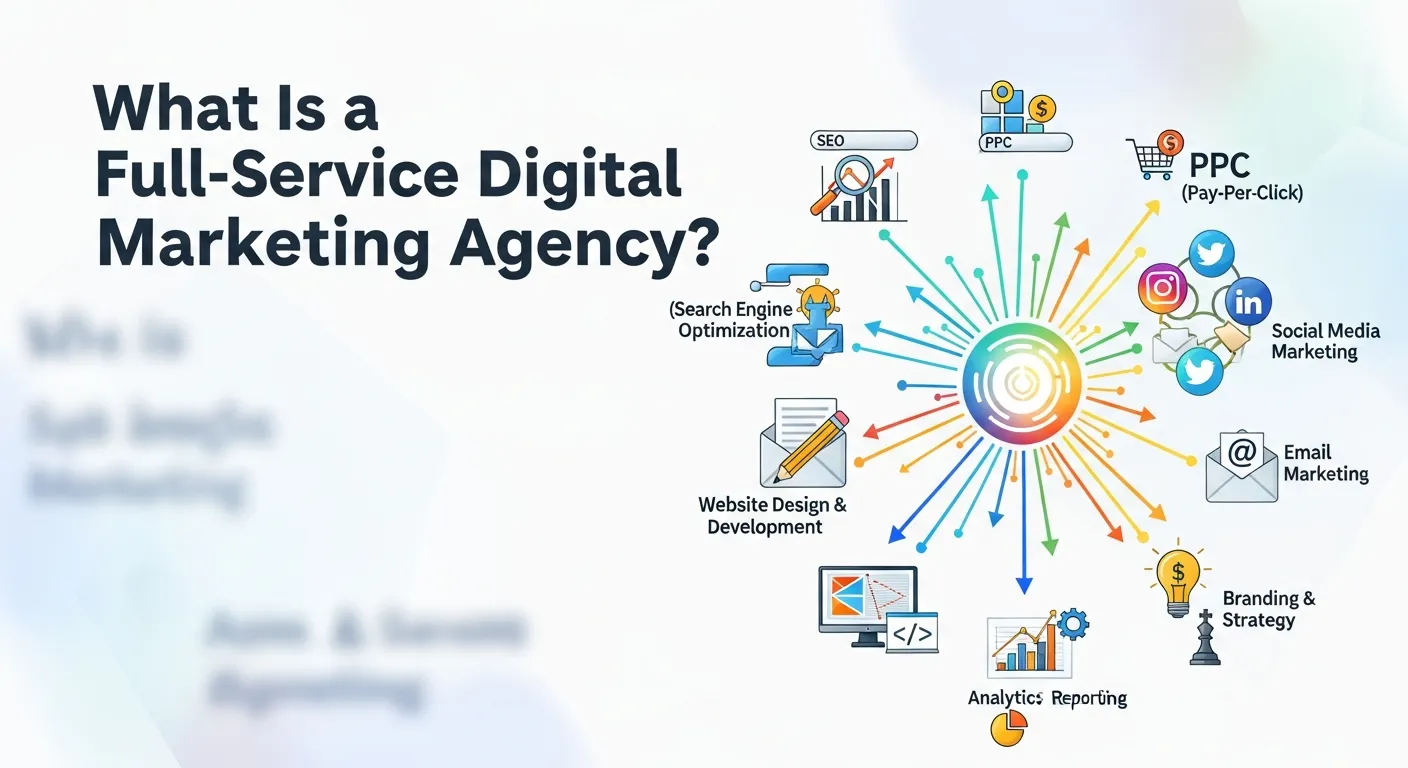
A full-service digital marketing agency provides end-to-end marketing solutions for businesses. Rather than specializing in just one area, these agencies offer multiple services that work together to build and maintain your online presence.
Typical services include:
- Search Engine Optimization (SEO): Improving your website’s visibility in search engine results
- Content Marketing: Creating valuable content that attracts and engages your target audience
- Social Media Management: Building and maintaining your presence across social platforms
- Pay-Per-Click (PPC) Advertising: Running paid ad campaigns on Google, social media, and other platforms
- Email Marketing: Nurturing leads and maintaining customer relationships through targeted email campaigns
- Web Design and Development: Creating user-friendly websites optimized for conversions
- Analytics and Reporting: Tracking performance and providing insights to guide strategy
The key advantage is integration. When all these services come from one agency, they’re designed to support each other. Your SEO strategy informs your content plan. Your social media campaigns align with your paid advertising. Everything works toward the same goals.
Why Businesses Choose Full-Service Agencies
Streamlined Communication
Working with multiple agencies or freelancers means coordinating between different teams, each with their own processes and timelines. A full-service digital marketing agency eliminates this complexity. You have one point of contact, one team that understands your business, and one unified strategy.
Consistent Brand Messaging
Your brand voice should remain consistent whether someone encounters you on Instagram, Google search results, or their email inbox. Full-service agencies ensure this consistency by overseeing all channels and touchpoints.
Strategic Integration
Digital marketing channels don’t exist in isolation. Your blog content can fuel your social media posts. Your email campaigns can drive traffic to landing pages optimized for conversions. A full-service agency sees these connections and builds strategies that leverage them.
Cost Efficiency
While it might seem cheaper to hire individual specialists, the hidden costs add up quickly. Time spent coordinating between vendors, inconsistent messaging requiring revisions, and gaps in strategy all drain resources. A single agency often proves more cost-effective in the long run.
Core Services Offered by Full-Service Digital Marketing Agencies
Search Engine Optimization (SEO)
SEO forms the foundation of organic lead generation. A comprehensive SEO strategy includes:
- Keyword research to identify what your customers are searching for
- On-page optimization to make your website search-engine friendly
- Technical SEO to ensure your site is fast, secure, and crawlable
- Link building to establish your site’s authority
- Local SEO for businesses targeting specific geographic areas
Essential digital marketing skills in SEO include understanding search algorithms, analyzing competitor strategies, and adapting to frequent updates in search engine guidelines.
Content Marketing
Quality content attracts visitors, builds trust, and drives conversions. Full-service agencies develop content strategies that include:
- Blog posts and articles that address customer questions
- Videos and infographics that explain complex topics
- Case studies and testimonials that demonstrate value
- Guides and whitepapers that generate leads
Your content should serve multiple purposes—educating your audience while supporting SEO goals and providing material for social media distribution.
Social Media Marketing
Social platforms offer direct access to your target audience. Effective social media marketing involves:
- Choosing the right platforms for your business
- Creating engaging content tailored to each platform
- Building and nurturing your community
- Running targeted ad campaigns
- Monitoring conversations and responding to engagement
A strategic approach to social media also supports referral marketing—when satisfied customers share your content, your reach expands exponentially.
Pay-Per-Click (PPC) Advertising
While organic strategies take time, PPC delivers immediate visibility. Full-service agencies manage:
- Google Ads campaigns targeting high-intent keywords
- Social media advertising on platforms like Facebook, Instagram, and LinkedIn
- Display advertising for brand awareness
- Remarketing campaigns to re-engage previous visitors
The key to successful PPC is continuous optimization based on performance data.
Email Marketing
Email remains one of the highest-ROI marketing channels. Effective email campaigns:
- Segment audiences for personalized messaging
- Nurture leads through automated sequences
- Re-engage inactive customers
- Provide value through exclusive content or offers
A full-service agency integrates email with other channels, ensuring your messaging remains consistent and timely.
Web Design and Development
Your website is often the first impression customers have of your business. Full-service agencies create sites that:
- Load quickly and perform well on all devices
- Guide visitors toward desired actions
- Reflect your brand identity
- Integrate with marketing tools and analytics platforms
An effective website serves as the hub for all your digital marketing efforts.
How to Build a Digital Marketing Plan with an Agency
Step 1: Define Your Goals
Start with clarity about what you want to achieve. Common goals include:
- Increasing website traffic
- Generating more qualified leads
- Improving conversion rates
- Building brand awareness
- Expanding into new markets
Specific, measurable goals give your agency clear targets to work toward.
Step 2: Understand Your Audience
Who are you trying to reach? Document:
- Demographics (age, location, income level)
- Psychographics (interests, values, pain points)
- Buying behavior (how they research and make decisions)
- Preferred communication channels
The more detailed your audience understanding, the more targeted your campaigns can be.
Step 3: Audit Your Current Efforts
Before moving forward, assess where you stand. A full-service agency will typically:
- Review your existing website and digital assets
- Analyze your competitors’ strategies
- Identify gaps and opportunities
- Benchmark your current performance
This audit forms the baseline for measuring future success.
Step 4: Develop an Integrated Strategy
Based on your goals, audience, and current position, the agency creates a comprehensive plan. This should outline:
- Which channels to prioritize
- Content themes and topics
- Campaign timelines
- Budget allocation
- Expected outcomes
A solid strategy explains not just what will be done, but why each element matters.
Step 5: Execute and Optimize
Implementation is where strategy meets reality. Your agency will:
- Launch campaigns across chosen channels
- Monitor performance against KPIs
- Test different approaches (A/B testing)
- Make data-driven adjustments
Remember that digital marketing campaigns will fail without ongoing optimization. Markets change, algorithms update, and audience preferences evolve. Continuous improvement is essential.
Red Flags: Why Digital Marketing Campaigns Fail
Not all agencies deliver on their promises. Watch for these warning signs:
Unrealistic Guarantees
No legitimate agency can guarantee specific rankings or results. Search algorithms are complex, and many factors influence outcomes. Be wary of promises like “first page rankings in 30 days.”
Lack of Transparency
You should understand what work is being done and why. Agencies that can’t explain their strategies or refuse to share detailed reports may not have your best interests in mind.
Poor Communication
Responsive communication is crucial. If an agency is slow to respond during the sales process, don’t expect things to improve once you’re a client.
One-Size-Fits-All Approaches
Your business is unique. Cookie-cutter strategies rarely deliver optimal results. Look for agencies that take time to understand your specific situation and customize their approach.
Overemphasis on Vanity Metrics
Traffic and followers sound impressive, but they don’t pay the bills. Focus on agencies that prioritize metrics tied to business outcomes—leads, conversions, and revenue.
Questions to Ask When Evaluating Agencies
What industries do you specialize in?
While many agencies work across industries, some have deep expertise in specific sectors. Relevant experience can accelerate results.
How do you measure success?
The agency should define clear KPIs aligned with your goals and explain how they’ll track progress.
What does your reporting look like?
Ask to see sample reports. They should be clear, comprehensive, and focused on meaningful metrics.
Who will work on my account?
Understand who you’ll be working with day-to-day. Will it be the person you’re talking to now, or will your account be handed off to junior staff?
What’s your approach to strategy development?
Listen for evidence of thorough research, audience understanding, and integration across channels.
Can you share case studies or references?
Results from similar businesses provide insight into what you might expect.
What are your contract terms?
Understand the commitment period, what’s included in your retainer, and how changes or additions are handled.
Essential Digital Marketing Skills to Look for in an Agency
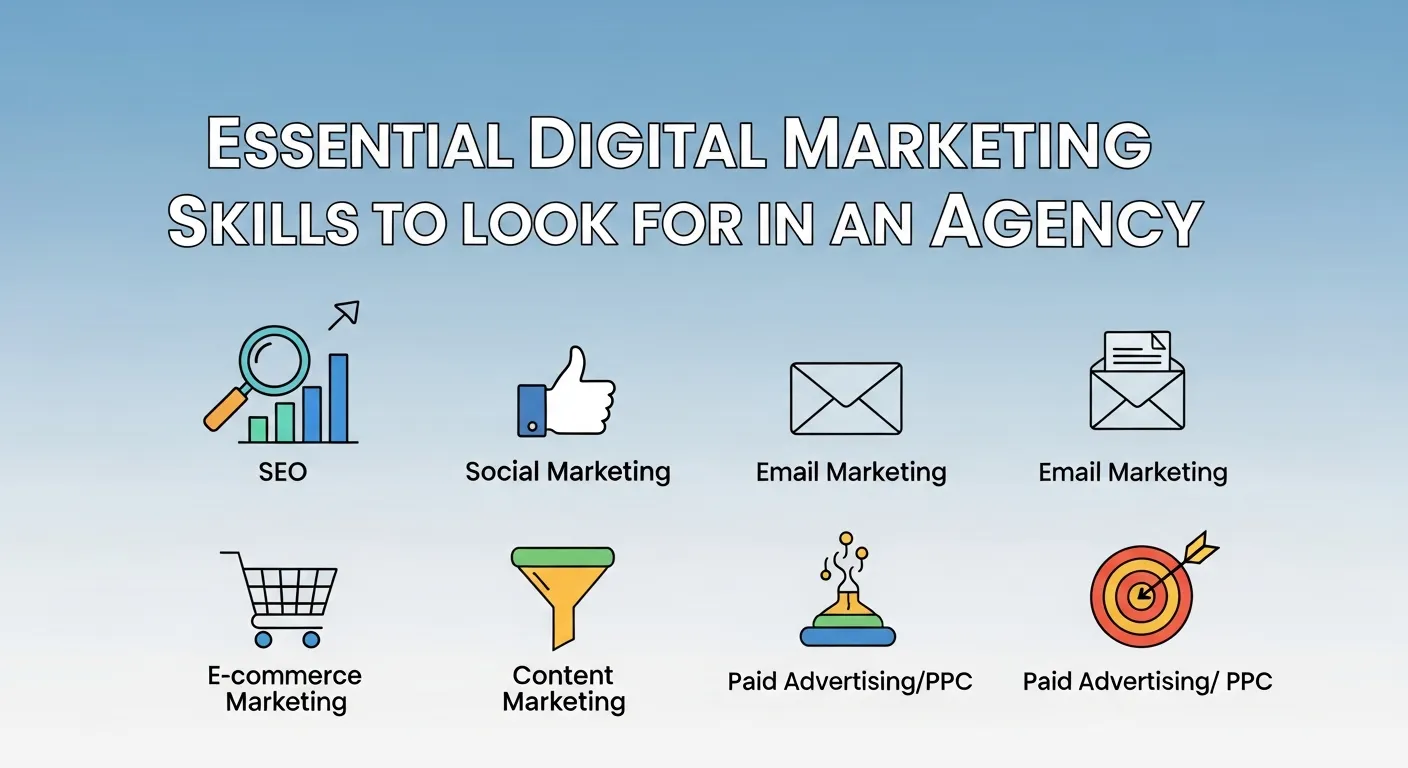
The best full-service digital marketing agencies combine technical expertise with creative thinking. Key skills include:
Data Analysis
Modern marketing is data-driven. Your agency should excel at interpreting analytics, identifying trends, and making evidence-based recommendations.
Strategic Thinking
Tactics without strategy lead nowhere. Look for agencies that see the big picture and understand how individual campaigns support broader business objectives.
Adaptability
Digital marketing evolves rapidly. Agencies must stay current with platform updates, algorithm changes, and emerging trends.
Creativity
Standing out in crowded markets requires fresh ideas. Your agency should bring creative solutions to content, campaigns, and problem-solving.
Technical Proficiency
From website optimization to marketing automation, technical skills are essential for executing modern marketing strategies.
What to Expect: Timeline and Results
Months 1-3: Foundation and Quick Wins
The first quarter focuses on setup and early optimization:
- Strategy development and approval
- Website improvements and technical fixes
- Initial content creation
- Campaign launches
- Baseline performance tracking
Some channels, particularly PPC, can deliver quick results. Others, like SEO and content marketing, take longer to gain traction.
Months 4-6: Momentum Building
As campaigns mature, you’ll see:
- Improved search rankings
- Growing organic traffic
- Increased social media engagement
- Higher quality leads
- Better understanding of what resonates with your audience
Data from this period informs optimization efforts.
Months 7-12: Optimization and Scaling
By now, your agency has enough data to:
- Double down on top-performing strategies
- Eliminate or adjust underperforming elements
- Expand successful campaigns
- Test new opportunities
Most businesses see their strongest results after six months of consistent effort.
Beyond Year One
Established campaigns continue to compound. Rankings improve, brand recognition grows, and referral marketing increases as satisfied customers spread the word. The key is maintaining momentum through continuous optimization and innovation.
Making the Partnership Work
Provide Access and Information
Your agency can’t succeed without your input. Share:
- Access to necessary accounts and platforms
- Information about products, services, and unique value propositions
- Customer insights and feedback
- Business goals and constraints
The more context you provide, the better they can serve you.
Set Realistic Expectations
Digital marketing delivers powerful results, but it’s not magic. Organic strategies take time. Budget constraints limit reach. Be patient and trust the process.
Stay Engaged
While the agency handles execution, your involvement matters. Review reports, ask questions, and provide feedback. The best results come from true partnerships.
Be Open to Recommendations
You hired experts for a reason. When they suggest changes to your website, messaging, or strategy, consider their advice carefully. They’re seeing things from an outside perspective informed by data and experience.
Wrapping Up: Your Next Steps
Choosing a full-service digital marketing agency is a significant decision that impacts your business growth. The right partner brings expertise, efficiency, and results that justify the investment.
Start by defining your goals and understanding your current position. Research agencies that specialize in your industry or business size. Evaluate them based on their approach, communication style, and track record.
Remember that successful digital marketing requires patience and persistence. Quick fixes rarely deliver lasting value. Build a digital marketing plan with long-term thinking, and work with an agency committed to your success.
When you find the right fit, you’re not just hiring a vendor—you’re gaining a strategic partner invested in helping your business thrive online.
Frequently Asked Questions About a Full-Service Digital Marketing Agency
Full-Service vs. Specialized Full-Service Digital Marketing Agency?
A Full-Service Digital Marketing Agency offers SEO, PPC, social media, content marketing, and more in one integrated strategy. Specialized agencies focus on one area only.
How much does it cost to work with a full-service digital marketing agency?
Small businesses spend $2,000–$5,000/month, larger companies $10,000–$50,000+. Agencies create packages tailored to your goals and budget.
How long before I see results from Full-Service Digital Marketing Agency?
Paid campaigns deliver traffic in days. SEO and content marketing take 4–6 months, with significant growth in 6–12 months.
Do I need to sign a long-term contract?
Most agencies require 6–12 month commitments. Some offer month-to-month plans at a higher cost.
Can a full-service agency work with my existing team?
A Full-Service Digital Marketing Agency can collaborate with your in-house team, supplementing tasks or capacity.
What if my industry is highly specialized?
Choose an agency experienced in your sector for faster results and better audience understanding.
How do agencies stay current with platform changes?
Top agencies stay updated through training, certifications, and testing new platform features.
What happens if I’m not happy with the results?
Discuss concerns first. Strategies can often be adjusted; contracts may allow early termination.
Should I pause campaigns during slow seasons?
Don’t pause completely. Adjust budgets or objectives to maintain engagement and momentum.
How involved do I need to be in day-to-day activities?
Stay engaged via check-ins and report reviews. The agency handles daily execution.
Can an agency help if my current campaigns are failing?
Agencies can audit, identify weaknesses, and implement strategies to turn campaigns around.
What’s the best way to build a digital marketing plan from scratch?
Document goals, audience, and competition. A Full-Service Digital Marketing Agency creates a multi-channel plan in 2–4 weeks.



Leave a Reply