

Marketing automation helps businesses simplify repetitive marketing activities, communicate with customers more effectively, and improve campaign performance. By using software, predefined workflows, customer data, and artificial intelligence, companies can deliver relevant messages at the right time without manually managing every interaction. From email marketing and lead generation to customer relationship management, marketing automation supports businesses in building stronger customer relationships and achieving sustainable growth. Whether you run a small business or manage a large organization, understanding the right tools and strategies can help you save time, improve efficiency, and create more personalized customer experiences.
Marketing Automation Tools
Marketing automation tools help businesses manage repetitive marketing tasks, organize customer information, and coordinate campaigns across different channels. These tools can handle activities such as scheduling emails, segmenting audiences, tracking customer behavior, managing leads, and measuring campaign performance. Instead of switching between multiple platforms and completing every task manually, marketers can use integrated systems to manage their activities more efficiently.
Choosing the right tools depends on your business goals, budget, audience size, and existing technology. Small businesses may benefit from affordable platforms with email scheduling, contact management, and basic reporting features, while larger organizations may need advanced segmentation, customer journey mapping, and integration with sales systems. Effective marketing automation allows teams to focus more on creative planning, customer research, and strategic decisions rather than repetitive administrative work.
Marketing Automation Software
Marketing automation software provides a centralized environment for planning, executing, and monitoring marketing activities. Depending on the platform, businesses can create automated email sequences, build landing pages, manage customer databases, assign lead scores, and analyze campaign results. These capabilities make it easier to maintain consistent communication throughout the customer journey.
Before selecting a platform, businesses should evaluate its usability, integration options, scalability, reporting capabilities, and pricing. The best marketing automation software should work smoothly with existing customer relationship management systems, website analytics, and e-commerce platforms. It should also support data privacy requirements and provide sufficient flexibility to adapt as marketing needs change.
A well-chosen system can improve coordination between marketing and sales teams, helping them understand which campaigns attract qualified prospects and which messages encourage customers to take action.
Benefits of Marketing Automation
One of the main advantages of marketing automation is that it reduces the time required to complete repetitive tasks. Businesses can schedule communications, trigger follow-up messages, and organize customer information automatically, allowing employees to concentrate on activities that require human judgment and creativity.
Another important benefit is personalization. Businesses can use customer preferences, previous purchases, website activity, and engagement history to deliver more relevant messages. When communication reflects a customer’s interests, it can improve engagement and create a more useful experience.
Marketing automation also supports consistency, measurable performance, and improved lead management. Businesses can monitor open rates, click-through rates, conversions, and other relevant metrics to understand campaign effectiveness. These insights help teams identify opportunities for improvement, allocate budgets more carefully, and develop strategies that support long-term growth.
Email Marketing Automation
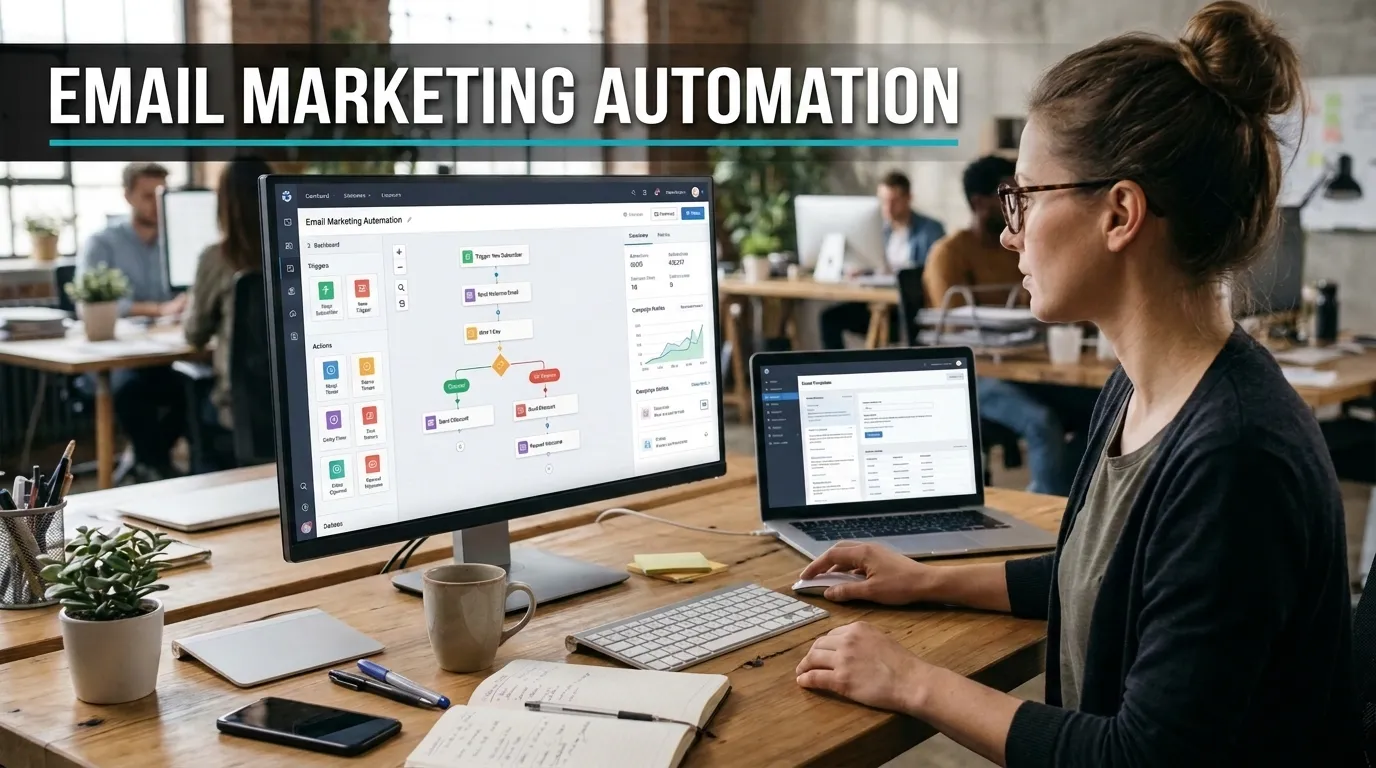 Email remains an effective channel for nurturing relationships with existing customers and potential buyers. Email marketing automation allows businesses to send messages automatically when someone subscribes, downloads a resource, abandons a shopping cart, completes a purchase, or reaches another predefined stage of the customer journey.
For example, a welcome sequence can introduce a brand to new subscribers, explain its main benefits, and provide helpful resources over several days. An e-commerce business might send a reminder to customers who leave products in their carts, while an established company could share personalized recommendations based on previous purchases.
Successful email marketing automation depends on useful content, appropriate timing, and accurate audience segmentation. Businesses should avoid sending excessive messages and should provide clear subscription preferences and unsubscribe options. Regular testing of subject lines, calls to action, and message formats can help improve performance without compromising the customer experience.
Automated Marketing Campaigns
Automated marketing campaigns coordinate multiple marketing activities around a specific objective, such as generating leads, launching a product, increasing sales, or encouraging repeat purchases. Instead of treating each message as a separate activity, businesses can design connected experiences that guide customers through different stages of the buying process.
A product launch campaign, for example, might begin with an announcement email, continue with educational content, and follow up with a reminder for subscribers who show interest. Customers who purchase the product can receive onboarding instructions, while those who do not engage may receive different content designed to address their concerns.
Marketing automation makes these campaigns easier to manage because messages and actions can respond to customer behavior. However, campaigns should be reviewed regularly to ensure that their content remains accurate, relevant, and aligned with business objectives.
Marketing Automation Strategies
An effective marketing automation strategy begins with clearly defined goals. Businesses should decide whether they want to improve lead quality, increase conversions, strengthen customer retention, or reduce the time spent managing campaigns. Clear objectives make it easier to select suitable workflows and measure meaningful results.
Understanding the target audience is equally important. Businesses should examine customer needs, buying behavior, communication preferences, and common challenges before designing automated experiences. A useful digital marketing strategy guide can help businesses understand how different promotional channels and marketing activities work together.
Companies should also review their social media marketing strategy to identify opportunities for coordinating social media engagement with email campaigns, lead capture forms, and customer follow-ups. Consistent messaging across these channels can create a more recognizable brand experience and help customers move naturally from discovering a business to making a purchase.
Lead Generation Automation
Lead generation automation helps businesses attract potential customers, collect relevant information, and nurture prospects until they are ready to make a purchasing decision. Common techniques include automated landing pages, downloadable resources, registration forms, email sequences, and lead scoring.
For example, a visitor who downloads an industry guide may automatically receive a series of educational emails. If that person repeatedly visits product pages or requests pricing information, the system can assign a higher lead score or notify the sales team. This approach helps businesses prioritize promising opportunities instead of treating every prospect identically.
Successful lead generation requires a clear value exchange. Visitors should understand what they will receive in return for sharing their information, and businesses should collect only the data they genuinely need. With well-designed workflows, marketing automation can improve follow-up consistency and help sales teams respond to interested prospects more efficiently.
Customer Relationship Management (CRM) Automation
Customer relationship management automation connects marketing activities with the systems businesses use to manage customer interactions. A CRM platform can organize contact records, track sales opportunities, record previous conversations, and provide visibility into customer relationships.
When integrated with marketing systems, a CRM can trigger personalized follow-ups based on customer actions, update contact information, and notify sales representatives when prospects demonstrate strong buying intent. It can also help businesses identify customers who may benefit from additional services, product recommendations, or retention campaigns.
The key to effective CRM automation is maintaining accurate data and establishing clear processes. Duplicate records, outdated contact details, and poorly configured workflows can create confusion rather than improve efficiency. Businesses should regularly review data quality and ensure that automated communication reflects the actual customer relationship.
Marketing Workflow Automation
 Marketing workflow automation connects individual tasks into repeatable processes that operate according to predefined rules. A workflow might begin when someone fills out a contact form and continue by recording their details, assigning a relevant audience segment, sending a confirmation email, and notifying the appropriate team member.
These workflows reduce delays and help ensure that important tasks are completed consistently. They can also coordinate internal responsibilities, such as requesting content approval, assigning campaign tasks, and notifying employees when a campaign needs attention.
Businesses should begin with simple workflows that solve clear operational problems before introducing more complex processes. Testing each step, monitoring failures, and documenting the workflow logic can prevent incorrect messages and unnecessary delays. Well-maintained marketing automation workflows become easier to scale as the business grows.
Marketing Automation for Small Businesses
Small businesses often operate with limited budgets and smaller marketing teams, making efficiency particularly important. Marketing automation can help these companies maintain regular communication, follow up with potential customers, and manage campaigns without hiring a large team.
A local service provider, for instance, can automatically send appointment confirmations, reminders, review requests, and follow-up messages. An online store can welcome new subscribers, recommend related products, and reconnect with customers who have not purchased recently. These activities help maintain customer relationships while reducing manual work.
Small businesses can also strengthen automated campaigns through consistent branding. Resources about personal business branding can help companies develop a recognizable identity and communicate a consistent message across their website, email campaigns, and social media channels. Starting with affordable tools and a few high-value workflows allows businesses to expand gradually as their needs develop.
Customer Engagement Automation
Customer engagement automation helps businesses maintain meaningful communication before, during, and after a purchase. It can support personalized notifications, customer education, feedback requests, loyalty campaigns, and service updates across appropriate communication channels.
For example, a business might send onboarding instructions after a customer signs up, share helpful product tips after a purchase, and request feedback after the customer has had time to use the product. These interactions provide useful information while showing customers that the relationship extends beyond the initial sale.
Engagement should remain helpful rather than intrusive. Businesses need to respect communication preferences, control message frequency, and offer customers meaningful choices. By combining relevant content with timely follow-ups, marketing automation can contribute to stronger customer satisfaction and encourage long-term loyalty.
Automation can also support integrated promotional activities. Businesses that combine digital communication with digital commerce marketing strategies can connect online promotions, product recommendations, and customer follow-ups with their broader sales objectives. For companies using offline channels, TV commercials and traditional transit advertising can generate awareness that digital campaigns then help convert into measurable online engagement.
AI-Powered Marketing Automation
 Artificial intelligence is expanding the capabilities of marketing automation by helping businesses analyze data, identify patterns, generate content ideas, and personalize customer experiences. AI-enabled platforms may recommend products, predict which leads are more likely to convert, identify potential customer churn, and suggest appropriate times to send communications. AI can also help marketers test different messages, summarize campaign performance, and identify audience segments that respond differently to particular offers. These capabilities support faster experimentation and more informed decisions when used alongside reliable customer data.
However, AI-powered marketing automation still requires human oversight. Generated content should be reviewed for accuracy, tone, and brand consistency, while automated recommendations should be evaluated for fairness and relevance. Businesses must also protect customer information and comply with applicable privacy regulations. The strongest results come from combining AI capabilities with human creativity, strategic thinking, and a clear understanding of customer needs. Technology can make marketing more efficient, but meaningful communication remains essential for building trust.
Conclusion
Marketing automation gives businesses a practical way to streamline repetitive tasks, nurture leads, improve customer engagement, and measure campaign performance. From email sequences and CRM integration to AI-powered personalization, the right approach can support growth while making better use of limited resources. The most effective implementation starts with clear objectives, suitable software, accurate data, and simple workflows. As businesses learn from campaign results, they can refine their processes and introduce more advanced capabilities. By combining automation with relevant content, thoughtful strategy, and genuine customer care, businesses can build more consistent marketing experiences and stronger long-term relationships.
FAQ
1. What is marketing automation?
Marketing automation uses software and predefined workflows to manage repetitive marketing activities, deliver personalized communications, and track customer interactions with less manual effort.
2. How does marketing automation work?
It works through triggers, conditions, and actions. For example, when someone subscribes to a newsletter, the system can automatically send a welcome email and add the subscriber to a relevant audience segment.
3. What are the main benefits of marketing automation?
The main benefits include saving time, improving personalization, maintaining consistent communication, organizing leads, measuring campaign results, and supporting customer retention.
4. Which marketing automation tools are best for beginners?
Beginners should look for easy-to-use platforms offering email campaigns, contact management, simple workflows, reporting, and integrations that match their existing business tools.
5. Is marketing automation suitable for small businesses?
Yes. Small businesses can automate email follow-ups, appointment reminders, lead nurturing, and customer feedback requests without needing a large marketing team.
6. How does email marketing automation increase sales?
It delivers relevant messages based on customer behavior, such as welcome emails, abandoned-cart reminders, product recommendations, and follow-ups that encourage customers to complete purchases.
7. What is the difference between CRM and marketing automation?
CRM systems primarily manage customer relationships, interactions, and sales opportunities. Marketing automation focuses on executing and coordinating marketing communications and workflows. Integrating both helps align marketing and sales.
8. Can marketing automation improve lead generation?
Yes. It can capture leads through forms, segment prospects, deliver educational content, score engagement, and alert sales teams when prospects demonstrate strong interest.
9. How does AI improve marketing automation?
AI can support predictive analytics, content suggestions, audience segmentation, product recommendations, and campaign optimization. Human review remains important for accuracy, privacy, and brand consistency.
10. How can businesses measure marketing automation success?
Businesses can track conversion rates, qualified leads, email engagement, customer retention, campaign revenue, and return on investment. The most useful metrics depend on the campaign’s specific objectives.



Leave a Reply