

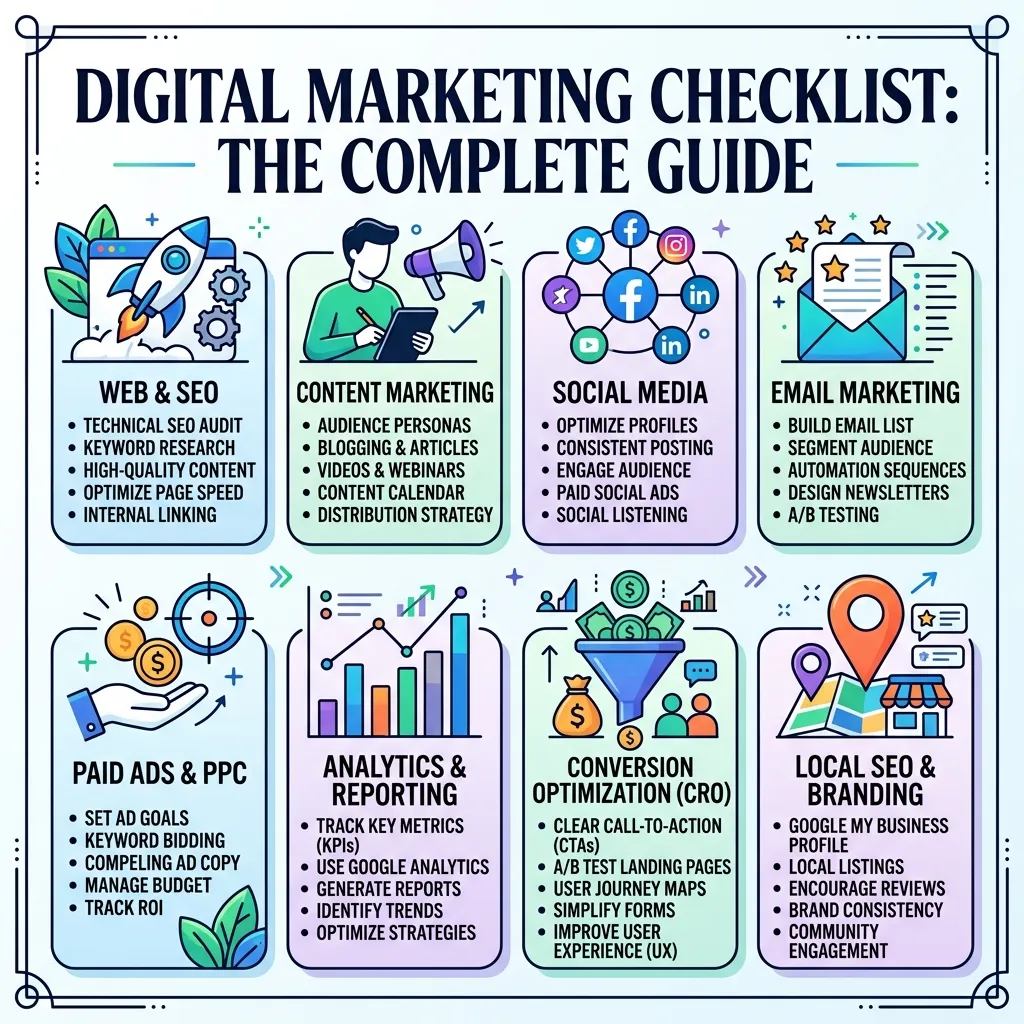
A digital marketing checklist keeps campaigns organized and prevents the small oversights that quietly hurt performance — a missing tracking pixel, an unoptimized landing page, a forgotten CTA. This guide walks through a complete digital marketing checklist covering strategy, SEO, content, paid ads, email, social media, and analytics, so you can audit your current efforts or plan a new campaign with nothing falling through the cracks.
Why You Need a Digital Marketing Checklist
Digital marketing involves a lot of moving parts, and it’s easy for something small to slip through the cracks — a landing page without a clear CTA, an ad campaign missing conversion tracking, an email list that’s never been segmented. A digital marketing checklist gives you a repeatable framework to catch these gaps before they cost you clicks, leads, or revenue.
Whether you’re launching a new campaign, auditing an existing strategy, or onboarding a new team member, working through a structured digital marketing checklist ensures consistency across every channel instead of relying on memory or ad-hoc habits that vary from person to person.
Strategy and Goal-Setting Checklist
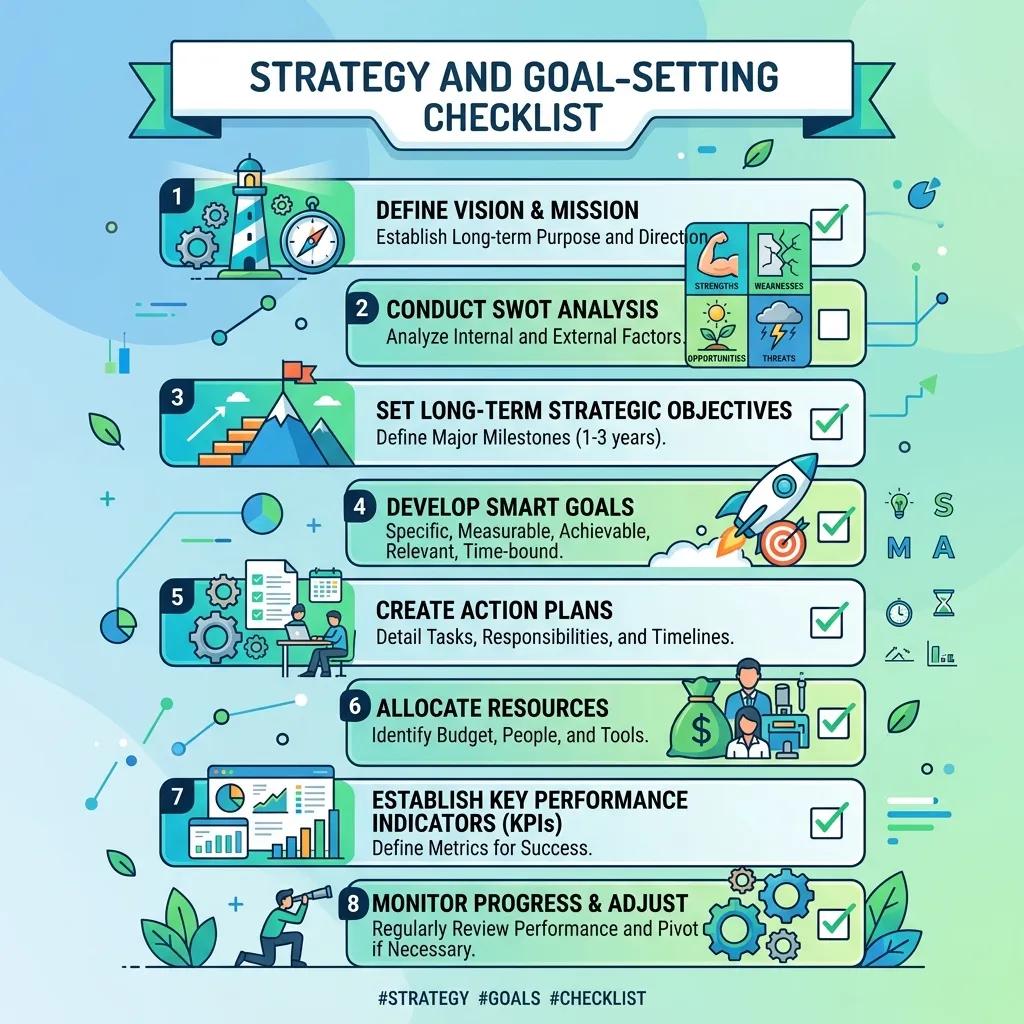
Before touching any specific channel, a solid digital marketing checklist starts with strategic groundwork:
- [ ] Define clear, measurable goals (leads, sales, brand awareness, retention)
- [ ] Identify your target audience and build out buyer personas
- [ ] Set a realistic budget across channels
- [ ] Choose the KPIs that will define success for each channel
- [ ] Map out your customer journey from awareness to conversion
- [ ] Conduct a competitor analysis to identify gaps and opportunities
- [ ] Establish a reporting cadence (weekly, monthly, quarterly)
Skipping this step is one of the most common reasons digital marketing campaigns underperform — without clear goals, it’s impossible to know whether a campaign actually succeeded.
Website and SEO Checklist
Your website is the foundation most other channels drive traffic toward, so this section of the digital marketing checklist deserves particular attention:
- [ ] Confirm the site loads quickly on both desktop and mobile
- [ ] Check that the site is fully mobile-responsive
- [ ] Verify all pages have unique, keyword-optimized title tags and meta descriptions
- [ ] Ensure a clear site structure with logical internal linking
- [ ] Set up and verify Google Search Console and submit an XML sitemap
- [ ] Check for broken links and fix any 404 errors
- [ ] Confirm SSL/HTTPS is properly configured
- [ ] Optimize images with descriptive alt text and compressed file sizes
- [ ] Review keyword rankings and identify content gaps
For a more thorough technical walkthrough beyond the checklist basics, this complete digital marketing audit guide covers a deeper, step-by-step process for reviewing your entire digital presence.
Content Marketing Checklist
Content supports nearly every other channel, from SEO to social to email, making it one of the most important sections of any digital marketing checklist:
- [ ] Maintain an editorial calendar with consistent publishing frequency
- [ ] Align content topics with keyword research and audience intent
- [ ] Include clear calls-to-action in every piece of content
- [ ] Repurpose long-form content into shorter formats (social posts, email snippets, video)
- [ ] Update and refresh older content regularly to keep it accurate
- [ ] Track which content pieces drive the most traffic and conversions
- [ ] Ensure brand voice and messaging stay consistent across formats
Paid Advertising Checklist
Paid campaigns can burn through budget quickly if key setup steps are missed, so this part of the digital marketing checklist is worth double-checking before any campaign goes live:
- [ ] Set up conversion tracking before launching any campaign
- [ ] Define clear audience targeting and exclusions
- [ ] Write multiple ad creative variations for testing
- [ ] Set appropriate daily and lifetime budgets
- [ ] Confirm landing pages match ad messaging and offer
- [ ] Set up UTM parameters for accurate attribution
- [ ] Establish a testing schedule for creative and targeting
- [ ] Review and pause underperforming ads regularly
Email Marketing Checklist
Email remains one of the highest-ROI channels in digital marketing, but only when the fundamentals are handled correctly:
- [ ] Segment your email list based on behavior, interests, or lifecycle stage
- [ ] Write compelling, clear subject lines
- [ ] Ensure emails are mobile-responsive
- [ ] Include a single, clear call-to-action per email
- [ ] Set up automated welcome and nurture sequences
- [ ] Test send times and frequency for optimal engagement
- [ ] Monitor and maintain list hygiene by removing inactive subscribers
- [ ] Confirm compliance with email regulations like CAN-SPAM or GDPR
Social Media Checklist
Social media requires ongoing consistency more than any single big campaign, so this checklist section focuses on habits as much as one-time setup:
- [ ] Maintain a consistent posting schedule across platforms
- [ ] Tailor content format and tone to each specific platform
- [ ] Engage with comments, messages, and mentions promptly
- [ ] Use relevant hashtags and geotags where appropriate
- [ ] Track engagement metrics, not just follower count
- [ ] Test paid social alongside organic content where budget allows
- [ ] Monitor brand mentions and respond to feedback, positive or negative
Analytics and Reporting Checklist
The final section of any digital marketing checklist should confirm you can actually measure everything above:
- [ ] Verify tracking is correctly installed across all channels (website, ads, email)
- [ ] Set up goal tracking and conversion events in your analytics platform
- [ ] Build a dashboard that surfaces the KPIs that matter most to your goals
- [ ] Review performance data on a consistent schedule
- [ ] Compare performance against past periods, not just against targets
- [ ] Document key learnings from each campaign for future reference
- [ ] Adjust strategy based on data rather than assumptions
Tracking the right numbers matters as much as tracking consistently. This guide on digital marketing performance metrics and KPIs breaks down which specific metrics actually correlate with growth, rather than vanity numbers that look good but don’t drive decisions.
How Often Should You Review Your Digital Marketing Checklist?
A digital marketing checklist isn’t a one-time exercise — different sections benefit from different review frequencies. Website and SEO fundamentals are worth auditing quarterly, since technical issues can quietly accumulate over months without anyone noticing. Content and social media checklists benefit from a lighter, ongoing review, ideally weekly, to catch scheduling gaps or engagement drop-offs early. Paid advertising checklists need the most frequent attention, often daily or every few days during active campaigns, since budget can be wasted quickly if tracking or targeting breaks. Email marketing checklists fall somewhere in the middle, reviewed monthly alongside list health and automation performance.
Building this checklist into a recurring calendar reminder, rather than relying on memory, is what actually makes it useful long-term. Many marketing teams assign specific sections of the checklist to specific team members, so accountability doesn’t fall entirely on one person trying to remember everything at once.
Common Mistakes a Digital Marketing Checklist Helps Prevent
Even experienced marketers fall into predictable traps that a structured digital marketing checklist helps catch before they become costly:
- Launching paid campaigns without conversion tracking, making it impossible to know which ads are actually working
- Publishing content without a clear call-to-action, wasting traffic that had genuine conversion potential
- Letting email lists go unsegmented, sending the same generic message to subscribers with very different needs
- Ignoring mobile experience, even though a majority of traffic across most industries now comes from mobile devices
- Setting vague goals, which makes it impossible to judge whether a campaign actually succeeded
If you’re building your strategy from scratch rather than auditing an existing one, this guide on how to build a digital marketing plan walks through the planning process this checklist assumes is already in place.
Using This Checklist as an Ongoing Habit, Not a One-Time Task
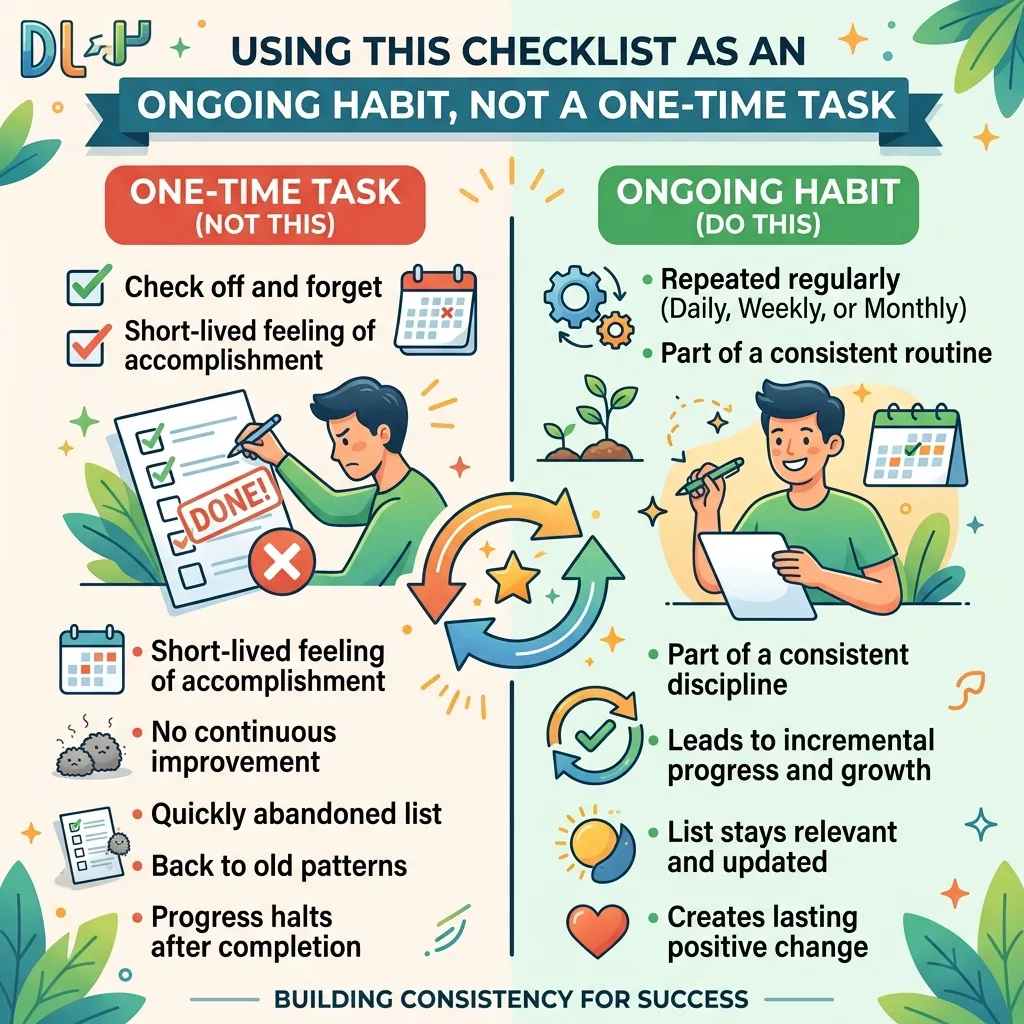
The real value of a digital marketing checklist comes from treating it as a recurring habit rather than something you complete once and file away. Campaigns evolve, platforms change their algorithms and ad policies, and audience behavior shifts over time — a checklist that worked perfectly six months ago may already be missing newer best practices. Revisiting each section periodically, updating it as your channels and goals evolve, and sharing it across your team keeps everyone aligned on what “done right” actually looks like for your specific business.
For teams that want a broader, ongoing education resource to keep pace with changing best practices across channels, Google’s Digital Garage offers free, regularly updated courses covering the fundamentals this checklist touches on, from SEO to analytics to paid advertising.
Conclusion
A digital marketing checklist won’t replace strategic thinking, but it does something equally important: it prevents the small, avoidable mistakes that quietly undermine otherwise solid campaigns. Whether you’re launching something new or auditing what’s already running, working through each section — strategy, website and SEO, content, paid ads, email, social, and analytics — helps ensure nothing important gets missed. Treat this checklist as a living document, review it regularly, and adjust it as your channels and goals evolve.
Frequently Asked Questions
1. What should be included in a digital marketing checklist?
A complete Digital Marketing Checklist should cover strategy and goal-setting, website optimization, SEO, content marketing, paid advertising, email marketing, social media, and analytics tracking. The checklist should help ensure that important marketing tasks are completed consistently.
2. How often should I review my Digital Marketing Checklist?
Review frequency depends on the marketing channel. Paid advertising may need frequent monitoring, while SEO and website audits can be reviewed quarterly. Content and social media tasks often benefit from weekly checks using a structured Digital Marketing Checklist.
3. Is a Digital Marketing Checklist useful for small businesses?
Yes. A Digital Marketing Checklist is particularly useful for small businesses and solo marketers managing multiple channels without a large marketing team. It helps organize tasks, identify gaps, and maintain consistency.
4. What’s the biggest mistake a Digital Marketing Checklist helps avoid?
Launching paid campaigns without proper conversion tracking is one of the most common and costly mistakes. A well-planned Digital Marketing Checklist helps ensure tracking, analytics, goals, and other essential campaign settings are completed before launch.
5. Should every business use the same Digital Marketing Checklist?
Not necessarily. The core framework can be similar, but each Digital Marketing Checklist should be customized according to the business’s industry, target audience, marketing channels, budget, and specific goals.
6. How does a Digital Marketing Checklist help with SEO specifically?
It ensures important SEO fundamentals are not overlooked. A useful Digital Marketing Checklist can include site speed, mobile responsiveness, keyword optimization, meta tags, internal linking, sitemap submission, technical SEO, and ongoing content optimization.
7. Can a Digital Marketing Checklist replace a full marketing strategy?
No. A checklist supports execution and consistency, but it does not replace a complete marketing strategy. Your Digital Marketing Checklist should work alongside clear objectives, audience research, positioning, competitive analysis, and a defined marketing plan.
8. What tools help track a Digital Marketing Checklist?
Project management tools such as Trello and Asana can help organize tasks, while Google Analytics and Google Search Console can monitor performance. Combining these tools with a Digital Marketing Checklist makes it easier to track responsibilities and deadlines.
9. How do I know if my email marketing checklist is working?
Monitor metrics such as open rates, click-through rates, conversions, unsubscribe rates, and subscriber growth. Comparing these metrics before and after implementing your Digital Marketing Checklist can show whether your email marketing process is improving.
10. Does a Digital Marketing Checklist need to be different for B2B vs. B2C?
Yes. Marketing priorities often differ between business models. A B2B Digital Marketing Checklist may place greater emphasis on lead generation, email, and educational content, while a B2C checklist may focus more heavily on social media, paid advertising, and direct conversions.
11. What’s the first step in any Digital Marketing Checklist?
Setting clear and measurable goals should come first. Before completing other tasks, define what you want to achieve, such as increasing website traffic, generating leads, improving conversions, or growing brand awareness.
12. How do I keep my team accountable to a Digital Marketing Checklist?
Assign specific tasks to individual team members and establish recurring review schedules. Using a shared Digital Marketing Checklist with clear deadlines and responsibilities makes it easier to monitor progress and ensure important marketing activities are completed.



Leave a Reply