

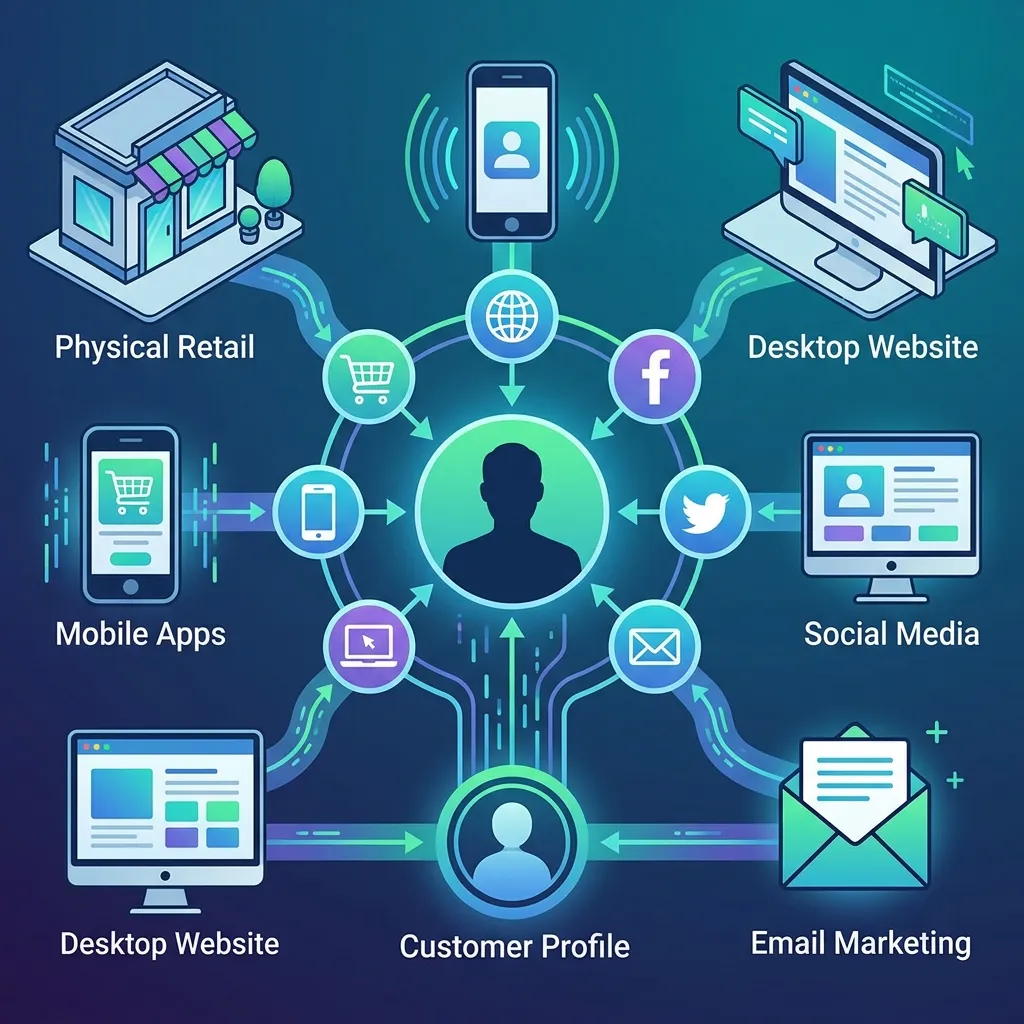
Omnichannel digital marketing is a unified approach that integrates all customer touchpoints—including websites, social media, email, mobile apps, and physical stores—to deliver a seamless and personalized customer experience. This strategy aligns messaging and data across platforms, significantly boosting brand loyalty, engagement, and sales conversions.
Customers today interact with brands across dozens of touchpoints before making a purchase. They might discover a product on an Instagram ad, research it later on a mobile website, and finally complete the transaction through a desktop computer or in a physical store. If these channels operate in isolation, the resulting friction often leads to lost sales and frustrated users. A unified approach is essential to keep the buyer moving smoothly toward a decision.
Omnichannel digital marketing solves this problem by connecting every channel into one cohesive system. Instead of treating social media, email campaigns, and website experiences as separate entities, an omnichannel digital marketing strategy ensures they share data and messaging. The customer experiences a continuous journey, picking up exactly where they left off, regardless of the device or platform they use.
Understanding the distinction between multi-channel and omnichannel digital marketing is critical. Multi-channel marketing involves a brand being present on various platforms, but those platforms function independently. Omnichannel digital marketing requires deep integration. Every channel communicates with the others, updating customer profiles in real-time to provide contextually relevant interactions.
What are the key components of an omnichannel digital marketing strategy?
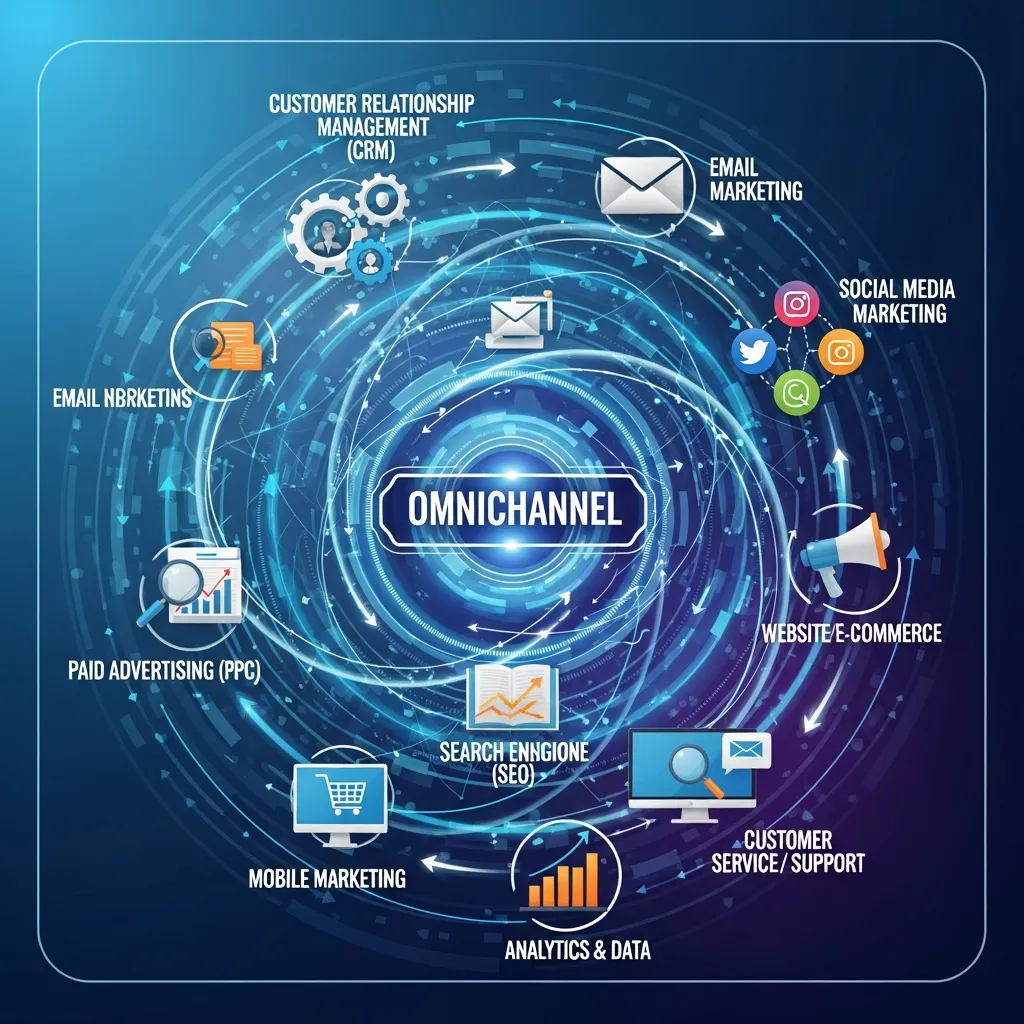
A successful omnichannel digital marketing framework relies on several foundational elements working together. Missing even one of these components can disrupt the entire customer journey.
A customer-centric approach
Your strategy must revolve around the customer’s needs and behaviors. This requires shifting focus away from pushing products on specific channels to understanding how customers naturally navigate their buying journey. You must anticipate their preferences and remove obstacles at every potential touchpoint.
Data integration and unified customer profiles
To deliver seamless experiences, organizations need a single source of truth for customer data. Omnichannel digital marketing platforms aggregate behavioral, transactional, and demographic data into unified profiles. When a user clicks an email link, the website immediately recognizes their past browsing history, allowing for highly relevant product recommendations.
Consistent brand messaging across channels
Consistency builds trust. Your brand voice, visual identity, and core messaging must remain uniform whether a customer receives an SMS notification, reads a blog post, or talks to a chatbot. Disjointed messaging confuses buyers and damages the credibility of your omnichannel digital marketing efforts.
What are the main benefits of omnichannel digital marketing?
Implementing an integrated system requires time and resources, but the measurable advantages make it a highly profitable investment.
Enhanced customer experience and loyalty
According to the Aberdeen Group, companies with strong omnichannel customer engagement retain an average of 89% of their customers. By eliminating repetitive steps—like asking users to re-enter information they already provided on another channel—you create a frictionless experience that builds long-term loyalty.
Increased sales and conversions
Shoppers who engage with multiple channels tend to spend more. When you deliver personalized offers based on real-time behavior across devices, conversion rates naturally rise. An abandoned cart email sent shortly after a user leaves your mobile app is a prime example of omnichannel digital marketing driving direct revenue.
Improved data collection and insights
Because omnichannel digital marketing connects all platforms, you gain a holistic view of campaign performance. You can identify exactly which touchpoints contribute most heavily to conversions. This granular data allows marketing teams to allocate budgets more effectively.
Operational efficiency
Integrated marketing technology reduces manual workflows. Automated triggers handle routine communication, such as sending welcome sequences or restock alerts, freeing up your marketing team to focus on high-level strategy and creative development.
How can you implement an omnichannel digital marketing strategy?
Building a robust system requires careful planning and the right technological infrastructure. Follow these steps to launch your omnichannel digital marketing initiatives.
Step 1: How do you map the customer journey?
Begin by documenting every interaction a prospect has with your brand from awareness to post-purchase. Identify the channels they use, the questions they ask, and the pain points they experience at each stage. This map serves as the blueprint for your entire omnichannel digital marketing ecosystem.
Step 2: What are the right channels to choose?
You do not need to be on every platform. Select the channels where your target audience actually spends their time. Common selections include email, social media, SMS, in-app notifications, websites, and physical stores. Focus on mastering a few interconnected channels before expanding your reach.
Step 3: How do you integrate technology and platforms?
Your tech stack is the engine of your omnichannel digital marketing strategy. You need a centralized Customer Relationship Management (CRM) system, marketing automation software, and robust analytics tools. Ensure these systems share application programming interfaces (APIs) so data flows instantly between them.
Step 4: How can you create personalized content and offers?
Use your unified data profiles to segment your audience and deliver highly relevant content. If a customer recently bought running shoes in your physical store, your email campaigns should recommend running socks or tracking apps, rather than promoting the same shoes they already purchased.
Step 5: How should you measure and optimize your strategy?
Continuously track key performance indicators (KPIs) like customer lifetime value, retention rates, and cross-channel attribution. Run A/B tests on your messaging and adjust your campaigns based on user feedback and data trends.
How does omnichannel digital marketing work across specific industries?
Different sectors apply omnichannel principles to solve unique customer challenges and drive growth.
E-commerce
Online retailers use omnichannel digital marketing to recover abandoned carts via SMS, retarget website visitors with social media ads, and provide seamless customer support through website chatbots that have access to order histories.
Retail
Traditional retailers bridge the digital and physical divide. Features like “buy online, pick up in-store” (BOPIS) rely entirely on omnichannel digital marketing infrastructure. Customers might receive an app notification about an in-store sale when they physically walk near a location.
Financial Services
Banks and financial institutions use omnichannel strategies to provide secure, consistent experiences. A customer might start a mortgage application on their mobile phone and seamlessly complete it later on a desktop computer, with a loan officer having immediate access to their inputted data.
Healthcare
Patient experiences improve significantly with omnichannel digital marketing. Integrated systems allow patients to book appointments online, receive SMS reminders, access test results through a secure app, and follow up with doctors via telehealth portals.
What are the common challenges of omnichannel digital marketing (and their solutions)?
Transitioning to an interconnected marketing model presents several distinct hurdles.
Data silos
When marketing, sales, and customer service departments use separate databases, creating a unified customer view is impossible. Solution: Invest in a Customer Data Platform (CDP) that automatically aggregates data from all departmental software into a single dashboard.
Technological complexities
Integrating legacy systems with modern marketing tools often requires specialized IT knowledge. Solution: Prioritize marketing platforms with native integrations and robust API documentation. Consider hiring specialized consultants during the initial setup phase.
Organizational alignment
Omnichannel digital marketing fails if internal teams operate in silos. Solution: Establish cross-functional teams. Ensure marketing, sales, and IT share the same KPIs to foster collaboration and unified goals.
What are the future trends shaping omnichannel digital marketing?
The landscape of digital marketing continues to evolve rapidly. Staying ahead requires adopting emerging technologies.
AI and machine learning in personalization
Artificial intelligence analyzes vast datasets to predict future consumer behavior accurately. AI tools dynamically adjust website content, email send times, and product recommendations for individual users in real-time, elevating the standard for personalization in omnichannel digital marketing.
Voice search and smart devices
As smart speakers and voice assistants become common household items, brands must optimize their content for conversational queries. Integrating voice commerce into the omnichannel journey allows users to reorder products or check order statuses hands-free.
Augmented reality and virtual reality
AR and VR technologies merge physical and digital experiences. Furniture retailers allow customers to visualize items in their living rooms via mobile apps before completing purchases online, adding a highly interactive touchpoint to the omnichannel digital marketing journey.
How does omnichannel impact Digital Marketing for Affiliate Marketing?
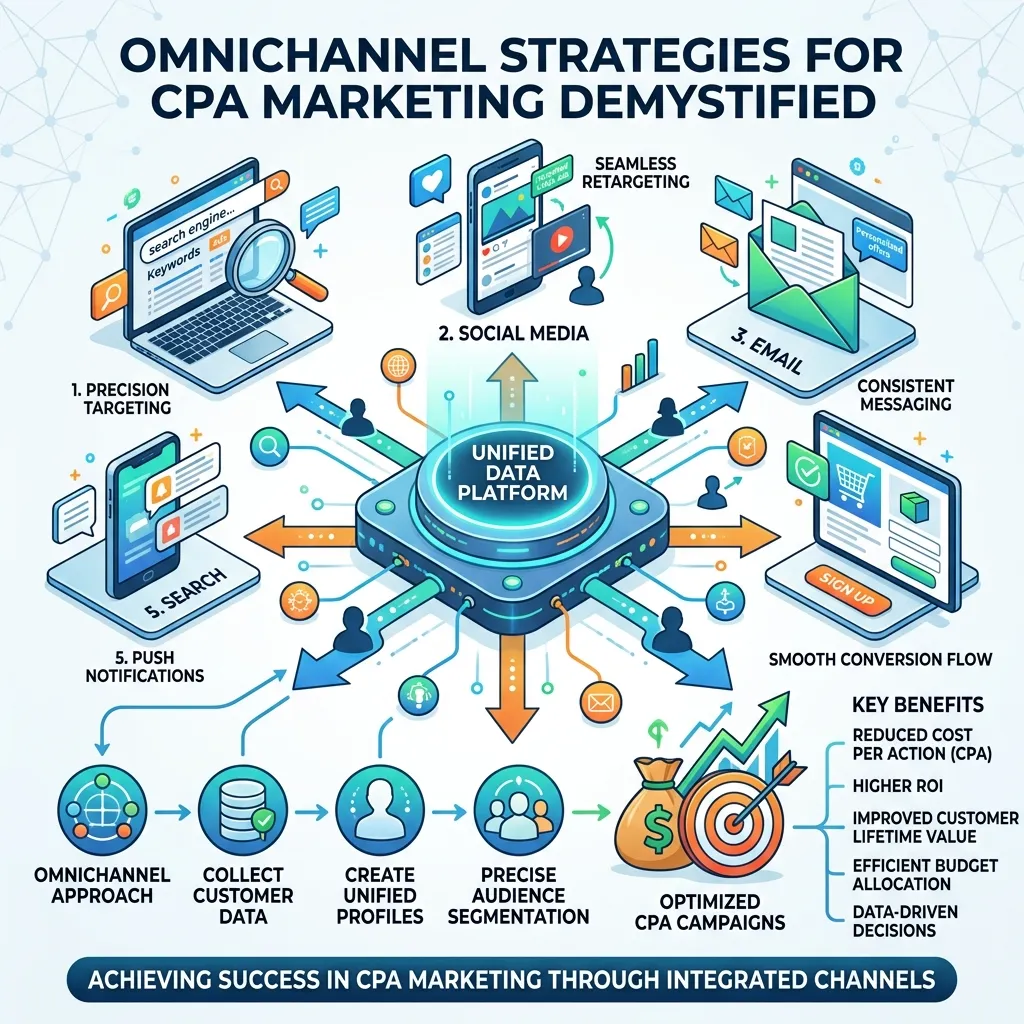
Integrating omnichannel principles can heavily amplify Digital Marketing for Affiliate Marketing campaigns. When affiliates drive traffic to your brand, those referred customers should experience a consistent, high-quality journey. An omnichannel digital marketing approach ensures that once an affiliate introduces a prospect, the brand’s retargeting ads, automated emails, and website experiences work harmoniously to close the sale. This unified process increases the overall conversion rate, resulting in higher earnings for partners and better ROI for the brand’s affiliate programs.
How can omnichannel strategies optimize CPA Marketing Demystified campaigns?
Cost Per Action (CPA) campaigns require precise tracking and high conversion rates to remain profitable. Applying omnichannel digital marketing principles keeps CPA Marketing Demystified and highly effective. By tracking user behavior across diverse touchpoints, marketers gain clear visibility into which specific channel combinations drive the targeted actions most efficiently. If an omnichannel digital marketing dashboard reveals that users who click a Facebook ad and then receive an SMS are twice as likely to complete a CPA offer, marketers can allocate their budgets specifically to that high-performing sequence.
What are your next steps for omnichannel success?
Omnichannel digital marketing is no longer a luxury reserved for massive enterprise corporations; it is an absolute necessity for brands wanting to remain competitive. By breaking down data silos, adopting a customer-centric mindset, and connecting your technological infrastructure, you can deliver the seamless experiences modern buyers demand. Start by auditing your current customer journey, identifying points of friction, and implementing integrations step-by-step. The result will be deeper customer loyalty, improved operational efficiency, and a significant boost to your bottom line.
Frequently Asked Questions
What is omnichannel digital marketing?
Omnichannel digital marketing is a strategy that integrates all digital and physical marketing channels to create a seamless, unified, and highly personalized customer experience across every touchpoint.
How is it different from multi-channel marketing?
Multi-channel marketing uses multiple platforms to reach customers, but the channels do not share data or messaging. Omnichannel digital marketing connects all platforms so they communicate with one another, providing a continuous customer journey.
What are the main benefits of an omnichannel strategy?
The primary benefits include higher customer retention rates, increased sales and conversion metrics, improved data collection for better decision-making, and enhanced operational efficiency.
How can I get started with omnichannel marketing?
Begin by mapping your customer journey to understand all potential touchpoints. Then, choose the channels most relevant to your audience and integrate your data systems using a CRM or CDP.
What technologies are essential for omnichannel?
Essential technologies include Customer Relationship Management (CRM) software, Customer Data Platforms (CDPs), marketing automation tools, and comprehensive data analytics software.
How does omnichannel improve customer experience?
It removes friction by remembering user preferences and past interactions across devices. Customers never have to repeat information or restart their journey when switching from a mobile app to a desktop website.
Can small businesses implement omnichannel strategies?
Yes. Small businesses can start by integrating just two or three primary channels—such as syncing their email marketing platform with their e-commerce website—and scaling up as their resources grow.
What are common challenges in omnichannel implementation?
The most frequent challenges include breaking down internal data silos, integrating complex or outdated technology systems, and aligning different departments toward a unified goal.
How can AI enhance omnichannel digital marketing?
AI enhances omnichannel strategies by rapidly analyzing customer data to predict behavior, allowing brands to deliver hyper-personalized product recommendations and dynamic content in real-time.
What role does data play in omnichannel?
Data is the foundational element that connects channels. Accurate, real-time data allows systems to recognize users instantly and deliver contextually relevant messaging based on their previous interactions.
How does omnichannel impact Digital Marketing for Affiliate Marketing?
It improves affiliate conversion rates by ensuring that traffic sent by partners enters a highly optimized, seamless funnel involving retargeting and email follow-ups, maximizing the chance of a successful sale.
Can omnichannel strategies be applied to CPA Marketing Demystified efforts?
Yes. Omnichannel tracking allows marketers to see the exact sequence of touchpoints that lead to a completed action, enabling them to optimize budgets for the highest converting multi-channel paths in their CPA campaigns.



Leave a Reply