

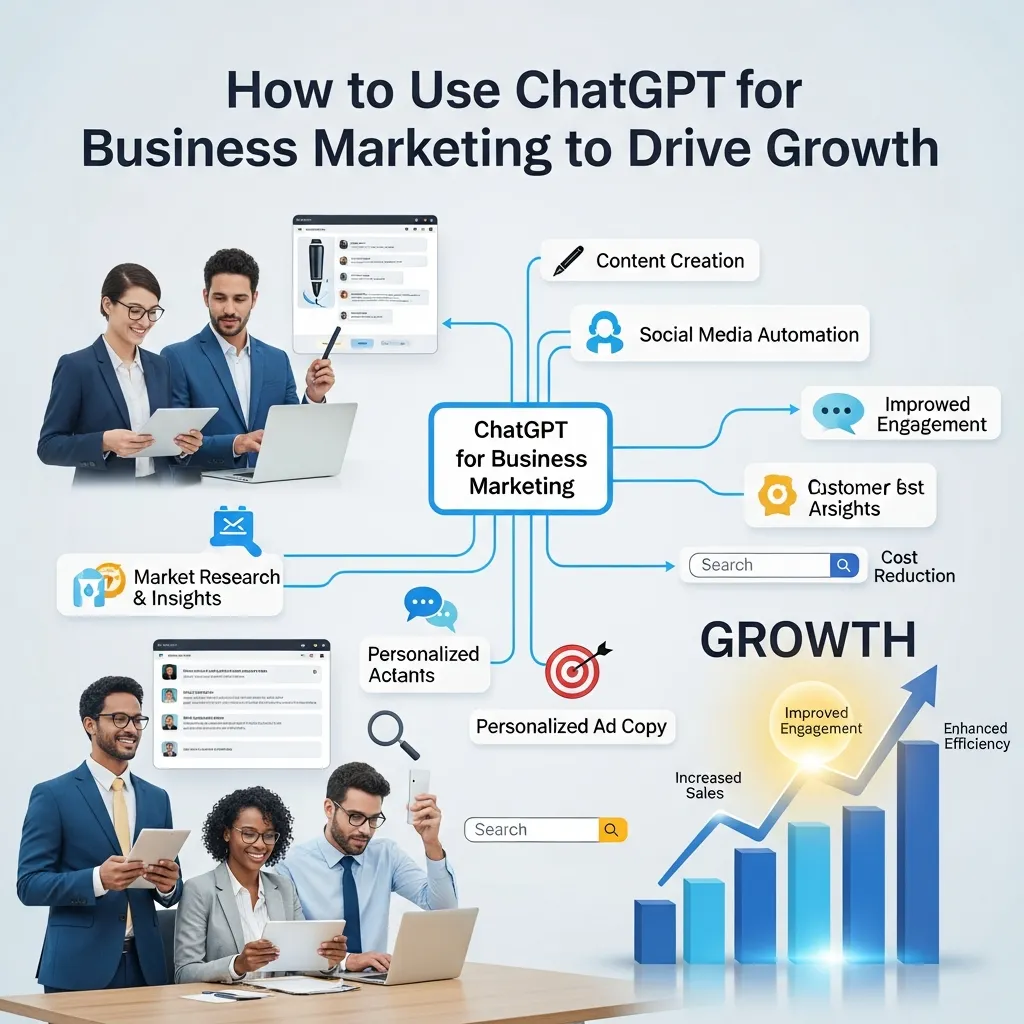
Leveraging ChatGPT for business marketing opens up transformative strategies that save time, improve customer connections, and scale your brand’s digital presence.
Digital marketing shifts constantly. New platforms emerge, algorithms update, and consumer expectations shift toward hyper-personalized experiences. Keeping up requires constant content creation, rapid data analysis, and seamless customer service. For many teams, keeping pace with these demands feels like a never-ending uphill battle.
Artificial intelligence brings a much-needed solution to this challenge. Leading the charge is OpenAI’s language model, which has fundamentally changed how professionals approach daily tasks. Using ChatGPT for business marketing allows you to automate tedious workflows, generate creative assets, and analyze vast amounts of data in seconds.
By integrating generative AI into your strategy, you gain a massive competitive advantage. You can produce high-quality content faster, tailor messages to specific audience segments, and scale operations without necessarily expanding your team. This post covers exactly how to implement ChatGPT for business marketing effectively and responsibly.
Understanding ChatGPT Capabilities
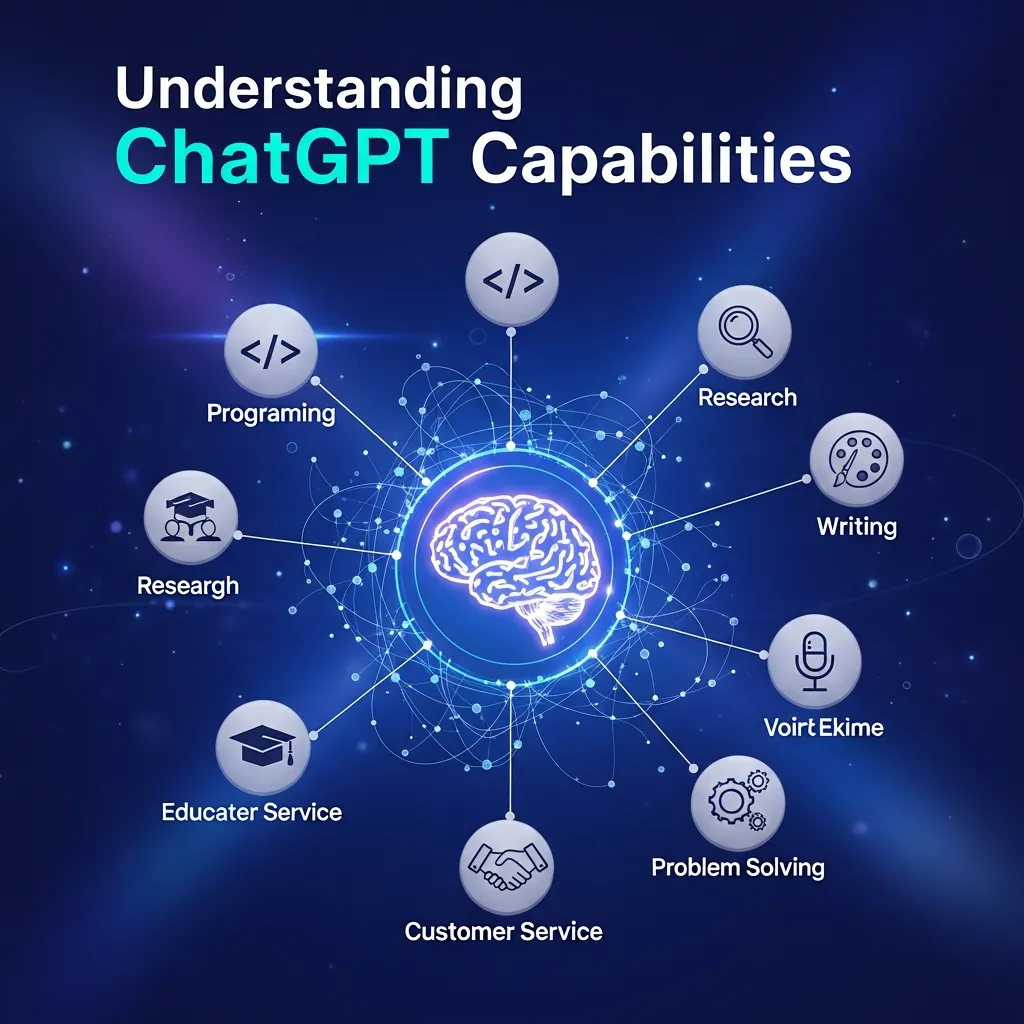
Generative AI models process massive datasets to understand language patterns and produce human-like text based on specific prompts. ChatGPT goes far beyond simple automated responses. It understands context, follows complex instructions, and adapts its tone to match your brand guidelines.
Key capabilities for marketing teams include rapid content generation, large-scale data analysis, and advanced personalization. You can ask the AI to draft an email sequence, summarize a 50-page industry report, or rewrite a sales pitch for three different target demographics.
Businesses need to adopt AI in marketing now because the barrier to entry has never been lower, and the cost of falling behind is severe. Early adopters are already seeing reduced customer acquisition costs and higher engagement rates. Implementing ChatGPT for business marketing means you can operate faster and smarter than competitors who still rely entirely on manual processes.
Core Applications of ChatGPT in Business Marketing
Content Creation and Curation
Generative AI shines brightest in content creation. You can use it to outline, draft, and refine blog posts, articles, and website copy. Instead of staring at a blank page, marketers can input a topic and receive a structured draft in seconds.
Social media management also becomes significantly easier. You can prompt the AI to create engaging posts, Instagram captions, and narrative structures for Stories.
Email marketing benefits heavily from AI assistance. ChatGPT can write personalized campaigns, craft compelling subject lines, and draft weekly newsletters tailored to specific user segments. It is also highly effective for drafting video scripts and podcast outlines, helping multimedia creators maintain a consistent publishing schedule.
Enhancing Customer Engagement and Support
Modern consumers expect instant answers. AI-powered chatbots integrated via API can provide immediate support, resolving common queries without human intervention. This ensures your customers receive help 24/7.
You can also design personalized customer journeys. By feeding interaction data into your prompts, the AI can suggest the best follow-up messages or product recommendations. Gathering customer insights from these conversations helps marketing teams refine their messaging and better understand pain points.
Data Analysis and Market Research
Analyzing data manually takes hours, if not days. ChatGPT accelerates this process by quickly identifying trends and shifts in consumer behavior from raw data exports.
Competitor analysis happens at unprecedented speeds. You can paste competitor website copy or public reviews into the chat and ask the model to summarize their strengths, weaknesses, and primary value propositions. Generating internal reports and executive summaries is equally seamless, keeping stakeholders informed without draining your marketing team’s time.
SEO Optimization and Strategy Development
Search engine optimization requires careful planning. ChatGPT assists with initial keyword research and broad content planning, helping you brainstorm topics that your target audience actually searches for.
You can ask the AI to generate click-worthy meta descriptions and SEO-optimized titles. Furthermore, analyzing search intent becomes much simpler. The model can review a list of target keywords and group them by informational, navigational, or transactional intent, allowing you to map out your content calendar with precision.
Advanced Strategies for Niche Marketing and Growth
Affiliate Marketing
Affiliate marketing thrives on volume and relationship building. ChatGPT helps streamline content creation for affiliate sites, crafting high-converting product reviews and comparison articles.
You can also use it to automate outreach to potential partners. The AI can draft customized pitch emails tailored to specific influencers or brand managers. When reviewing affiliate campaign performance, ChatGPT for business marketing can synthesize performance metrics and suggest optimization tactics to boost your commission rates.
Personalization at Scale
Hyper-targeted marketing yields the highest conversion rates. ChatGPT allows you to scale personalization by taking a single core message and instantly adapting it for dozens of different audience personas. You can adjust the reading level, tone, and cultural references to ensure the message resonates perfectly with each specific group.
Predictive Analytics for Campaign Optimization
While ChatGPT is primarily a language model, its Advanced Data Analysis features allow you to upload spreadsheets containing past campaign data. The AI can highlight patterns that predict future outcomes, helping you allocate ad spend more efficiently.
Local SEO and Community Engagement
Local businesses can leverage AI to generate location-specific landing pages and Google Business Profile updates. You can also draft responses to local community forums or social media groups, ensuring your brand remains active and helpful in neighborhood discussions.
Implementing ChatGPT in Your Marketing Workflow

Choosing the Right Tools and Integrations
Successful adoption requires integrating AI into the software your team already uses. Whether using the native web interface, the OpenAI API, or third-party marketing platforms powered by ChatGPT, select tools that align with your security requirements and workflow preferences.
Best Practices for Prompt Engineering
The quality of the AI’s output depends entirely on the quality of your prompt. Assign the AI a specific role, provide ample context, clearly state your desired format, and include any necessary constraints. For example, specify your brand voice guidelines, target audience, and desired call-to-action to ensure the generated copy is instantly usable.
Training Your Team on AI Marketing Tools
Technology is only effective if your team knows how to use it. Conduct regular training sessions on prompt engineering and share a library of successful prompts across the department. Encourage team members to experiment and find new ways to use ChatGPT for business marketing in their daily routines.
Measuring ROI and Adapting Strategies
Track the time saved on content creation, the increase in publishing volume, and the impact on engagement metrics. Use these data points to calculate the return on investment of your AI tools. Adapt your strategies as the technology evolves, ensuring you always utilize the latest features to their full potential.
Challenges and Ethical Considerations
While ChatGPT for Business Marketing offers powerful advantages, it also comes with important challenges that businesses must address carefully. Balancing efficiency with responsibility is key to long-term success.
Ensuring Content Quality and Brand Voice
One of the main challenges of using ChatGPT for Business Marketing is maintaining consistent quality and a unique brand voice. AI-generated content can sometimes feel generic, repetitive, or lacking emotional depth.
To overcome this, human oversight is essential. Content creators and editors should review, refine, and personalize outputs to reflect the brand’s identity. This includes adding storytelling elements, verifying facts, and ensuring the tone aligns with the company’s voice. When used correctly, ChatGPT for Business Marketing becomes a collaborative tool rather than a content shortcut.
Data Privacy and Security Concerns
Data protection is a critical consideration when implementing ChatGPT for Business Marketing. Businesses must avoid sharing sensitive customer data, confidential financial information, or proprietary business strategies with public AI systems.
Establishing clear internal guidelines is crucial. Teams should be trained on what information can and cannot be entered into AI tools. By maintaining strict data policies, companies can safely leverage ChatGPT for Business Marketing without compromising security or customer trust.
Avoiding Over-Reliance on AI
Although ChatGPT for Business Marketing can significantly boost productivity, relying too heavily on AI can weaken creativity and authenticity. Marketing thrives on human insight, emotional intelligence, and cultural awareness—areas where AI still has limitations.
Businesses should use AI as a support system for idea generation, research, and automation, while keeping humans in control of strategy and final decisions. This balanced approach ensures that campaigns remain engaging, original, and aligned with audience expectations.
The Future of Human-AI Collaboration in Marketing
The future of ChatGPT for Business Marketing lies in collaboration rather than replacement. Successful marketing teams will combine human creativity with AI-driven efficiency to produce high-quality content at scale.
Marketers are evolving into strategic directors—guiding AI tools, refining outputs, and focusing more on big-picture thinking. This shift allows businesses to operate faster, smarter, and more competitively in a digital-first world.
Embracing the AI-Powered Marketing Era
There is no doubt that ChatGPT for Business Marketing has transformed how modern teams operate. From generating SEO-optimized content to analyzing trends and automating repetitive tasks, its applications continue to expand rapidly.
Adopting this technology gives businesses access to capabilities once reserved for large agencies. However, success depends on how effectively it is integrated into existing workflows. Start small by automating routine tasks, then gradually scale its use into more strategic areas like campaign planning and customer engagement.
Ultimately, businesses that embrace ChatGPT for Business Marketing today—and use it thoughtfully—will gain a significant competitive edge. Those who combine innovation with responsible usage will be best positioned to lead in the evolving digital landscape.
Frequently Asked Questions (FAQs) about ChatGPT for Business Marketing
1. What is ChatGPT and how can it benefit my business marketing?
ChatGPT is an advanced language model developed by OpenAI that generates human-like text based on prompts. It benefits business marketing by automating content creation, brainstorming ideas, analyzing market data, and improving customer engagement at scale.
2. Is ChatGPT suitable for small businesses?
Absolutely. ChatGPT levels the playing field, allowing small businesses to produce high-quality marketing materials, run customer support bots, and execute complex strategies without needing a massive budget or a large in-house team.
3. How can ChatGPT help with content creation?
It can generate outlines, draft blog posts, write social media captions, create email newsletters, and develop video scripts. You provide the topic and parameters, and the AI produces the initial draft, saving you hours of writing time.
4. Can ChatGPT assist with SEO strategies?
Yes. You can use it to brainstorm keywords, analyze search intent, generate SEO-friendly meta titles and descriptions, and outline content structured specifically to answer common search queries.
5. How does ChatGPT improve customer engagement?
By powering chatbots and automated email sequences, it ensures customers receive instant, accurate, and personalized responses to their inquiries around the clock.
6. What are the limitations of using ChatGPT for marketing?
ChatGPT can sometimes generate inaccurate information (hallucinations), produce generic-sounding copy if not prompted correctly, and lacks the genuine human empathy required for highly sensitive customer interactions.
7. How do I ensure brand voice consistency with AI-generated content?
Provide the AI with a detailed prompt that includes your brand guidelines, tone of voice, and examples of past successful content. Always have a human editor review and refine the final output.
8. Can ChatGPT analyze market trends?
Yes. By feeding it industry reports, consumer data, or competitor reviews, the AI can synthesize the information, highlight emerging trends, and summarize consumer sentiment.
9. Is it difficult to integrate ChatGPT into existing marketing tools?
No. Many popular marketing platforms already feature native AI integrations. Additionally, OpenAI provides a robust API that developers can easily connect to your existing CRM, CMS, or customer support software.
10. What’s the role of human marketers when using ChatGPT?
Human marketers serve as strategic directors and editors. They develop the overall strategy, craft the prompts, verify the accuracy of the AI’s output, and inject the final layer of creativity and emotional resonance.
11. How can ChatGPT support Affiliate Marketing efforts?
It accelerates the creation of product reviews, automates partner outreach emails, generates compelling social media posts with affiliate links, and helps analyze which promotional strategies are driving the most clicks.
12. What security measures should I consider when using AI for marketing data?
Establish clear policies prohibiting employees from entering personally identifiable information (PII), confidential business strategies, or proprietary data into public AI chat interfaces. Use enterprise versions of AI tools when handling sensitive data to ensure it is not used to train future models.



Leave a Reply