


Data Collection and Audience Segmentation
Effective personalization at scale begins with comprehensive data collection and precise audience segmentation. A robust first-party data strategy leverages multiple sources—website analytics, CRM records, transaction history, and engagement metrics—to build unified customer profiles.
First-Party Data as the Foundation
First-party data is the cornerstone of privacy-compliant personalization. By capturing explicit consent and transparently communicating data usage, brands can gather high-quality behavioral and demographic information directly from their audience. This approach reduces reliance on third-party cookies and aligns with evolving privacy regulations.
Advanced Segmentation Techniques
Segmentation goes beyond basic demographics to include behavioral triggers, predictive scoring, and lifecycle stages. Customer data platforms (CDPs) play a vital role by unifying disparate data streams into a single source of truth, enabling real-time segmentation based on interests, engagement levels, and propensity to convert. In line with best practices recommended by leading institutions such as Stanford University and standards outlined by the National Institute of Standards and Technology, organizations can implement robust governance frameworks that ensure data accuracy and integrity.
Privacy and Compliance Considerations
As data collection practices evolve, compliance with regulations such as GDPR and CCPA is paramount. Transparency and user control over data usage build trust and reduce the risk of penalties. Consent management platforms (CMPs) simplify preference capture and streamline regulatory adherence, ensuring that personalization efforts respect user privacy while maintaining efficacy.
Implementing AI-Driven Content Personalization

With data and AI capabilities in place, marketers can implement personalized experiences across multiple channels, enhancing relevance and driving conversions.
Dynamic Website Content
Dynamic content engines adapt website copy, images, and calls-to-action in real time based on visitor attributes. For example, returning customers may see tailored product recommendations and loyalty offers, while first-time visitors receive educational resources aligned with their interests. This contextual relevancy reduces bounce rates and guides users toward desired outcomes.
Email Automation and Send-Time Optimization
Email remains a cornerstone of digital marketing, and AI enhances its performance by predicting optimal send times and crafting personalized subject lines. Send-time optimization tools analyze historical engagement data to determine when each subscriber is most likely to open and click. Meanwhile, dynamic email templates update content on the fly to reflect inventory levels, location-based offers, or recent browsing history.
Cross-Channel Orchestration
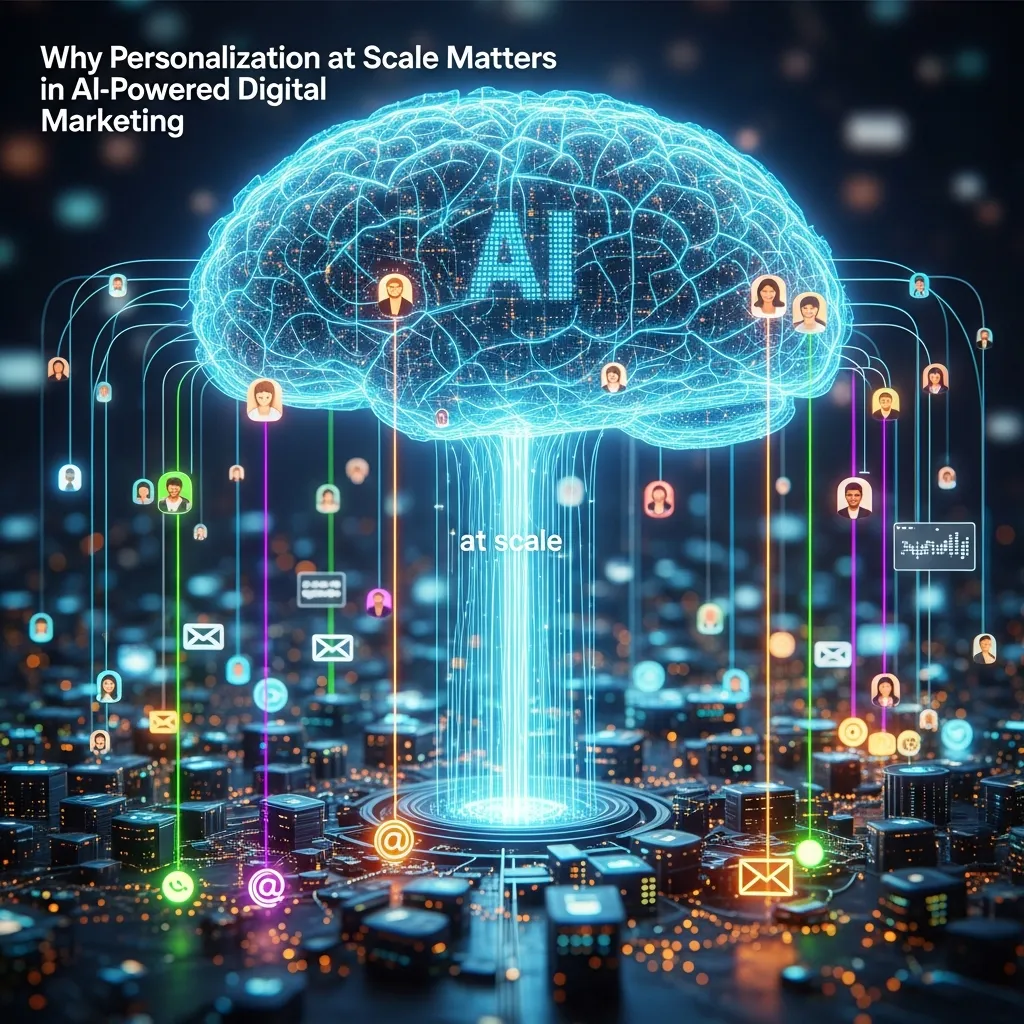
AI-driven marketing automation platforms unify campaigns across email, social, display, and SMS. By leveraging predictive models and real-time triggers, these platforms deliver consistent messaging that adapts to evolving customer behavior. Automated workflows streamline campaign management, enabling marketers to scale personalized outreach without manual complexity.
Essential Tools and Technologies for Scalable Personalization
Successful personalization at scale requires a well-integrated technology stack. Key components include:
- Customer Data Platforms (CDPs): Centralize user data from multiple touchpoints to create unified profiles.
- Machine Learning Frameworks: Support predictive analytics and dynamic model training for accurate recommendations.
- Content Management Systems (CMS): Offer dynamic rendering capabilities to serve personalized content on demand.
- Marketing Automation Tools: Orchestrate cross-channel campaigns with real-time triggers and automated workflows.
- Real-Time Data Processing Engines: Enable event-driven personalization by processing interactions as they occur.
- Analytics and Visualization Platforms: Provide performance dashboards and attribution models to measure ROI.
By integrating these technologies, marketing teams can establish a scalable foundation for personalization at scale. A modular approach—selecting best-of-breed solutions for each component—ensures flexibility and future-proofing as organizational needs evolve.
Conclusion
Personalization at scale is no longer optional—it’s an expectation in today’s marketplace. By harnessing AI-driven insights, robust data collection, and dynamic content delivery, organizations can craft experiences that resonate deeply with individual audiences. Implementing a strategic framework—grounded in first-party data, advanced segmentation, and real-time orchestration—enables marketers to drive meaningful engagement, boost conversion rates, and foster long-term loyalty.
As you embark on your personalization journey this year, remember to prioritize privacy, measure performance rigorously, and iterate continuously. With the right blend of technology, data governance, and creative execution, personalization at scale can unlock sustainable growth and establish your brand as a leader in customer-centric marketing.
Frequently Asked Questions About AI-Powered Digital Marketing
1. What is AI-Powered Digital Marketing?
AI-Powered Digital Marketing uses artificial intelligence and machine learning to automate, optimize, and personalize marketing campaigns across channels like email, web, social media, and ads.
2. How does AI improve AI-Powered Digital Marketing strategies?
AI analyzes customer behavior, predicts user intent, and delivers personalized content, helping brands improve targeting, engagement, and conversion rates in AI-Powered Digital Marketing.
3. Why is AI-Powered Digital Marketing important in 2026?
AI-Powered Digital Marketing is important because it helps businesses handle large-scale data, reduce manual work, and deliver real-time personalized experiences to customers.
4. What tools are used in AI-Powered Digital Marketing?
Common tools include customer data platforms (CDPs), AI analytics tools, marketing automation platforms, machine learning systems, and real-time personalization engines.
5. Can small businesses use AI-Powered Digital Marketing?
Yes, small businesses can use AI-Powered Digital Marketing through affordable tools like email automation platforms, AI chatbots, and social media scheduling tools.
6. How does AI help with customer personalization?
AI tracks user behavior, purchase history, and engagement patterns to deliver personalized recommendations, messages, and offers in AI-Powered Digital Marketing campaigns.
7. Is AI-Powered Digital Marketing expensive?
Not always. Many AI tools offer scalable pricing, making AI-Powered Digital Marketing accessible for startups, SMEs, and large enterprises alike.
8. What role does machine learning play in AI-Powered Digital Marketing?
Machine learning helps predict customer behavior, optimize ad targeting, and continuously improve campaign performance based on real-time data.
9. How does AI improve email marketing?
AI enhances email marketing by optimizing send times, personalizing subject lines, and dynamically adjusting content for better engagement and conversion rates.
10. Is AI-Powered Digital Marketing safe for user data?
Yes, when properly implemented with GDPR/CCPA compliance and secure data handling, AI-Powered Digital Marketing can safely manage customer information.
11. What skills are needed for AI-Powered Digital Marketing?
Key skills include data analysis, understanding AI tools, marketing strategy, content creation, and basic knowledge of automation platforms.
12. What is the future of AI-Powered Digital Marketing?
The future includes deeper personalization, predictive analytics, fully automated campaigns, and real-time customer journey optimization powered by advanced AI systems.



Leave a Reply