

Marketing fuels growth: traditional methods build broad awareness, digital channels target and engage audiences. Combining both creates effective, measurable strategies.
Marketing is the engine that drives business growth. It’s how companies connect with customers, build brand loyalty, and ultimately, sell their products or services. But as technology has reshaped our world, the field of marketing has split into two major branches: traditional marketing and its newer, more dynamic counterpart, digital marketing.
Understanding the difference between these two approaches is crucial for any business leader, marketing professional, or entrepreneur. While both share the same fundamental goal of attracting and retaining customers, their methods, channels, and metrics for success can be vastly different.
This guide will explain the core concepts of both traditional and digital marketing. We’ll explore their distinct strategies, highlight their unique benefits and drawbacks, and help you understand how to blend them effectively to create a powerful marketing strategy that delivers results.
What is Traditional Marketing?
Traditional marketing refers to any form of promotion or advertising that doesn’t involve the internet. It’s the classic approach that businesses have relied on for decades to reach a broad audience. Think of the advertisements you encounter offline in your daily life.
These methods are often described as “outbound” marketing, as they push messages out to a general audience in the hope of capturing their attention.
Key channels for traditional marketing include:
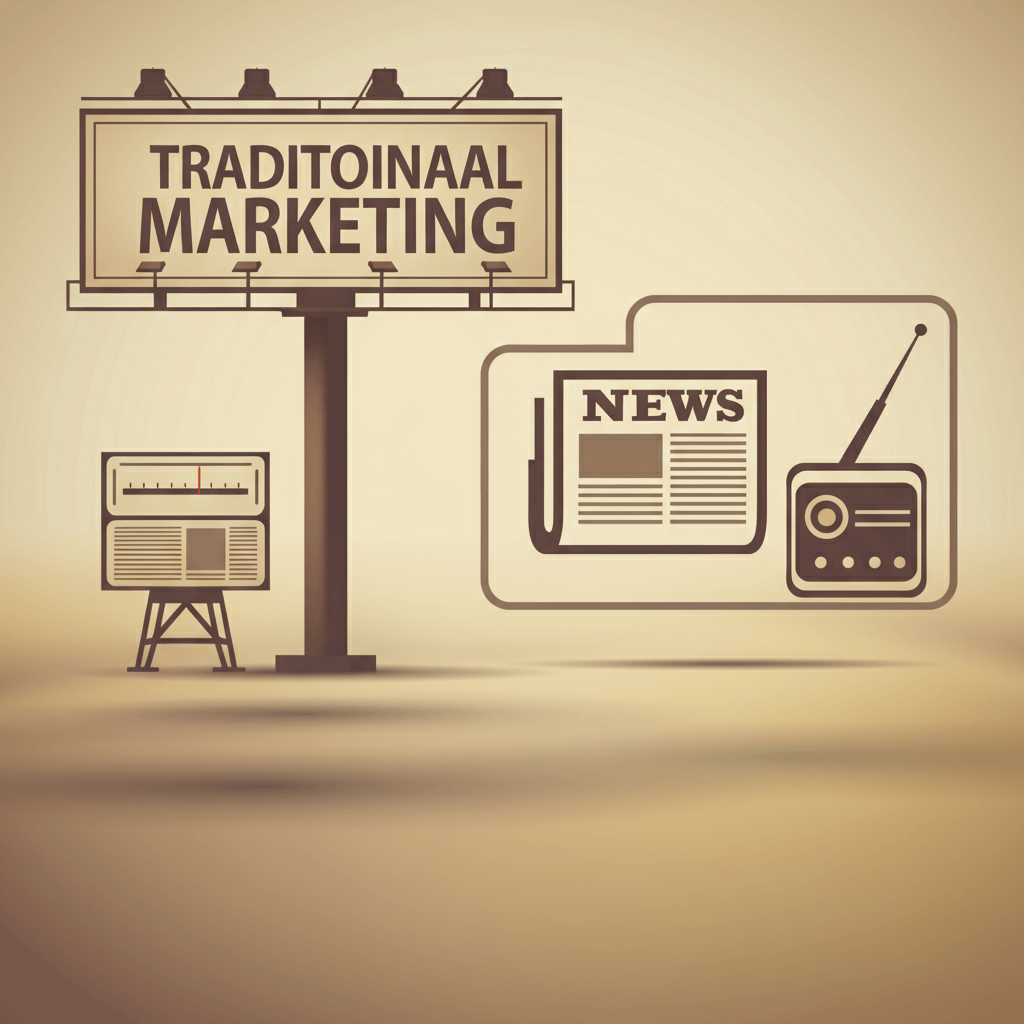
- Print Media: Ads in newspapers and magazines, brochures, flyers, and direct mail campaigns sent to your home.
- Broadcast Media: Commercials on television and radio.
- Outdoor Advertising: Billboards, bus stop posters, and other forms of out-of-home (OOH) advertising.
- Direct Mail: Postcards, letters, and catalogs sent directly to potential customers’ mailboxes.
- Telemarketing: Contacting potential customers via phone calls.
- Events: Sponsoring or participating in trade shows, conferences, and local community events.
Advantages and Disadvantages of Traditional Marketing
Traditional marketing is far from obsolete. It still offers significant advantages, particularly for businesses aiming to build brand awareness within a specific geographic area. A local restaurant, for example, might find great success with a flyer campaign in its neighborhood or an ad in a community newspaper.
However, this approach also comes with notable drawbacks. One of the biggest challenges is the difficulty in measuring its direct impact. It’s tough to know exactly how many people saw your billboard and then decided to visit your store. Traditional campaigns are also expensive, with high costs for printing, airtime, and physical ad space. Finally, the interaction is almost entirely one-way; there’s little to no immediate engagement with the audience.
What is Digital Marketing?
Digital marketing encompasses all marketing efforts that use an electronic device or the internet. It leverages digital channels such as search engines, social media, email, and websites to connect with current and prospective customers.
Unlike the broad-casting approach of traditional marketing, digital marketing excels at targeting specific audiences. This precision allows businesses to deliver personalized messages to people who are most likely to be interested in their products or services. It is primarily an “inbound” strategy, focused on creating valuable content and experiences that pull people toward your brand.
Key channels for digital marketing include:
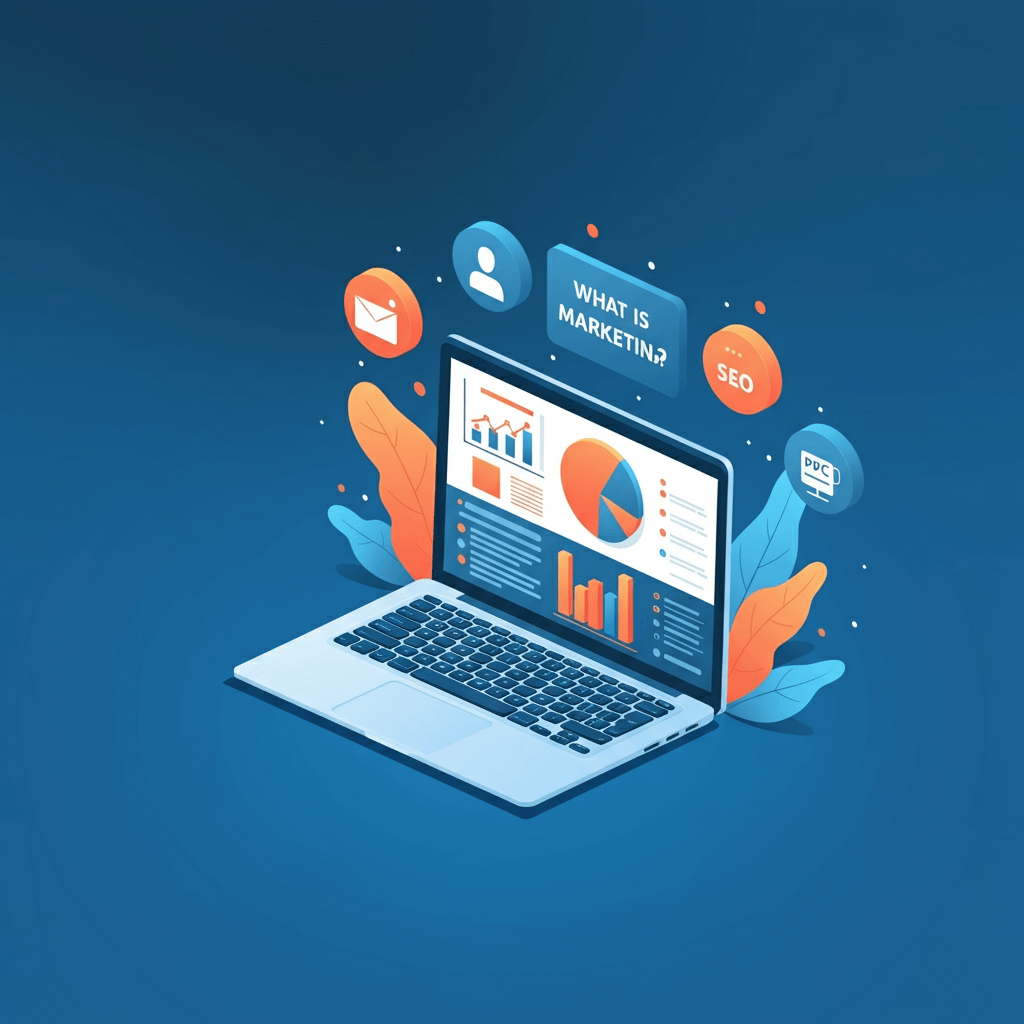
- Search Engine Optimization (SEO): The process of optimizing your website to rank higher in search engine results pages (like Google), thereby increasing the amount of organic (free) traffic your site receives.
- Content Marketing: Creating and sharing valuable, relevant, and consistent content—such as blog posts, videos, and ebooks—to attract and retain a clearly defined audience.
- Social Media Marketing: Promoting your brand and content on social media channels like Facebook, Instagram, LinkedIn, and TikTok to increase brand awareness, drive traffic, and generate leads.
- Pay-Per-Click (PPC) Advertising: A model of internet marketing in which advertisers pay a fee each time one of their ads is clicked. The most common form is Google Ads.
- Email Marketing: Communicating with your audience directly through email to promote content, share discounts, and direct people toward your website.
- Affiliate Marketing: A performance-based type of marketing where a business rewards one or more affiliates for each visitor or customer brought by the affiliate’s own marketing efforts.
Advantages and Disadvantages of Digital Marketing
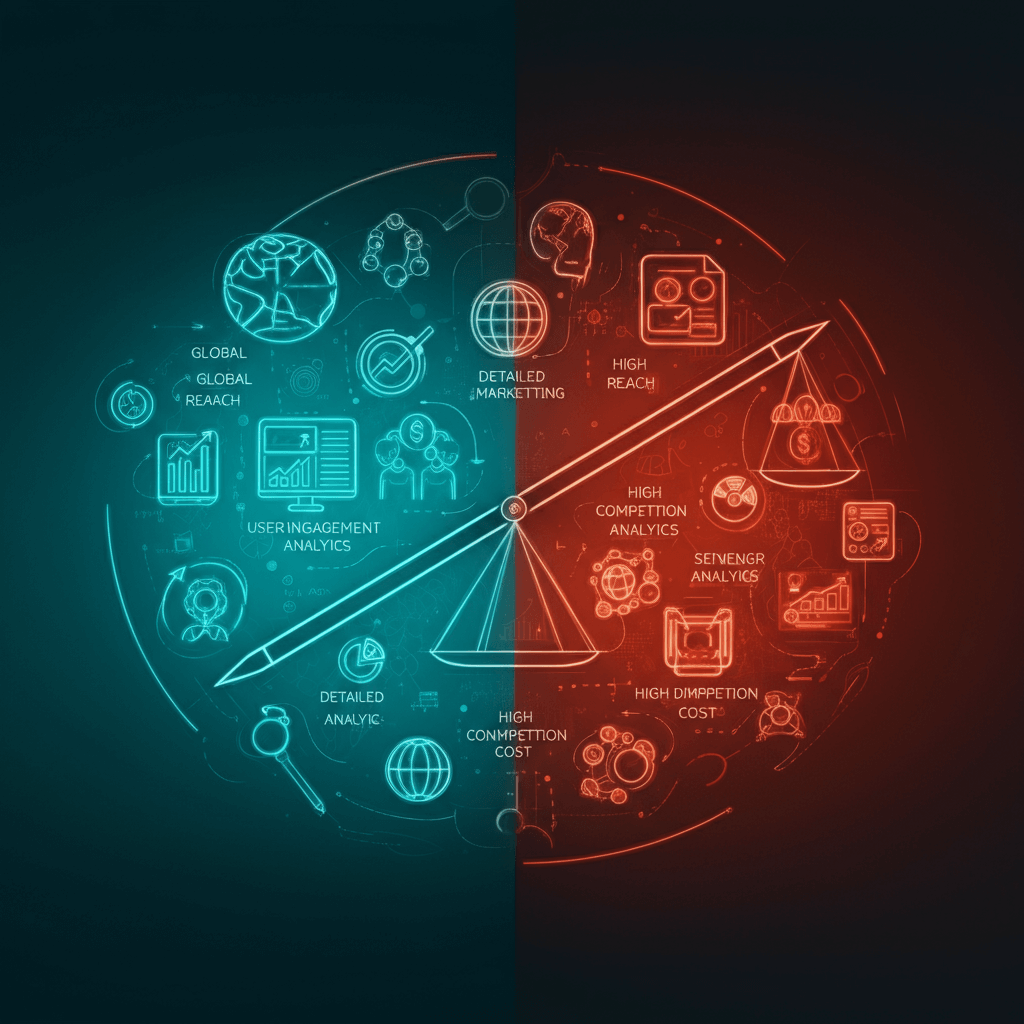
The rise of digital marketing is no accident. It offers unparalleled advantages for modern businesses. The most significant benefit is measurability. With tools like Google Analytics, marketers can track every click, view, and conversion, providing clear data on a campaign’s return on investment (ROI).
Digital marketing also offers incredible reach, allowing even a small business to connect with a global audience. The ability to target specific demographics, interests, and behaviors ensures marketing budgets are spent efficiently, reaching the people who matter most. Furthermore, it fosters two-way communication, enabling brands to engage directly with their customers and build lasting relationships.
However, digital marketing has its own set of challenges. The landscape is constantly changing, with new platforms and algorithm updates requiring marketers to be perpetually learning. The sheer volume of online content means it can be difficult to cut through the noise and capture your audience’s attention. Finally, negative feedback and criticism can spread quickly online, requiring careful reputation management.
Key Differences at a Glance
|
Feature |
Traditional Marketing |
Digital Marketing |
|---|---|---|
|
Channels |
Print, broadcast, direct mail, billboards |
Websites, social media, email, search engines |
|
Communication |
One-way (push) |
Two-way (interactive) |
|
Audience |
Broad, mass market |
Targeted, niche segments |
|
Measurement |
Difficult, often estimated |
Precise, data-driven (clicks, conversions) |
|
Cost |
Often high initial investment |
Can be more cost-effective and scalable |
|
Engagement |
Passive |
Active and immediate |
|
Pace |
Slower, longer campaign cycles |
Fast-paced, real-time adjustments |
Creating an Integrated Marketing Strategy
The most effective strategies don’t choose between traditional and digital—they combine both. Businesses that understand this synergy often see stronger results, similar to those discussed in direct and digital marketing synergy..
For instance, a TV commercial (traditional) could direct viewers to a website to redeem a special offer, where their email can be collected for future campaigns (digital). A QR code on a printed flyer (traditional) can lead a customer to a product page or social media profile (digital).
By blending these approaches, you can leverage the broad brand-building power of traditional methods with the targeted, measurable, and relationship-focused strengths of digital marketing. The key is to understand your audience, define your goals, and choose the channels that will best help you achieve them.
Customer Journey and Touchpoints
Understanding the customer journey is vital for both traditional and digital marketing. In traditional marketing, the journey often starts with awareness generated through mass media, such as TV commercials, newspaper ads, or sponsorships. These channels effectively introduce products or services to a wide audience but offer limited opportunities to guide the customer through later stages like consideration or conversion.
Digital marketing fills that gap by offering precise control over touchpoints. For instance, a user who clicks on a social media ad can be directed to a personalized landing page, receive follow-up emails, and see retargeted ads that match their browsing behavior. Tracking each step allows marketers to optimize campaigns continuously, improving conversion rates and ensuring that every interaction builds toward the final goal of purchase or engagement.
By mapping the customer journey across both traditional and digital channels, businesses can create an integrated strategy that nurtures leads from awareness to conversion seamlessly.
Content Strategy: Different Approaches for Different Channels
Content drives engagement, whether delivered through print brochures, social media posts, or blogs. In traditional marketing, content often takes the form of storytelling through visuals or copy that grabs attention in a crowded environment. The messaging tends to be concise and persuasive, designed to leave a lasting impression in just a few seconds, as in TV spots or magazine ads.
Digital content strategies, by contrast, offer far greater depth and variety. Long-form blog posts, explainer videos, interactive infographics, podcasts, and webinars allow brands to provide detailed information, build authority, and foster ongoing engagement. Digital content can also be optimized for SEO, social sharing, and personalization, creating opportunities for sustained interaction that traditional marketing alone cannot achieve.
The combination of memorable traditional content with rich, informative digital content enables brands to engage audiences at multiple levels, reinforcing messages while also encouraging active participation.
Traditional content focuses on brevity and memorability, while digital content enables depth, education, and ongoing engagement. Digital formats like blogs, videos, and guides support SEO and authority-building, as outlined in this complete digital content marketing guide.
Data and Analytics in Marketing

One of the starkest differences between traditional and digital marketing is the ability to collect and analyze data. Traditional marketing relies on surveys, focus groups, and estimated reach to measure effectiveness. While useful, these methods are often limited in scope and lag in timeliness.
Digital marketing, on the other hand, provides real-time insights into campaign performance. Metrics such as click-through rates, conversion rates, engagement, bounce rates, and ROI allow marketers to make informed, immediate decisions. A/B testing, heatmaps, and customer segmentation tools enable highly targeted campaigns that maximize efficiency and minimize waste.
Integrating data-driven insights from digital marketing with qualitative insights from traditional campaigns provides a holistic view of performance. This combined approach allows marketers to refine strategies, allocate budgets wisely, and make every campaign more effective.
Advanced capabilities such as AI-driven insights are transforming how marketers operate, as shown in how AI and machine learning are transforming marketing analytics.
Future Trends in Marketing
The marketing landscape continues to evolve rapidly. Traditional marketing is increasingly blending with digital methods, giving rise to hybrid campaigns. QR codes on print media, augmented reality (AR) experiences linked to TV ads, and digital retargeting based on offline interactions are just a few examples.
Digital marketing itself is evolving with AI-driven personalization, predictive analytics, voice search, and immersive experiences like AR/VR. Businesses that embrace these technologies while maintaining strong traditional foundations will be well-positioned to connect with audiences across multiple touchpoints, ensuring relevance and growth in the years ahead.
How to Integrate Traditional and Digital Marketing
The key to a successful marketing strategy is not choosing one over the other but integrating both. Identify where each channel is most effective, then design campaigns that complement one another. For example, a print ad might build awareness, a QR code can guide users to a landing page, and a follow-up email can convert leads into customers.
Consistent branding, clear messaging, and a deep understanding of your audience are essential. When combined thoughtfully, traditional and digital marketing become a powerful, mutually reinforcing engine that drives engagement, loyalty, and revenue.
Marketing Automation and Personalization
Digital marketing opens the door to automation and personalization in ways traditional methods cannot. Email drip campaigns, retargeting ads, and AI-driven recommendations allow brands to deliver timely, relevant messages tailored to individual customer behavior.
In contrast, traditional marketing tends to focus on broad messaging with little customization. While this can be effective for mass awareness, it cannot replicate the one-to-one engagement that digital channels offer.
By combining the broad reach of traditional campaigns with the precision of automated digital messaging, businesses can create marketing systems that are both scalable and highly personalized.
Automation allows brands to scale personalized communication through email workflows, retargeting, and AI recommendations. Understanding what marketing automation is helps businesses create efficient, customer-centric systems that traditional marketing alone cannot replicate.
Your Path Forward in Marketing
The debate isn’t about which form of marketing is “better,” but which is right for your specific goals and audience. Traditional marketing still holds value for building local brand presence and reaching demographics that are less active online. Digital marketing, on the other hand, offers precision, engagement, and a wealth of data that is essential for any modern business looking to grow and compete.
By understanding the unique strengths of both, you can make informed decisions and build a marketing strategy that not only reaches your audience but also resonates with them, turning passive viewers into loyal customers.
Frequently Asked Questions (FAQ)
What is the main difference between traditional and digital marketing?
Traditional marketing relies on offline channels and broad messaging, while digital marketing leverages online channels, data, and personalization for targeted engagement.
Can small businesses benefit from traditional marketing?
Yes. Local businesses often see strong results from flyers, community sponsorships, and print ads, especially when integrated with digital follow-ups.
Is one type of marketing more cost-effective than the other?
Digital marketing generally offers more flexibility and measurable ROI, but traditional marketing can be highly effective for brand awareness, particularly in local or niche markets.
How can I combine traditional and digital marketing effectively?
Use traditional channels to build broad awareness, then guide audiences to digital platforms for engagement, lead capture, and conversion. Integration across channels amplifies results.
How do I measure the success of traditional campaigns?
Through surveys, focus groups, coupon/redemption tracking, and correlation with sales. Combining these insights with digital analytics provides a more complete picture.
What role does data play in modern marketing?
Data drives decision-making in digital marketing, helping optimize targeting, measure ROI, and personalize communication. Traditional marketing insights are still valuable for audience behavior and qualitative feedback.
What are emerging trends in marketing?
Hybrid campaigns, AI-driven personalization, interactive content, AR/VR experiences, voice search optimization, and integrated omnichannel strategies are shaping the future.



Leave a Reply